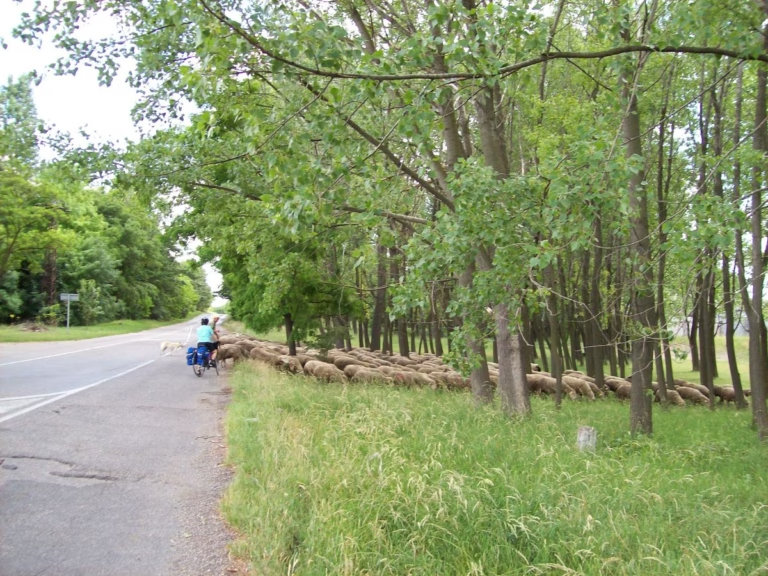

Looking to ride the Neckar Valley Cycling Route?
Although not as well known as other German bicycle touring routes, it was something my 3 friends and I wanted to try.
We had arrived in Heilbronn along the Neckar Valley Cycling Route in early September and immediately had to get off our loaded bicycles due to the huge crowds. This turned out to be during the annual wine festival while cycling in Germany, and although it was still early, plenty of people were wandering about. This was a surprise highlight of the journey.
The entire journey would be in southern Germany in the state of Baden-Württemberg. Use my helpful guide to plan your ride.
Neckar Cycle Path Facts
Distance – the total length is 375 km (230 miles)
Difficulty – follows the Neckar River and is very flat or gently rolling, not one of your more difficult routes
Surface – Neckar Valley Cycle Route is a mostly paved bike trail with sections on quiet local roads
Best for – bicycle touring, Families, local riders, beginner cyclists
Highlights of the Neckar Cycle Path
Horb – medieval town
Tübingen – Hohentübingen Castle
Esslingen – 200 half-timbered houses in the medieval town
Heilbronn – wine area
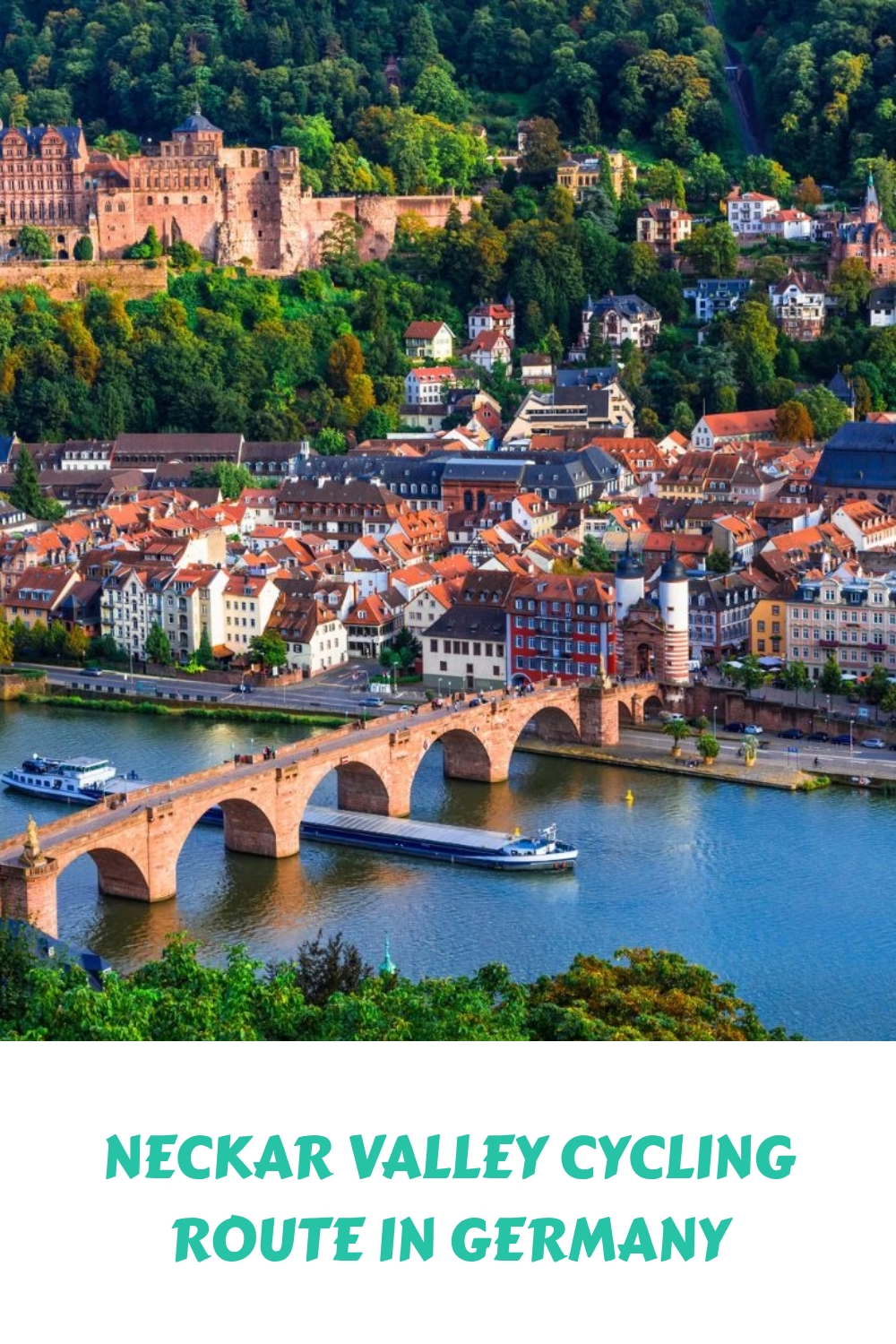
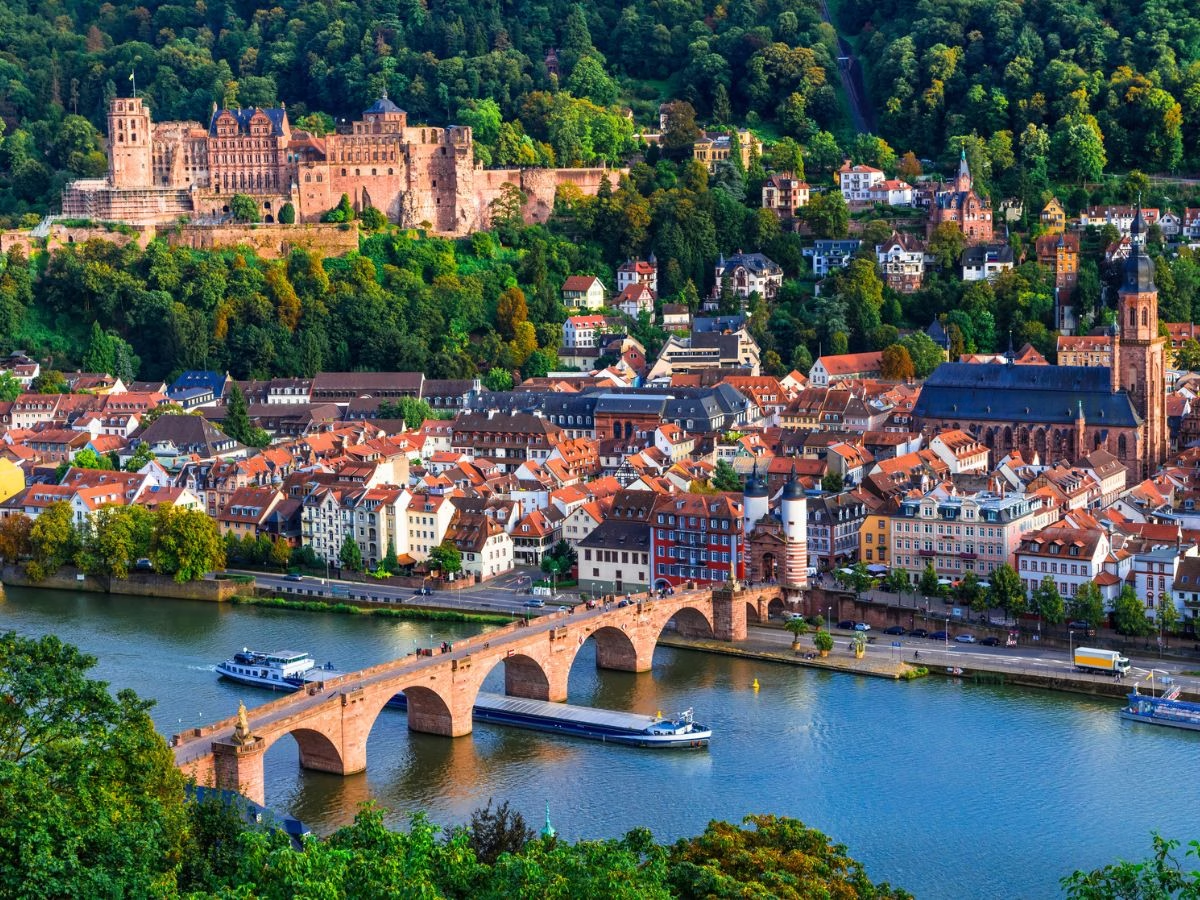
Heidelberg – the famous Heidelberg Castle
Mannheim – baroque palace
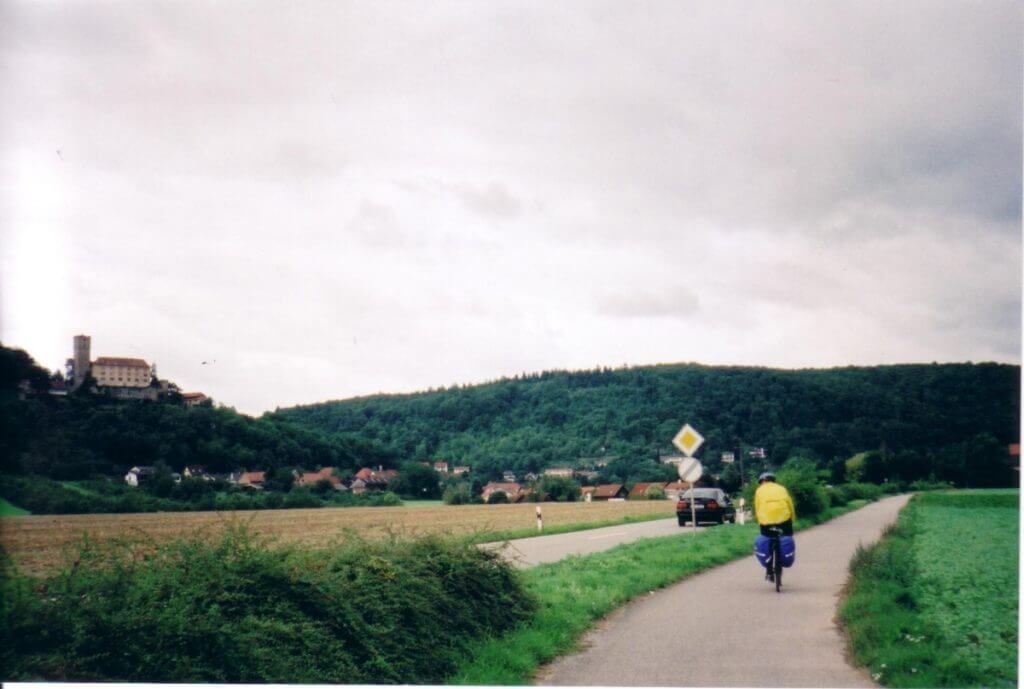
Day 1 Cycling from Villingen-Schwenningen to Rottweil
The Neckar River starts in a spring located in Schwenninger Moos National Park, the source of the Neckar, while the bike path starts at the nearby Schwenningen railway station. Just look for the green bike with the red and white front wheel on the signs.
The town of Schwenningen is also the start of Germany’s Clock Route, a driving route heading into the Black Forest to the west. So it is not surprising that there is a clock museum in the town. It is located in the former 19th-century clock factory and features clock manufacturing machines.
Right from the start, we found the bike route to be well-signed and easy to follow. You will pass the International Aeronautic Museum at Schwenningen Airport. If you like trains (like one of my cycling colleagues), then a visit to the world’s oldest electric locomotive in Trossingen; it was built in 1888.
Some of the daily stages on this itinerary are rather short, and depending on how much sightseeing you do along the way, days can be combined. We carried all our gear in our Ortlieb panniers.
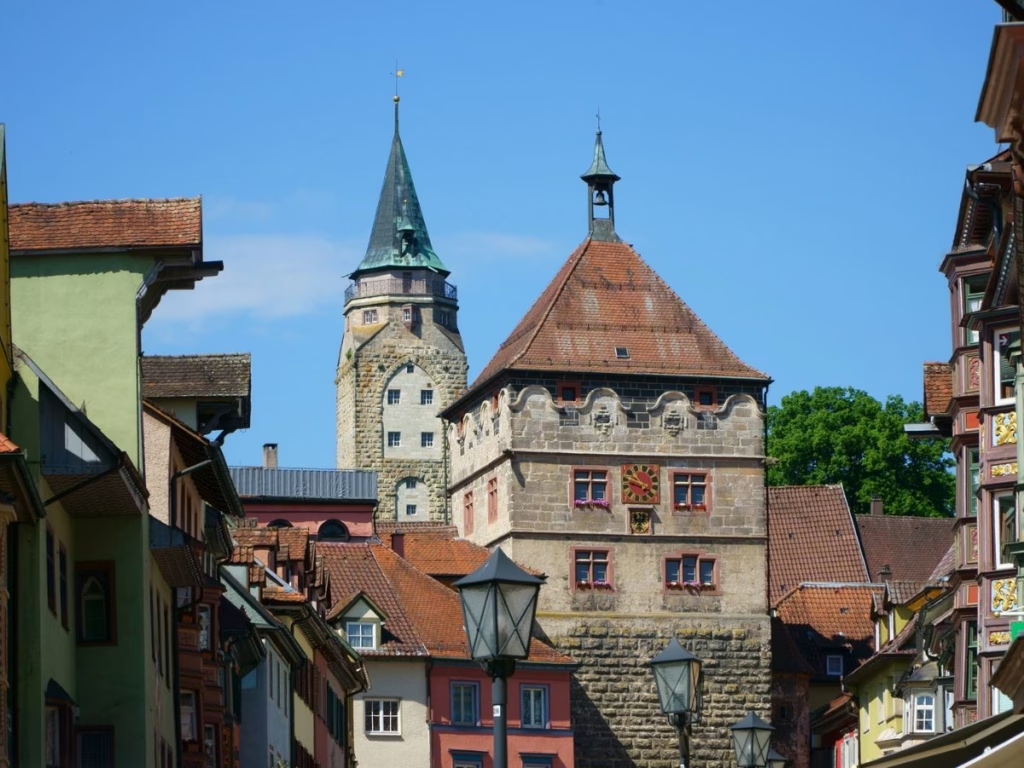
After your first 27 km of riding, you reach Rottweil, a stunningly beautiful town. With its centuries-old buildings and cobblestone streets, it’s easy to feel as if you’ve stepped back into the past when visiting this historic destination. But Rottweil isn’t just any old town; it was actually a free imperial city for nearly 600 years! That makes it one of the oldest towns in the region, with plenty to explore and discover.
Day 2 Cycling from Rottweil to Horb
Today is a long ride at 48 km. At this point, the route through the Neckar River Valley tends to wander a bit as it heads north, and you ride through the valley towards Oberndorf, 15 km north of Rottweil, where there is a weapons museum. Continue to medieval Horb, situated on a ridge along your route. This is one of many medieval towns along this route, and you will have to decide on which ones to visit.
Day 3 Cycling from Horb to Tübingen
Continue along the Neckar bike route to Rottenburg, passing Weitenberg Castle, now a hotel. If you have ever wanted to stay in a castle, this is your chance. Rottenburg also has plenty of history and culture to explore. Take a stroll through the old market square or visit the city’s many churches and monasteries. However, we are continuing to the next town.
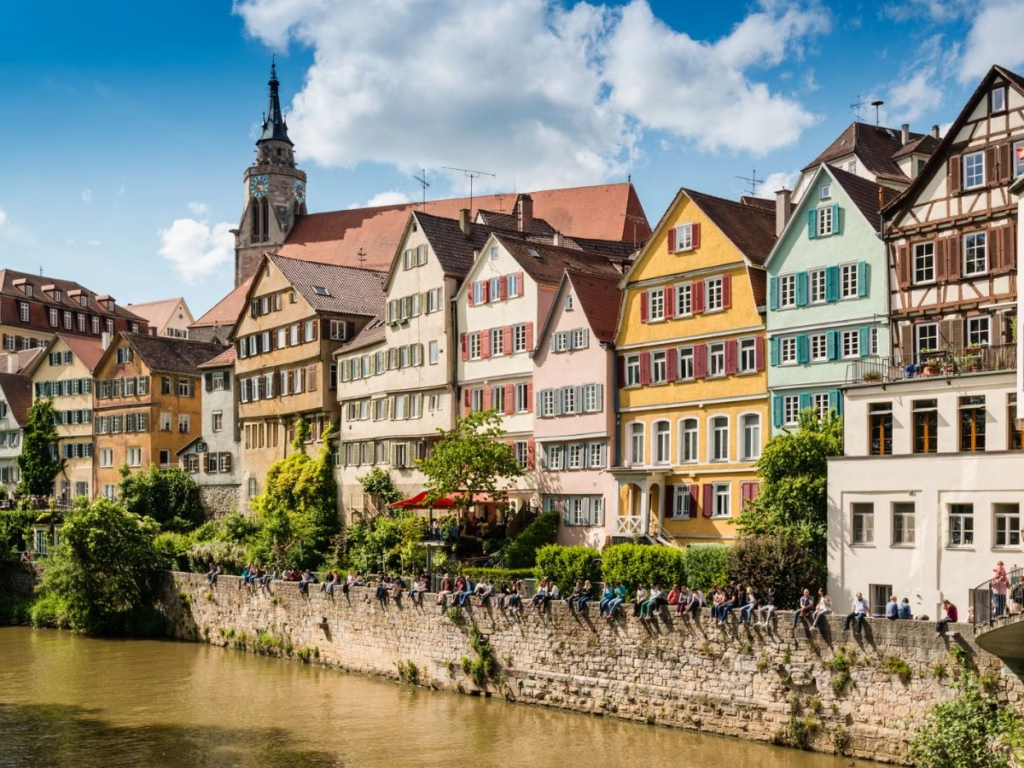
After 35 km, we reach Tubingen, which is known for its stunning architecture, beautiful gardens, and vibrant university life. The city has been around since the Middle Ages and is home to some of Europe’s oldest universities. You can explore its many historical sites, including Hohentübingen Renaissance Castle.
Some cyclists feel Tübingen is the ideal starting point and skip the first section.
Day 4 Cycling from Tübingen to Esslingen
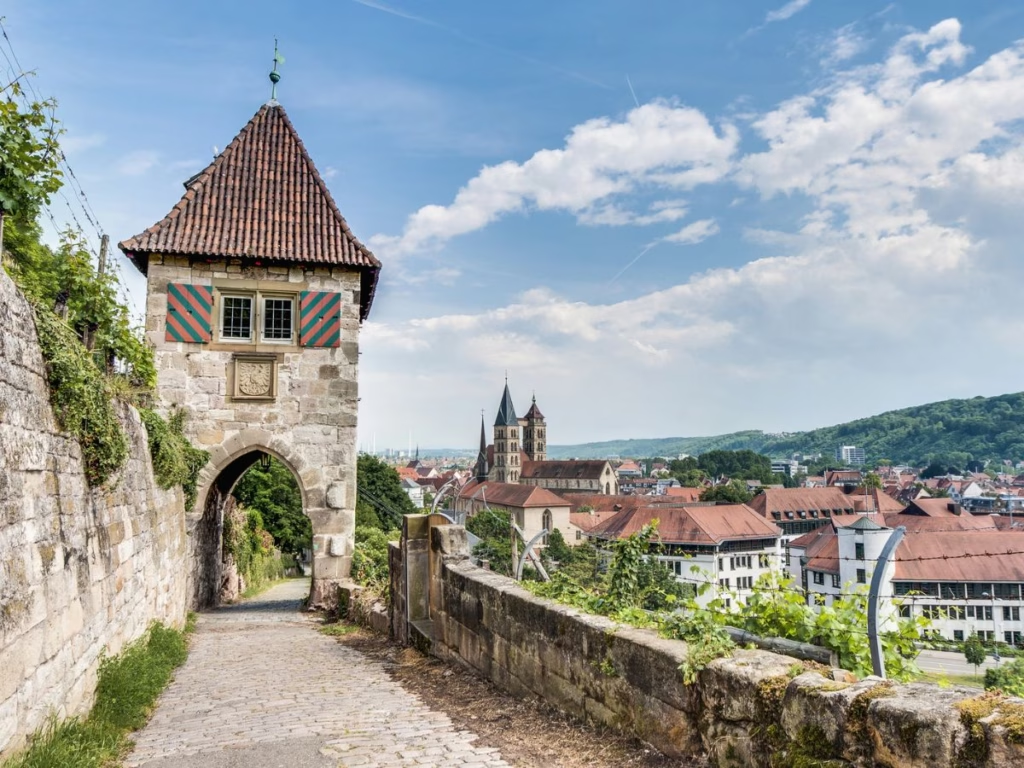
An easy 52 km bike tour today to Esslingen while viewing the beautiful natural landscapes. You will need time to explore the centuries-old architecture with over 200 half-timbered homes, some from the 1260s, the Gothic churches known for their stained glass windows, all surrounded by vineyards.
Day 5 Cycling from Esslingen to Heilbronn
The Neckartal-Radweg (or Neckar Radweg), using its German name, continues following the river until reaching Stuttgart, where you might want to visit the Daimler-Benz Museum. Some cyclists take the 5 km side trip to Ludwigsburg Castle, which looks more like a huge palace and is known as Germany’s Versailles.
If you stop in Stuttgart, be sure to visit the Museum of Illusions, where you can experience optical illusions, walk through mirror rooms, and lose yourself in the Infinity Room. You can also visit the observation level of the 217-meter TV tower for great views.
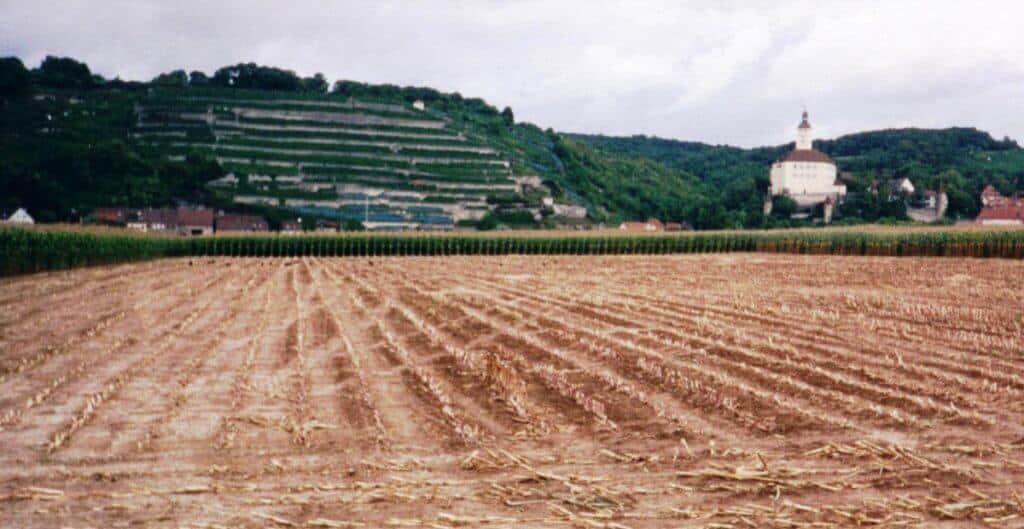
About 20 km north of Stuttgart, you will pass the town of Marbach am Neckar, home of Friedrich Schiller and now the Schiller National Museum (closed until the fall of 2024). In this next section of the ride, you can expect to see vineyards on the hills.
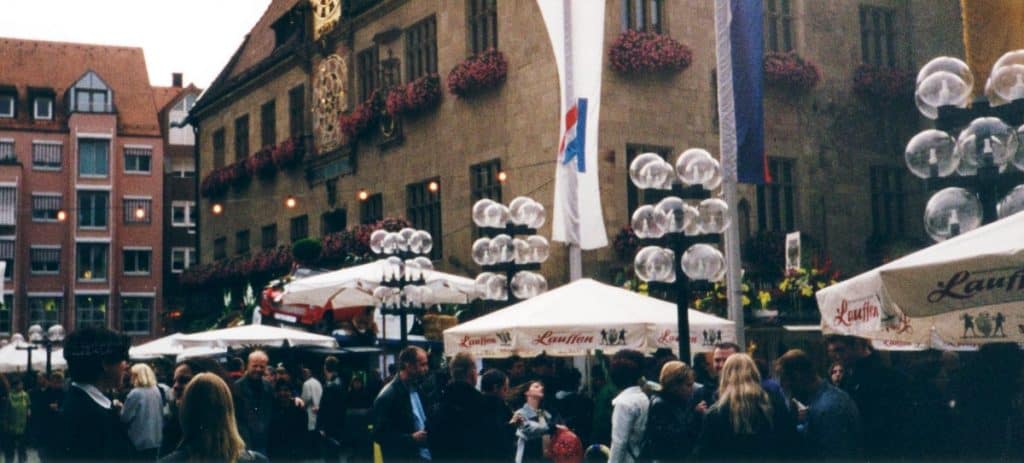
After 60 km along the Neckar bike route continues through an area of hills covered with vineyards until we reach Heilbronn, where we enjoy the wine festival. The regional Castle Cycling Route from Rothenburg meets here.
Although we had been cycling all day, we quickly checked into our hotel in Heilbronn, secured our bikes, and headed to the wine festival. There were plenty of colorful booths scattered about the streets where you could sample a glass of wine, the results of local wine growers’ harvest.
We spent most of our time at the wine festival, but Heilbronn has interesting architecture to view as well, and the Renaissance Town Hall features a 16th-century astronomical clock. The 13th-century Gothic St. Kilian Church has a tower and interior worth seeing.
Day 6 Cycling from Heilbronn to Eberbach
Cycling the next morning on the Neckar Valley cycle path, we were joined by a lone German cyclist who was bicycle touring the route and accompanied us for much of the morning on our 55 km.
The castle of Neckarsulm, built in 1487, is along the way. At this point, the river is quite wide, and you are riding through a scenic valley with hills crowding both sides.
Bad Wimpfen
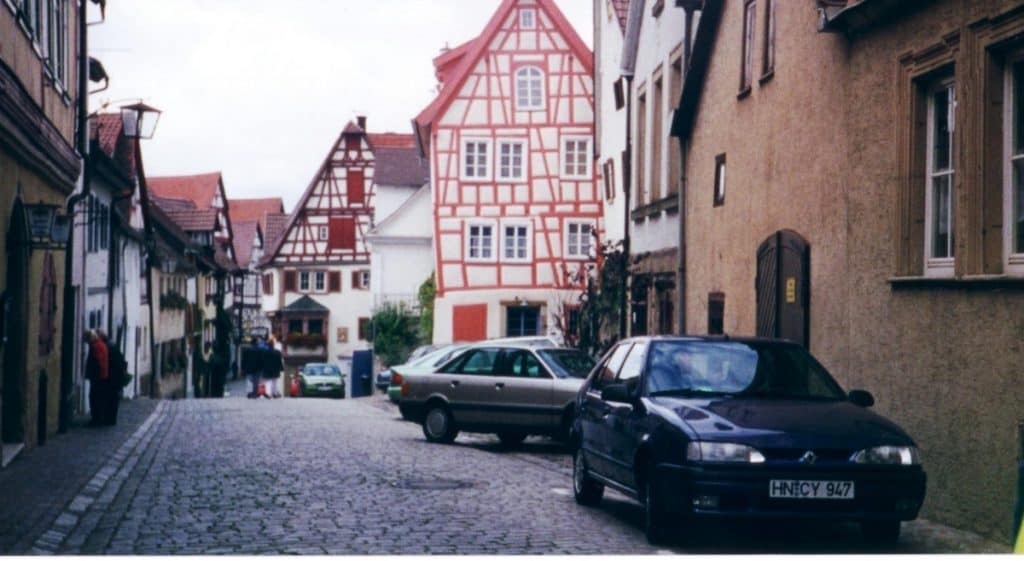
We took a slight detour off the route to visit historic Bad Wimpfen, founded around 1200. Famous for the Blauer Turm (blue tower), a high tower that you can climb for views of the Neckar River and the town’s medieval skyline.
Guttenberg Castle in Neckarmühlbach, one of the oldest castles in Germany, features a museum, tavern, and raptor center, and you can even stay overnight.
Another possible stop is Hornberg Castle in Neckarzimmern, a labyrinth of wall corridors, towers, stairs, and inner courtyards. Götz von Berlichingen, the knight with the iron hand, lived here once upon a time.
Zwingenberg Ferry
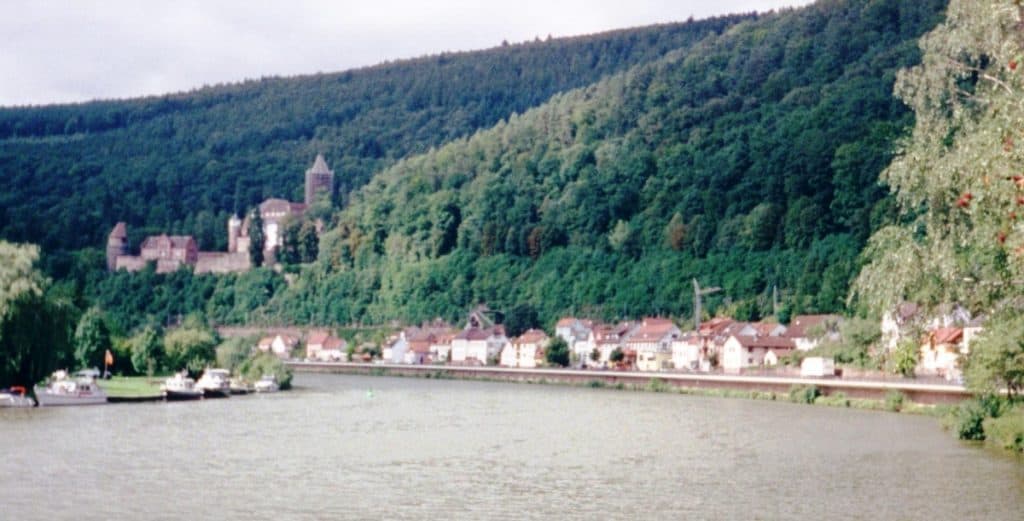
At Zwingenberg, we used a small ferry to cross the river as the Neckar Valley cycling route changes sides from time to time. Sometimes the water levels get a bit high, and you might need to take a detour on local roads.
On the right bank, you can see the privately owned and well-preserved Castle Zwingenberg by His Grand Ducal Highness Ludwig, Prince of Baden. In August every year, the castle hosts an open-air festival which is worth attending if your cycling holiday has you in the area at the time.
Eberbach
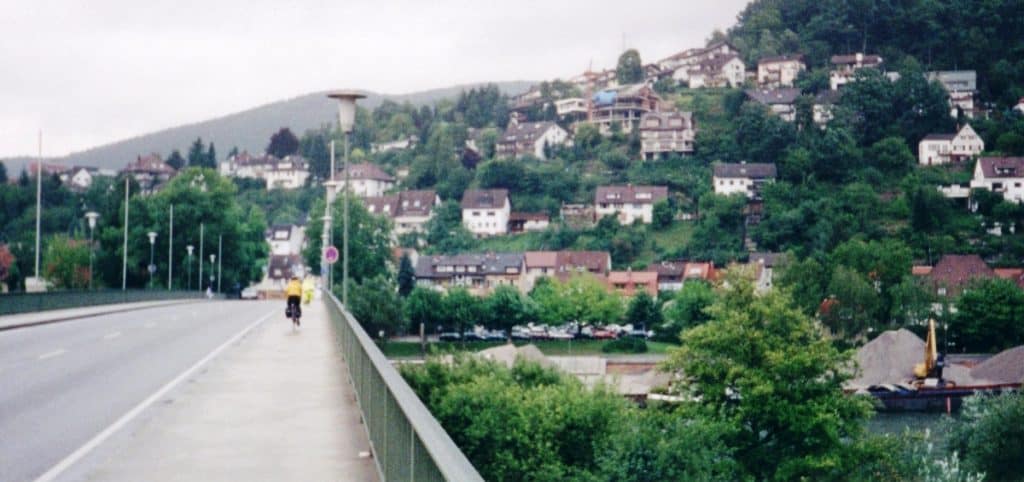
Entering the Staiger town of Eberbach was impressive as you cross a bridge over the river and the town sits before you on the slopes of the hill. Also, we started to see much more river traffic along this section. We had difficulty finding accommodation, so we went to the tourist office, which located rooms in the Gasthof Linde, nice, but a bit of a climb after a long day on the trail.
Day 7 Cycling from Eberbach to Heidelberg
Departing Eberbach, it was about 42 km of easy riding mostly on quiet country roads, so we arrived early, although on the wrong side as you head towards the River Rhine.
Heidelberg
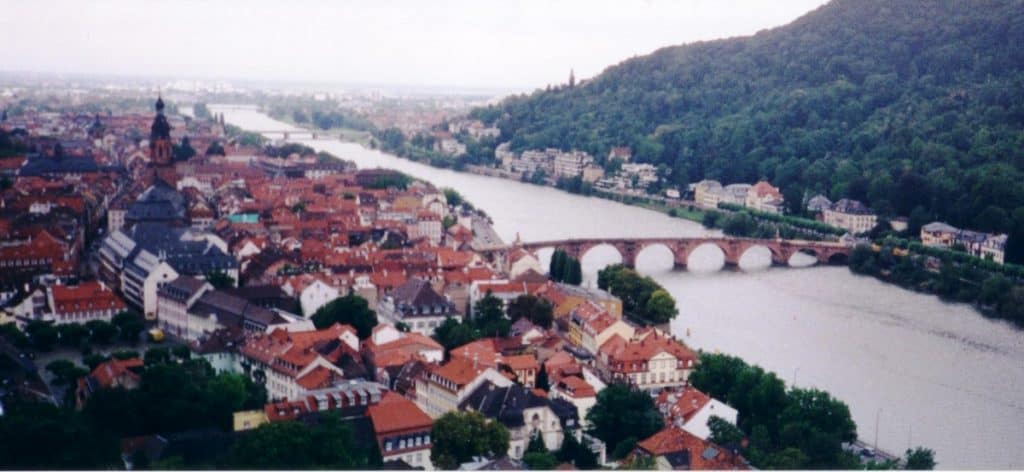
What an entrance as you cross a historic bridge with the castle high on the hill to your left and the old city of Heidelberg with its pedestrian-friendly main street to the right. We stopped on the old bridge for a photo opportunity. Do be sure to stay extra nights on your cycling tour to visit the castle and city.
Even though it was a Monday night, we searched in vain for a B&B or hotel before going to the tourist office for assistance. They found us a place, but it required a 5 km ride to get there and a commuter the next day to return to visit the town.
We first visited Heidelberg Castle, which offers English-language guided tours to visit the ruins and gardens (private tours also available). We then explored the market in the old town to pick up some souvenirs. There is also a well-known Christmas market in December in the same location.
You can also take a guided old-town walking tour or a Neckar River sightseeing cruise.
Day 8 Cycling from Heidelberg to Mannheim
Your last day of riding the entire route, although many cyclists only go as far as Heidelberg. After 10 km of riding, you will reach the Celtic city of Ladenburg, one of the most well-preserved towns along the Neckar. The historic old town features numerous half-timbered houses, an old city wall, and a market square. One of the undiscovered gems along the route.
Riding into Mannheim, you meet up with the Rhine Cycle Route, one of the longer tours, where you can head north to the city of Mainz or south towards Basel. The Neckar is one of the largest tributaries of the Rhine River.
However, while in Mannheim you will want to see the 18th-century Baroque Palace, and Marktplatz Square with its baroque fountain, and get some souvenirs along the Planken shopping street in the city centre.
Neckar Valley Cycling Route Trail Map
Additional Resources for Your Neckar Cycling
Busbud – a booking platform if you prefer bus transfer rather than trains
VRBO – different types of rental accommodation along the route
HostelWorld – hostel accommodation
Booking.com – excellent choice of accommodations
Expedia – for hotels while cycling the route. I had difficulty finding accommodation in Heidelberg, so I recommend booking in advance
Trip.com – for railway connections
Travel Insurance – for a safe journey
FAQs: Neckar Valley Cycling Route
Where does the Neckar Cycle Path start and end?
The route starts from the train station in Villingen-Schwenningen and ends at the Rhine River in Mannheim. There is a train service to both towns as well as Heidelberg if you decide to end there.
Best time to ride the Neckar Valley Cycling Route?
Do the cycle in May/June or September/October to avoid the busy summer months when it can be difficult to get accommodation. Even during these months, Friday and Saturday nights can be difficult to find hotels due to local weekend riders.
How long is the Neckar Cycle Path?
375 km (230 miles) from Villingen-Schwenningen to Mannheim on the Rhine River.
Which direction to ride the Neckar Cycle Path?
It is always easier to ride downstream, although the elevation drop is 617 metres over the entire 375 km.
Looking for more information on cycling in Germany?
If you are going to Germany for bicycle touring and would like more information, consider reading some of my other posts:
- The Romantic Road Bike Route is connected to the Castle Road Route and fairytale castles before joining the Neckar Route
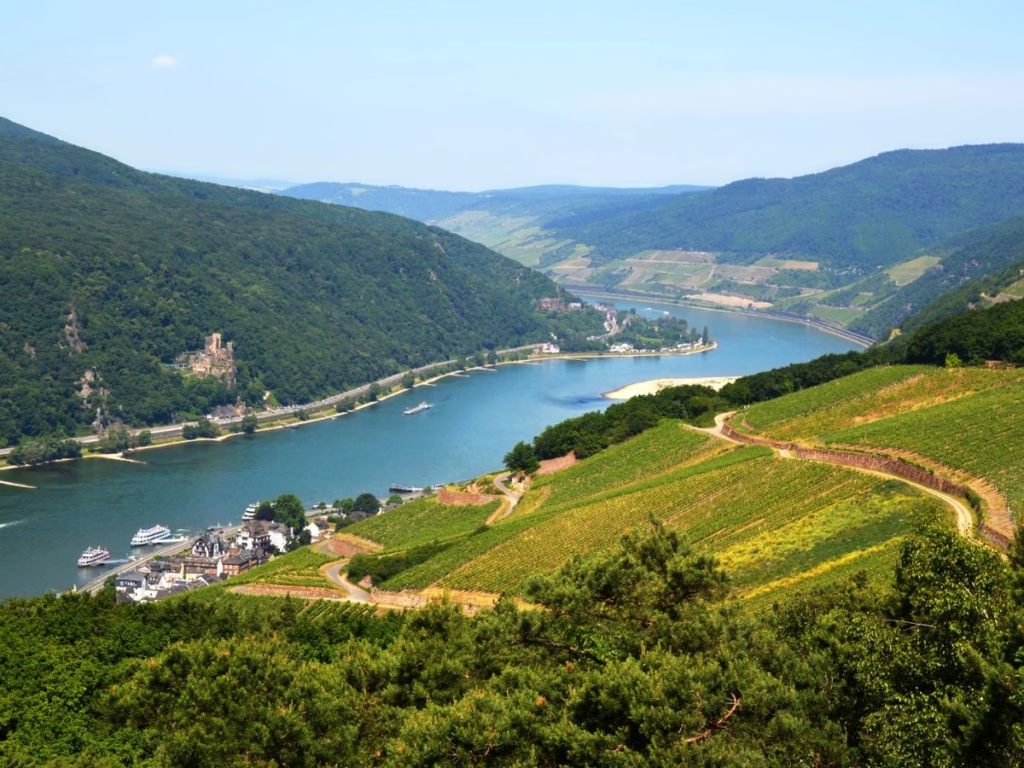
- Rhine River Cycle Route is a long-distance cycle route along the Rhine Valley to Lake Constance
- Cycling around Lake Constance, a bike route around this lake surrounded by 3 countries
- Germany’s Bodensee to Königssee Cycle Tour – across Bavaria to the Austrian border
Final Thoughts: Neckar Valley Cycling Route
For further information to help with your planning, check out the German Tourist Office website.
The much lesser-known Neckar Valley Bike route provides easy riding on a paved bike path along the scenic river with lots of castles, numerous museums, vineyards, and interesting medieval towns.