
Looking at cycling the Danube Bike Trail from Vienna to Budapest?
Well, I did it with a few cycling friends and in Hungary, riding the more interesting inland route instead of right along the Danube River.
It was quite an experience, and this helpful guide should help you plan your own journey. Enjoy!
Introduction to the Danube Bike Trail
Distance – 340 km (211 miles) from Vienna to Budapest, following an inland route
Countries visited – Austria, Slovakia, Hungary
Difficulty – mostly flat except for the wine region departing Tata with a few hills
Best for – bicycle touring
Note – there is poor signage on the Hungarian section of this route
The section of the Danube Bike Trail from Vienna to Budapest is 340 kilometers (211 miles) and passes through parts of three countries – Austria, Slovakia, and Hungary. It is also part of the Eurovelo 6 route of 4,450 km across the center of Europe, including the Danube Cycle Route along Europe’s second-longest river from the Black Forest to the Black Sea.
The route makes for an easy one-week journey with the sections in Austria and Slovakia on well-signed paved bicycle trails, while the sections in Hungary are on mostly quiet roads, but a few small parts have some traffic. There were also a few short stretches along a forested dirt lane, which were muddy during our travels, and we had to walk a short distance.
As I did, many of the cyclists had started their cycling vacation in Passau, Germany, and rode to Vienna along that section of the Danube Bike Route.
This section of the Danube Bike Trail is not as busy as the German and Austrian parts, and you tend to see the same cyclists each day visiting from a variety of countries as you meet each other at dinner. Although I reserved my hotels on my own, I found the same people at dinner each evening. I strongly recommend the Bikeline Bike Trail Guide (my favorite) or the Danube Cycleway book, as road signs are lacking in Hungary along the route.
Highlights of the Danube Cycle Path Vienna to Budapest
Vienna – Schonbrunn Royal Palace, coffee houses, music
Bad Deutsch-Altenburg – archaeological site from Roman times
Bratislava – castle and capital of Slovakia
Mosonmagyarovar – ringed with canals
Gyor – pedestrian-friendly
Tata – museums and a castle surrounding the lake
Wine region – very scenic and the only hills on the route
Esztergom – the huge cathedral and nearby castle
Szentendre – an old town along the river
Budapest – Castle District with scenic view, restaurants, and museums
Danube Cycle Route From Vienna to Slovakia
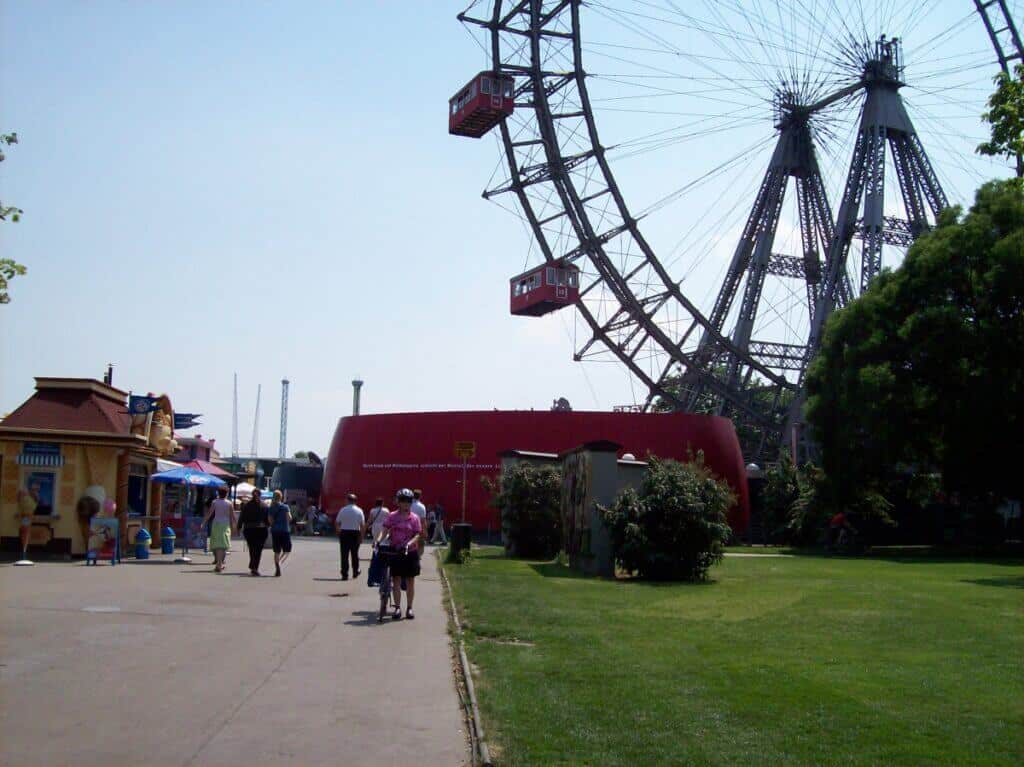
We did spend a few days in Vienna visiting the Royal Palace, going to St. Stephen’s Cathedral, tasting the Sacher Torte (famous cake), riding the Ring Road bike path, and listening to musical performances. Oh yes, you will want to visit the famous Prater Park and go on the Ferris wheel, dating from 1897.
I started riding from Vienna, taking the route along the Danube, which is well-signed like all sections in Austria, and again all paved and over fairly flat terrain with a few gentle hills. You will pass National Park Donau-Auen, which is a 2,000-hectare wetland area along the Danube and the second largest of its kind in Central Europe. The Castle Orth, located in this nature reserve, serves as a museum and office.
A side trip to the north of the Danube is the village of Eckertsau, which is the location of the former imperial hunting lodge from the Habsburg era with a very ornate ballroom. If visiting in April or May, concerts are held on the grounds.
Bad Deutsch-Altenburg
I recommend cycling to either Bad Deutsch-Altenburg (Roman site) or Hainsburg (walled) near the Slovakia border on the first day. I had booked the Gasthof zum Goldener Anker in Hainsburg, but when I arrived, the owner advised they were overbooked, gave me a free beer, and told me they had booked an alternate.
The alternative was the Hotel Konig in nearby Bad Deutsch Altenburg, which also turned out to be a good choice and well located to wander about the town. It was also close to the Danube cycle path.
For sightseeing, there is the most significant archaeological site if you want to learn about the Roman World. The Romerstadt Carnuntum offers 3 sites with one ticket. You can see an early Roman settlement including Heathen’s Arch, Civilian City’s Amphitheater, Gladiators’ Practice area, the Roman City Quarter, and the Museum in Bad Deutsch-Altenburg. In September, there is a Roman festival.
Nearby castles include Hainsburg up on the hill with views of the medieval town, and also Rothelstein Castle, which is more of a ruin today. But our hotel was in Bad Deutsch-Altenburg, and an evening walk after dinner along the river was in the works.
Danube Bike Trail in Slovakia
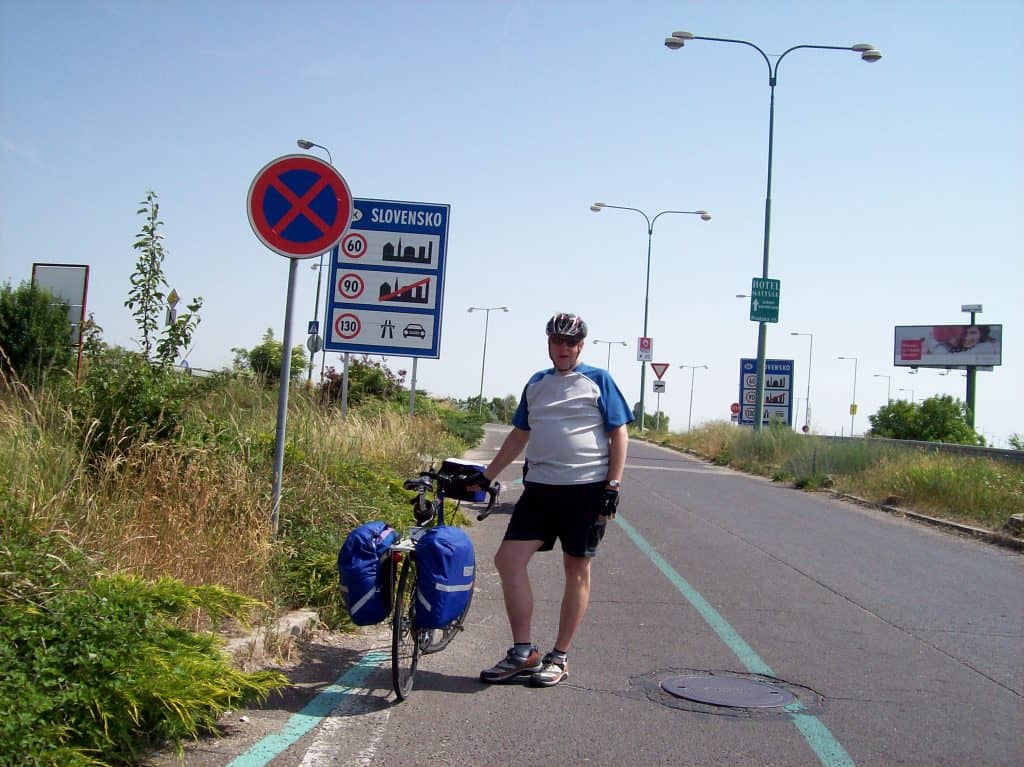
The next day’s cycle to the Slovakian border was along a very flat bike trail. At the border, the bike lane ends, and you have to line up in the car lane to pass through customs. So fast that they barely looked at our passports. The bicycle trail starts again right at the border and continues all the way to the Hungarian border about 30 km away.
Bratislavia
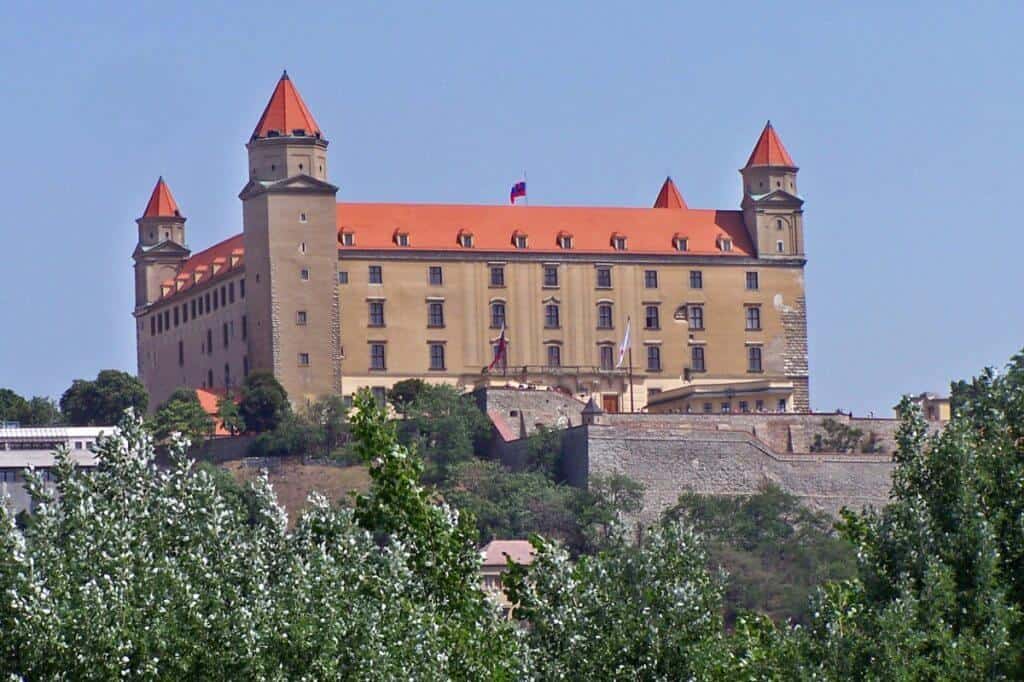
Along the way, you pass the capital city of Bratislava on the north bank of the Danube. If you want to take the bridge across the river and visit Bratislava Castle, tour the cobblestone streets, and stop for a coffee.
Back on the Danube Bike Trail, numerous cafes just catered to cyclists. I was cycling on a Saturday, and it seemed the entire city of Bratislava was cycling on the bike path; it was very crowded, and many just went on the nearby road.
Danube Bike Trail in Hungary
Near the Hungarian border, you have two Danube routes to choose from, with one along the river. Instead, I recommend the inland route, which passes through more interesting cities and terrain.
On a journey of this length, there is a chance you may get some rain, so having Ortlieb Back Roller panniers to keep your gear dry is essential.
The bike route signs in Hungary are lacking, so use a guide. Also on the Hungarian section, it seemed we met the same Dutch, German, American, Canadian, and other cyclists who were following the same route, and we all seemed to stay in the same hotels, so we helped each other.
Danube Bike Trail along the River
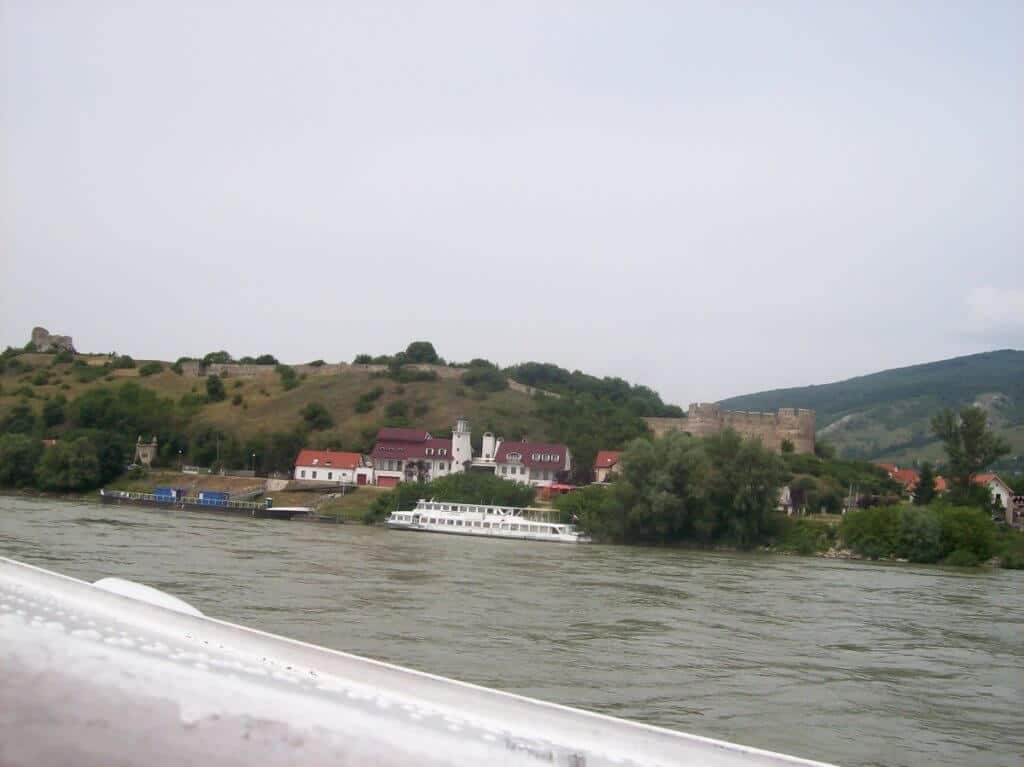
We did not ride this route, but did see some of the scenery during our return from Budapest to Vienna, which we took by hydrofoil. Expect to ride along the numerous side arms of the Danube in this area.
The Roman Castle Kelemantia is a world UNESCO heritage site, a great spot to visit if you have an interest in history and architecture, and it is easy to reach by cyclists, as it is next to the cycle path, and then from the parking lot, a nice 1.5 km walk.
Located in the Slovak Territory on the north side of the river, this was a former Roman camp. Its main purpose was to guard the nearby settlements from their enemies. It is being restored, and there are signboards explaining its history.
Danube Bike Trail inland route
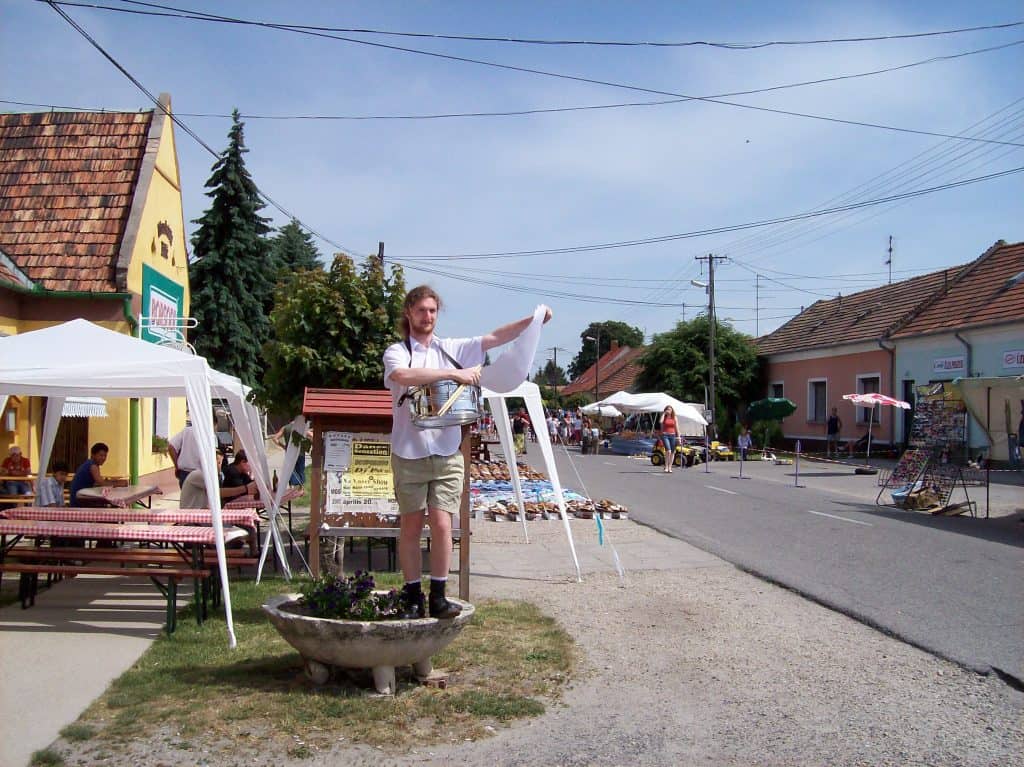
The first town we encountered in Hungary was Raika, just over the border. There was kind of a street market going on as we cycled down the main street. Wanting a lunch stop, we picked a pizza restaurant so that it would be easy to order as the owners did not speak English. Food prices were exceptionally low.
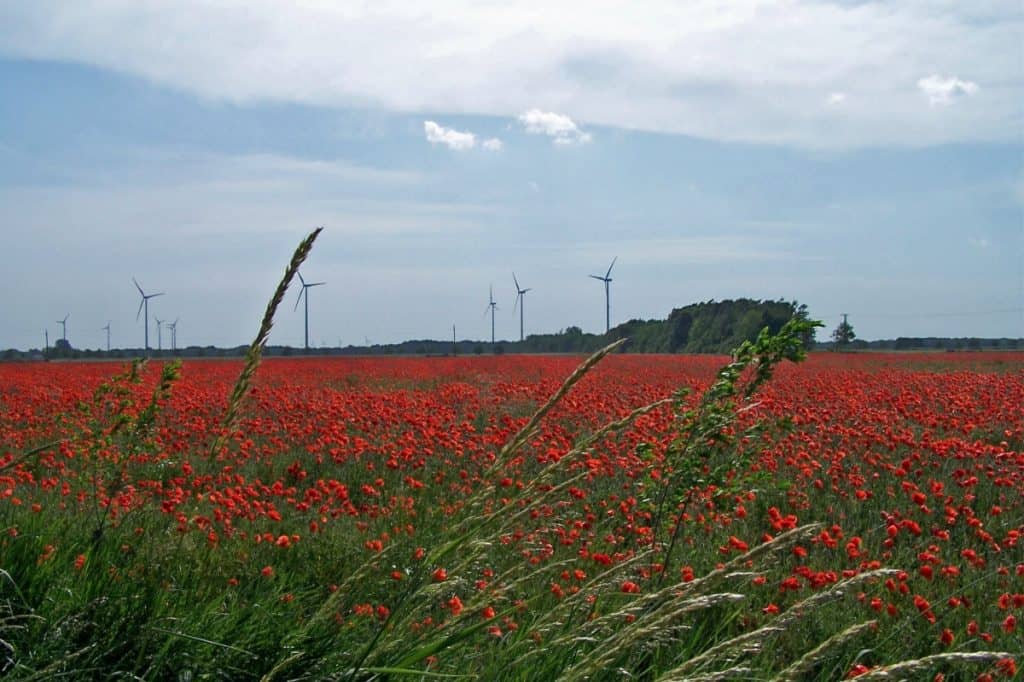
Mosonmagyarovar
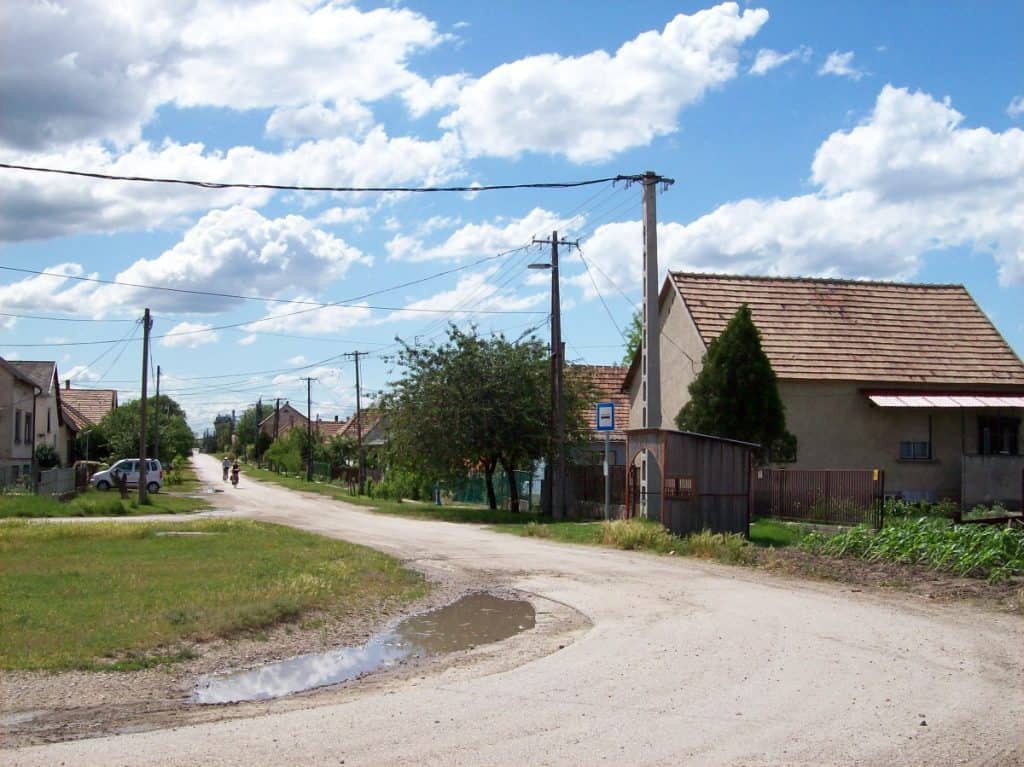
The Hungarian section is on mostly paved country roads with a few busy sections, a short dirt trail, and a paved bicycle trail leaving Mosonmagyarovar. All the hotels offered places for us to lock up our bicycles at night, as they catered to cyclists, and we had advised in advance that we were cyclists.
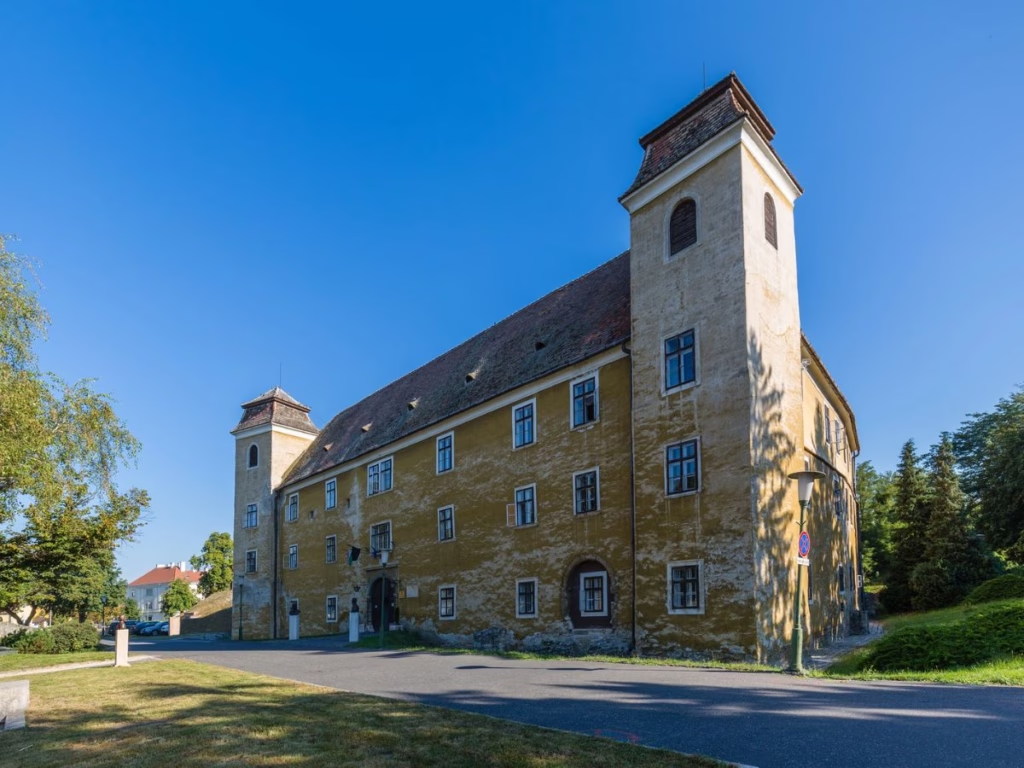
In Mosonmagyarovar, we stayed at the Panorama Hotel, which had a lovely dining area where I am sure most of the other guests were cyclists.
The local people, although they did not speak English, knew where the bicycle tour route went and would point out directions as we cycled along. In one spot, we stopped to view our map on a quiet country road, and a guy stopped his car in the middle of the road and walked over and pointed us in the right direction. I didn’t tell him that we were just taking a break and were not lost. I appreciated his effort.
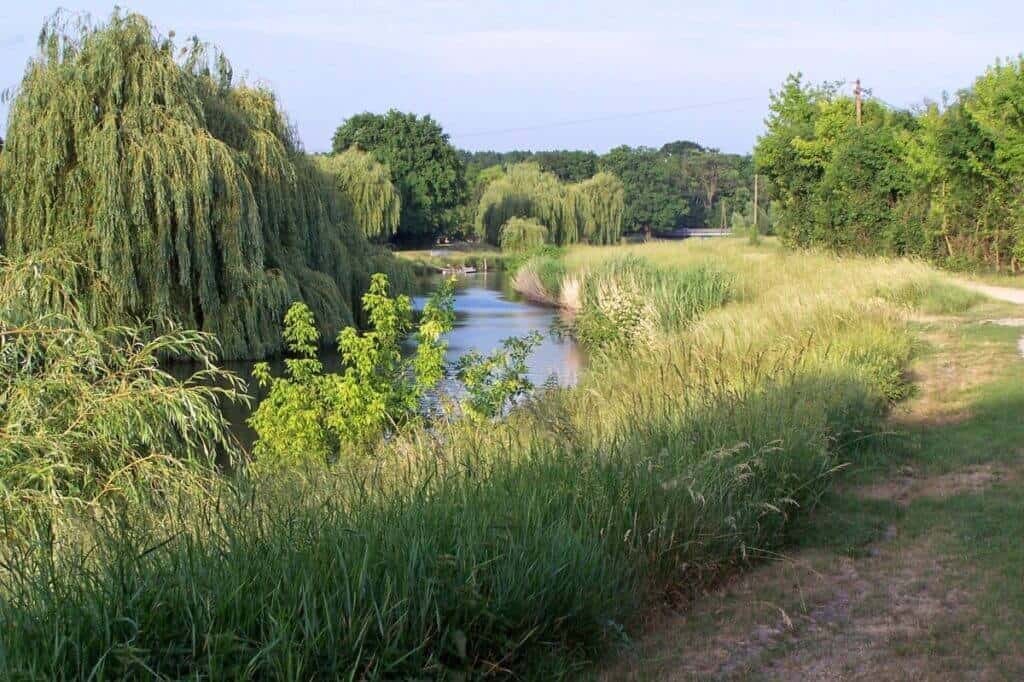
Our first stop on the Hungarian bicycle tour was in Mosonmagyarovar, a small city ringed with canals, where we stayed at the Hotel Panorama, a lovely hotel overlooking the canals.
Gyor
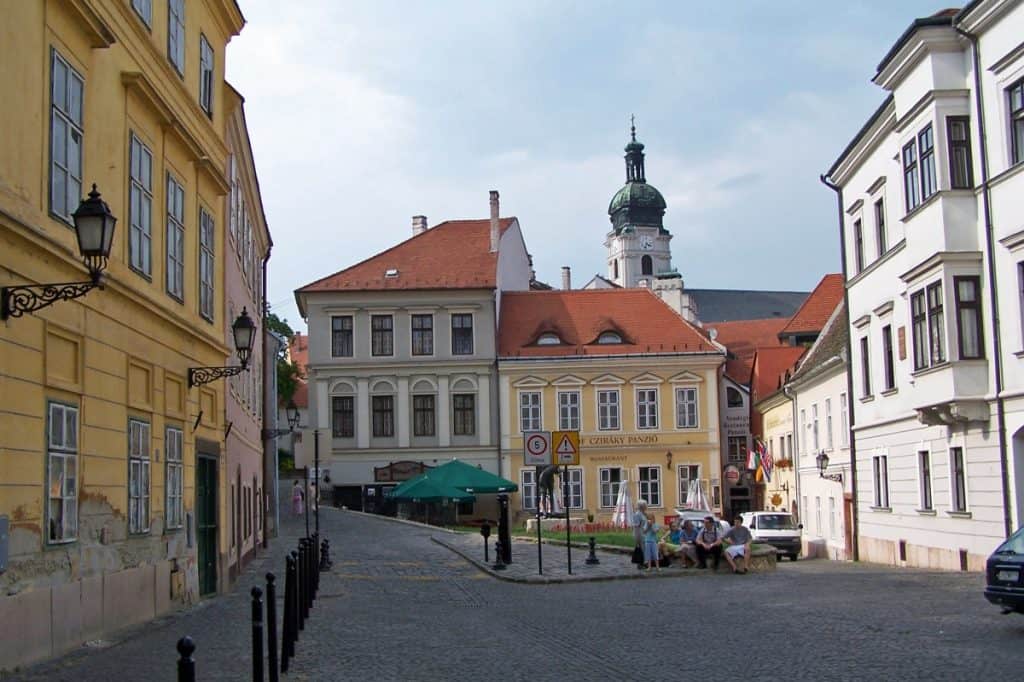
Leaving town the following day, we were on bicycle trails for most of the first part of the day and passed through several charming villages and past Hedevar Castle, although it was not open during our visit. We continued our ride to Györ.
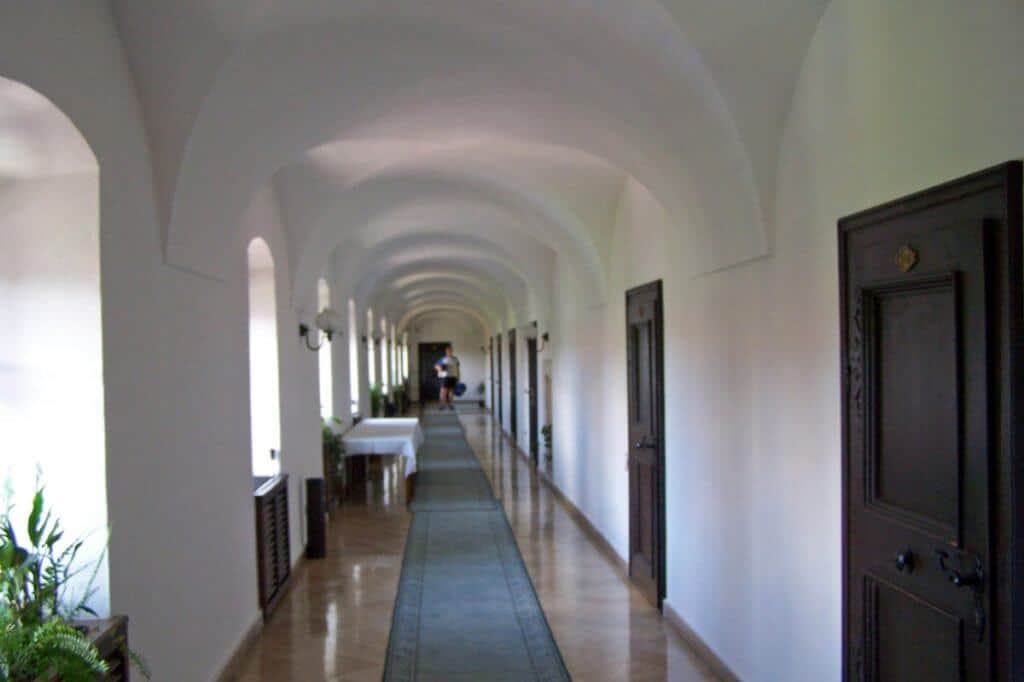
In Györ, we stayed at the Hotel Klastrom, which was a former Carmelite Monastery converted into a hotel with a main courtyard and a garden with a bar. The hotel is right in the city center, and you can easily walk along the pedestrian-only streets nearby.
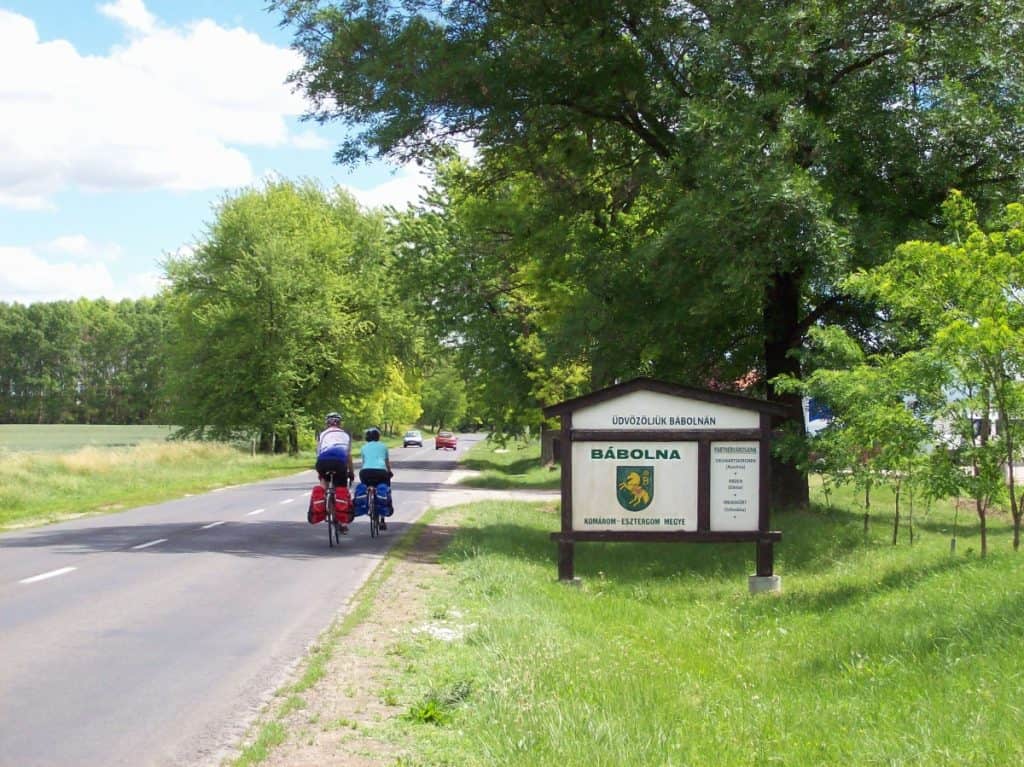
Babolna
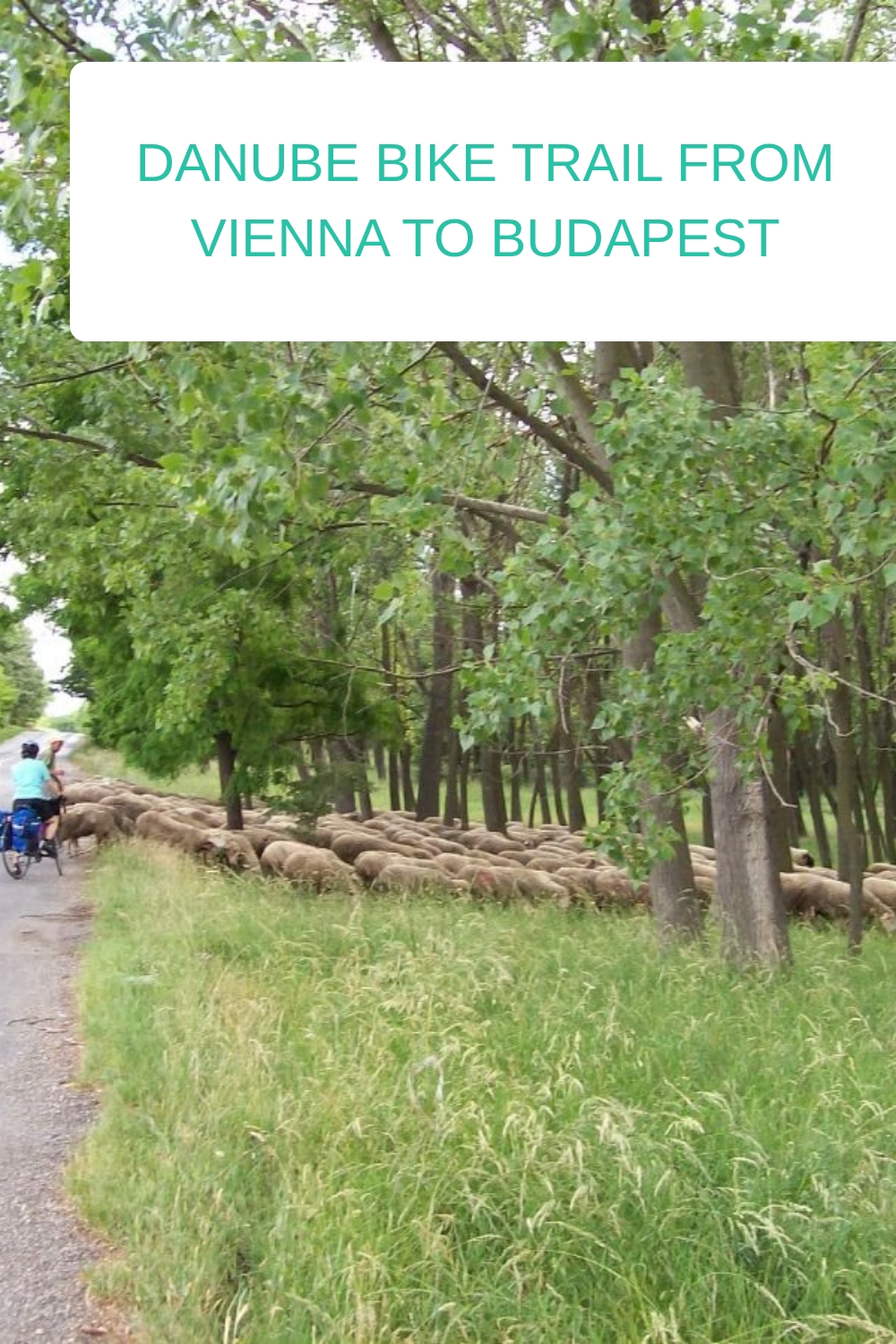
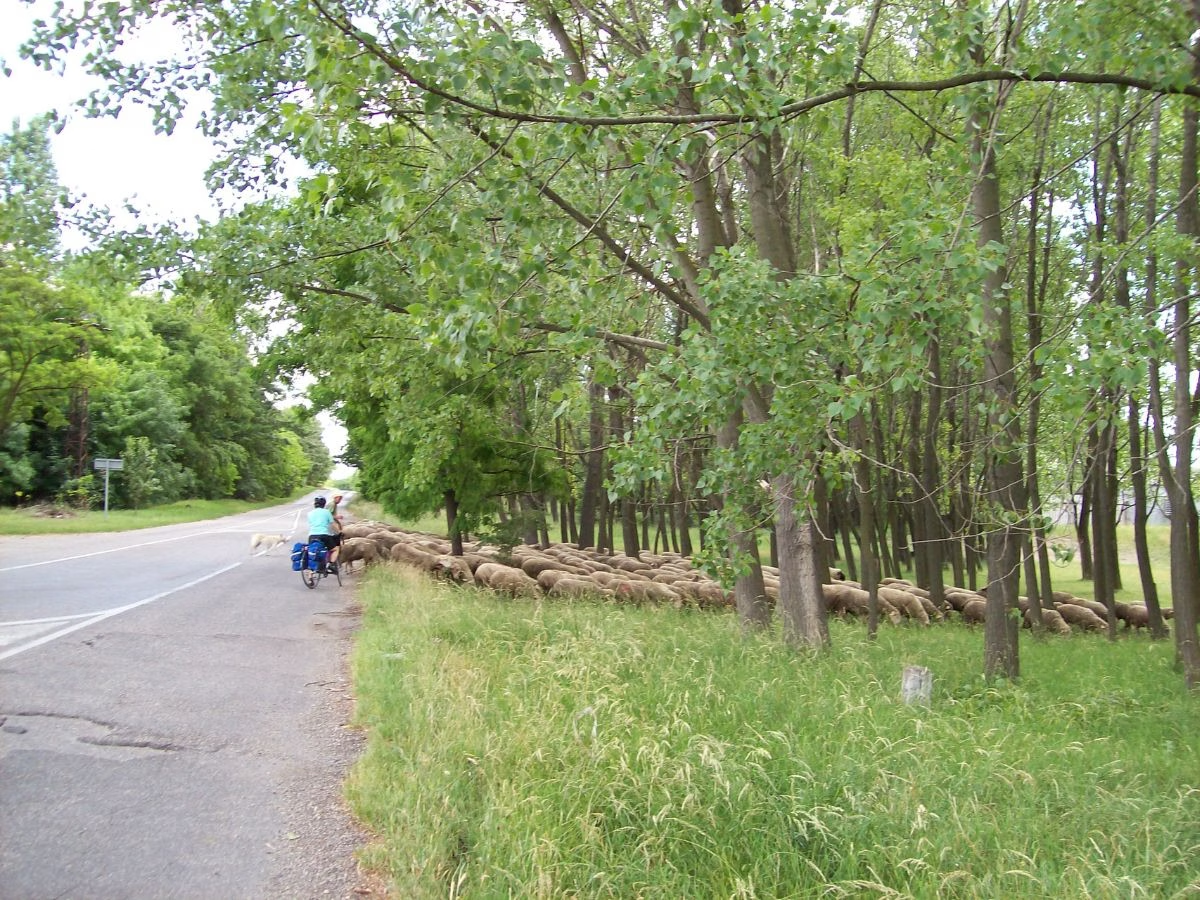
We then continued through the small town of Babolna, an area known for its horse farms on some gently rolling terrain and low hills, where we stopped for lunch. More quaint towns as we cycled along quiet roads to Tata, and in one place were stopped by a flock of sheep on the road.
Tata
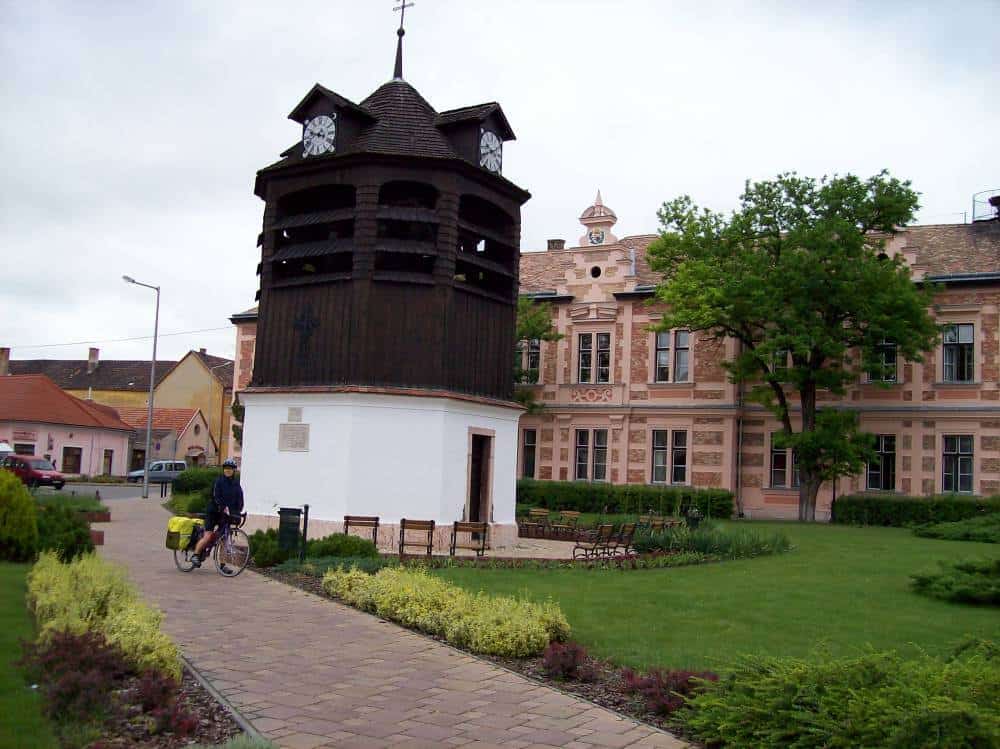
Then we reached Tata, located on a large lake surrounded by museums and the famous castle. Tata Castle was built in the 14th century, and you can walk around the lakeside grounds. I wish we had booked a 2-night stay in Tata, so interesting.
The Hotel Penta Lux was difficult to locate, being a few kilometers off the bike route, so I was glad we had reserved rooms, and the hotel had a swimming pool as well. There were several restaurants within walking distance.
Leaving Tata, the bike route took us right past the distinctive Haranelab clock tower, and you may wish to stop and listen to the chimes.
Hungarian Wine Region
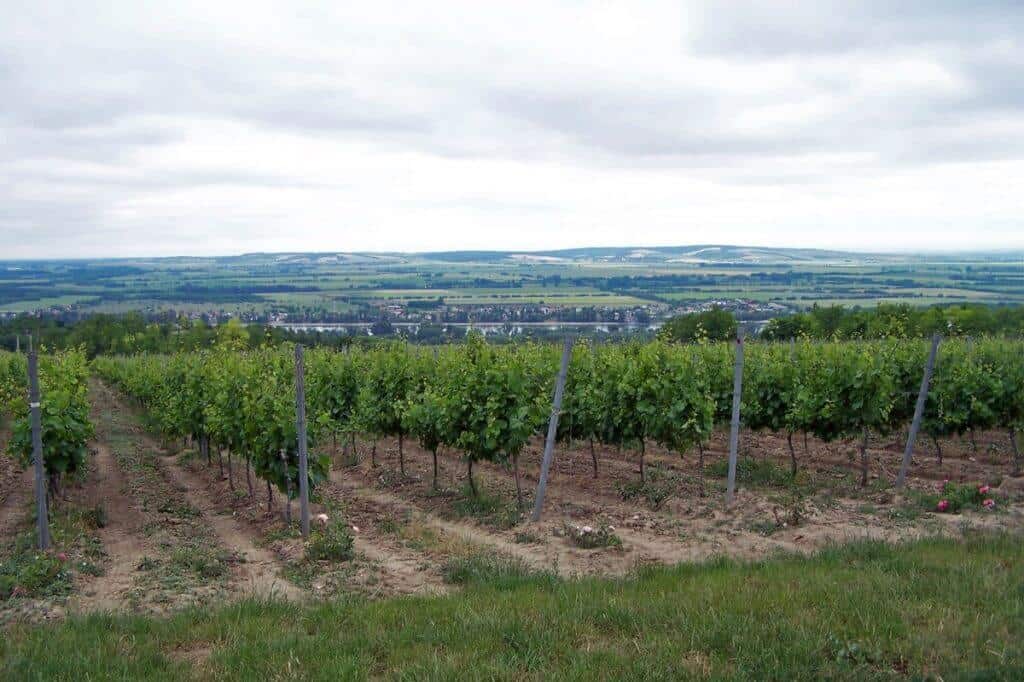
Our next day began as we climbed a few major hills into the Hungarian wine region, which provided some great views of the surrounding countryside. This was followed by a long winding descent. We stopped at a small cafe for lunch, and although they didn’t speak English, it worked out okay; a very basic choice of food items.
Esztergom
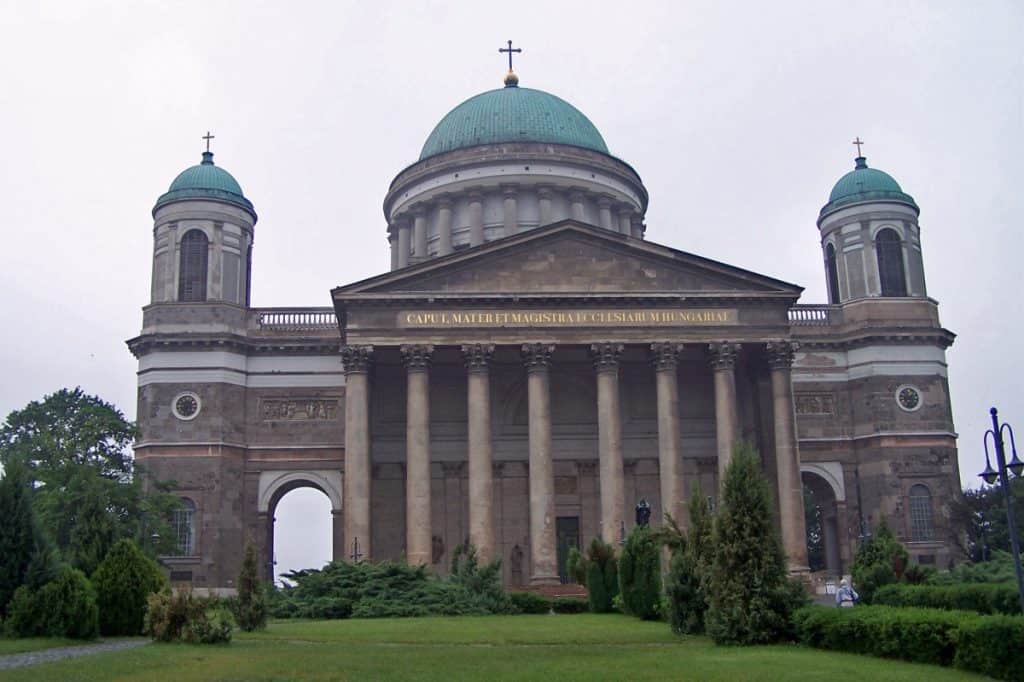
Returning to the scenic river banks of the Danube, we cycled on to Esztergom, which is a busy little city known as the Rome of Hungary. My accommodation was the Ria Panzio, a guesthouse near the center.
You will need plenty of time here because crowning the nearby hill is one of the must-see stops: the largest Catholic church in Hungary. You must visit the basilica and an adjoining castle, both overlooking the River Danube.
Danube Bike Trail in Budapest
Szentendre
Departing Esztergom, you are riding along what is known as the Hungarian Danube Bend. First, you reach the ruins of the 13th-century Castle of Visegrad, which means high castle. It is a bit of a hike up, but you get panoramic views of the Danube Bend and the town below. The signs do not explain the history very well, so you are really paying the low entrance fee for the view.
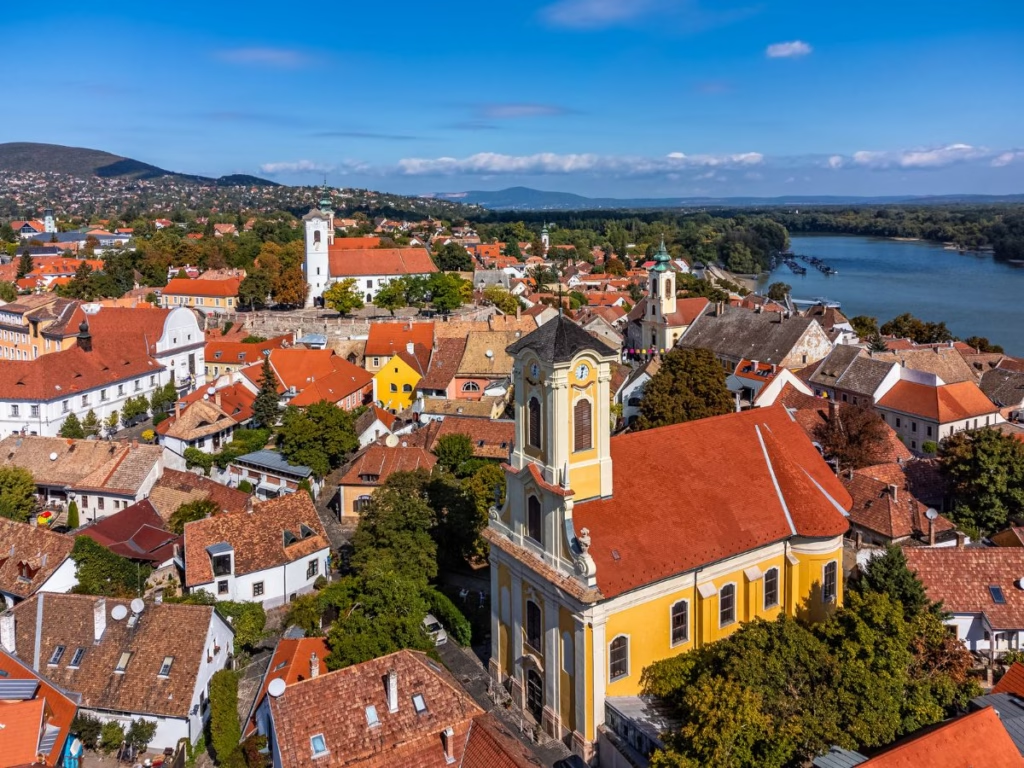
For the last part of the route, continue to the baroque old town of Szentendre, which can be busy on weekends. Do spend some time exploring the cobblestone alleys with the interesting buildings.
Budapest
The road into Budapest is partly on quiet roads, partly on a bicycle route, and with a section of the route on the edge of a very busy and dangerous highway.
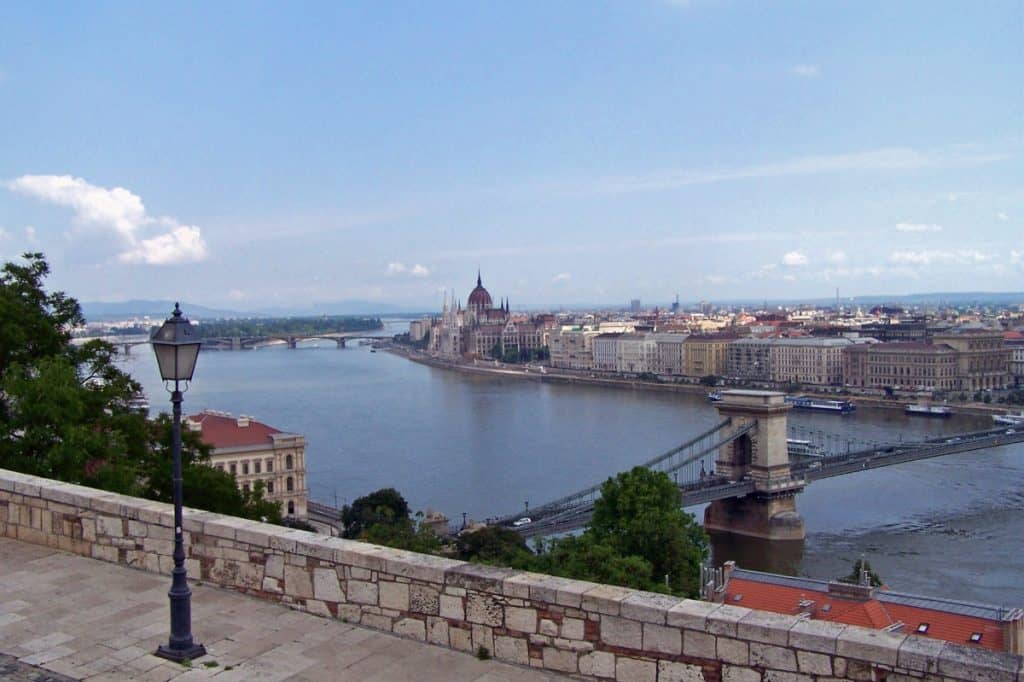
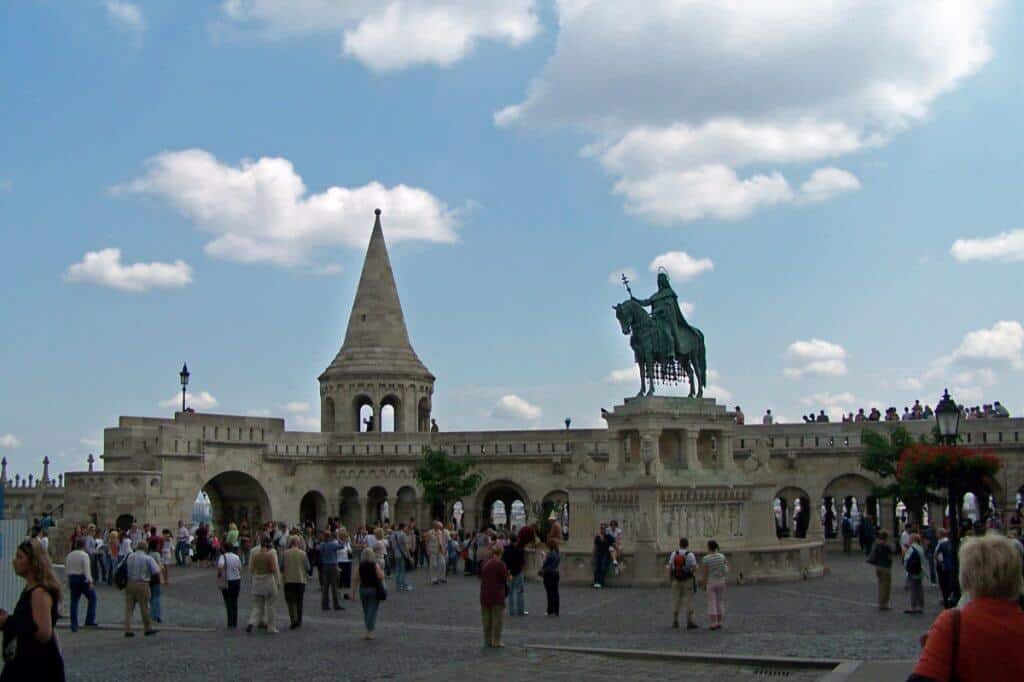
Budapest itself was easy to cycle through with bicycle trails along the Danube River. A great stop for an overnight stop or a few additional nights to explore; in particular, the absolute highlight today was the Castle District at the top of a hill with a castle, museums, and restaurants.
Hotel Kalvin House, a small property, was located near the Central Market Hall, built in the late 19th century, and is worth a visit.
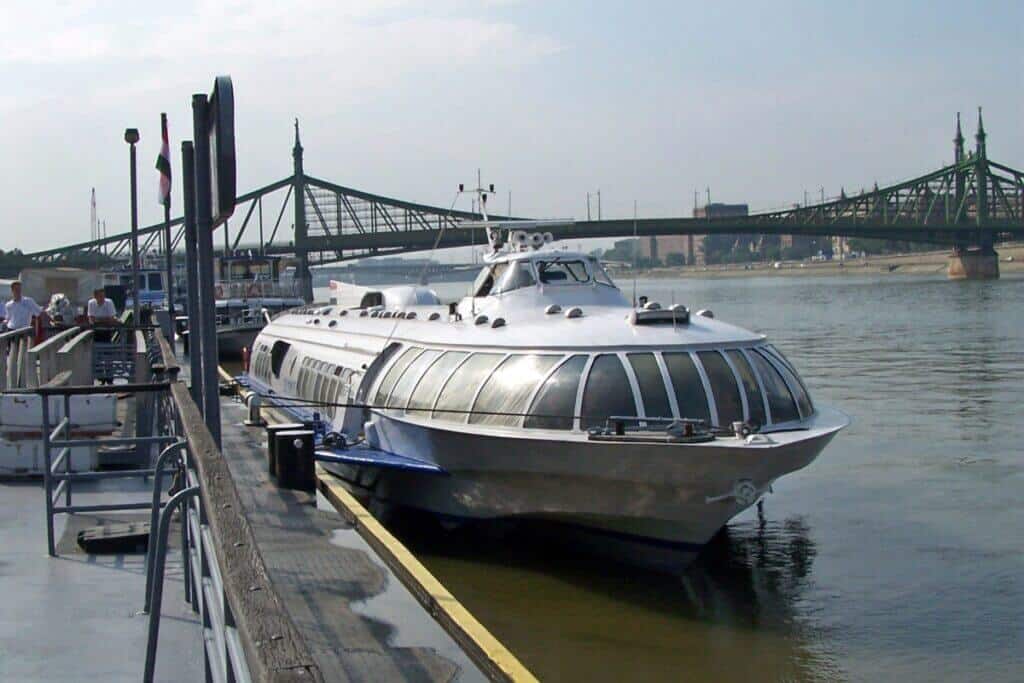
You can return to Vienna via the bicycle route along the Danube, taking about 5 days, or take a train.
We took the hydrofoil along the Danube. The hydrofoil gave us an adventure as we saw the scenery along the river, Bratislava again, but this time from the river. It dropped us and our bicycles off in central Vienna, and we cycled to our hotel. There are a lot of negative reviews about this on TripAdvisor, but we had a good time.
Danube Bike Route Accommodation
These are the places I stayed at during my cycling journey, and all had places for overnight bicycle storage. If they are not to your liking, try VRBO, booking.com, or Expedia.
Hotel Wien-Stadthalle, Vienna – located near the West Train Station and walkable to the city center.
Gasthof zum Goldener Anker, Hainburg – my first choice, but full, so stayed in Hotel Konig
Hotel Konig, Bad Deutsch Altenburg – good location near bike route and river
Panorama Hotel, Mosonmagyarovar – seemed every cyclist on the Danube route was staying here, and we all dined at the hotel restaurant.
Hotel Klastrom, Györ – a former monastery with a nice courtyard in the middle of the city.
Hotel Penta Lux, Tata – nice hotel, but a few kilometers off the bike route
Ria Panzio, Esztergom – difficult to find a place that stores bicycles, so glad to find this hotel near the center.
Hotel Kalvin House – located near the Central Market and with a bike lane connecting it with the main train station.
Danube Cycling Route Map from Vienna to Budapest
Other Resources for Your Danube Bike Trip
BikesBooking – bicycle rentals in both Vienna and Budapest
Trip.com – train connections for your trip to return to Vienna
Danube River Guided Bike and River Cruise – includes both the Austrian and Hungarian sections to Budapest.
Bikeline Bike Trail Vienna to Budapest – this is the guide I used because of the detailed maps, important as Hungary lacked signage in many areas
Danube Cycleway – not as current, but features a longer route from the Black Forest to Budapest
Travel Insurance – a good investment since you are visiting several countries
FAQs: Danube Cycle Path Vienna to Budapest
How long does it take to cycle from Vienna to Budapest?
Most people take about one week to cycle from Vienna to Budapest. Plus, many stay extra days to visit both cities.
Is the Danube Cycle Path from Vienna to Budapest flat?
Mostly yes, but there are a few hills in the Hungarian wine country between Tata and the Danube River.
Which Danube Cycle Path route from Vienna to Budapest is best?
The inland route includes Györ and Tata, is much more scenic and has a lot of history.
Best time to cycle from Vienna to Budapest?
There is limited accommodation for cyclists along the route, and the summer high season is busy, so consider May/June or September/October.
Looking for more information on cycling in Austria?
If you’re planning a bike trip to Austria and want more information, consider some of my other posts:
- Start in Passau instead of Vienna, taking the Danube River Bike Route
- The Adige Bicycle Path starts in Austria and heads to Verona in Italy
- In the Salzburg region, the Tauern Bicycle Trail heads north to the Danube
- Also in the Salzburg Lake District is the Salzkammergut Bike Route
- Finding accommodation can be tough at times on this route, so check out how I found good hotels for cyclists
Wrap-up: Danube Bike Trail from Vienna to Budapest
While a GPS is helpful, it is also a good idea to have route maps while in Hungary, as signage is very limited. I used the Bikeline Danube Trail #3 with its very detailed maps. Not as detailed but also with good information is The Danube Cycleway.
You also might want to read about our experiences on the Danube Bike route from Passau to Vienna. The Danube Bike Trail Hungary section is tougher to follow than the Austrian section, but this cycling holiday offered us vineyards, historic castles, elegant cathedrals, interesting cities, and very scenic countryside, and I recommend it.