
Are you interested in cycling the Rhine River route?
You have certainly come to the right place because, with 3 friends, I rode the Rhine cycle route to Lake Constance, which I circled on another bike route. I stopped for extra nights to further explore some of the towns along the way, including Strasbourg, Basel, and Konstanz.
This is one of the most popular cycling routes in Europe and follows one of the largest rivers, although the Volga, the Danube (see my posts), and others are longer.
Use this helpful guide to plan your own bicycle tour, which includes 5 European countries. The route often splits, so there are trails on both sides of the river, so I will advise which side of the river I cycled.
Introduction to the Rhine Cycle Route
Distance – 1,232 km (766 miles) through the Central European countries of Switzerland, Austria, Germany, France, and the Netherlands
Terrain – generally flat or gently rolling with some hills near Basle and Konstanz
Surface – a combination of bicycle paths, mostly paved (some hard-packed sections), and quiet local roads
Best for – bicycle touring, families
Bicycle Touring the Rhine Cycle Route from Andermatt in Switzerland to Hoek Van Holland in the Netherlands, a distance of 1,232 km through the heart of Europe. During my September ride, the route had a bonus as it was busy with many local festivals.
Insider tip: For my cycle tour, I headed south, which was most likely a bad decision but still worked out okay. Most riders head the opposite way from Andermatt to Lake Constance to Basle and then north to the Netherlands.
The Rhine Cycling Route Guide available from Amazon is broken down into stages and includes maps.
Cycling from the North Sea to Koblenz

The starting point for me along the Rhine Cycle Route was at the mouth of the Rhine in Hoek van Holland. This Lower Rhine town has a metro station on Line B of the Rotterdam Metro with train connections to Amsterdam, Brussels, and Paris, plus boat service to England.
Following bike trails through Rotterdam, I continued passing the site of the Battle of Arnhem, famous in WWII.
I was riding through some of the largest cities in Germany, including Düsseldorf, Cologne, Bonn, and Koblenz.
Riding through the Upper Middle Rhine Valley
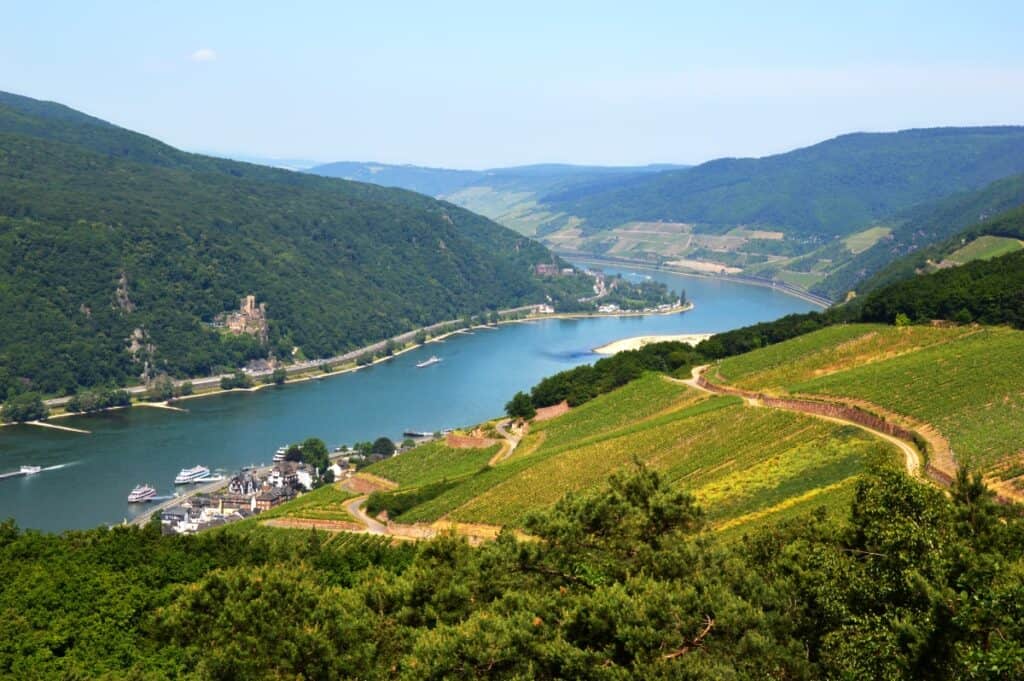
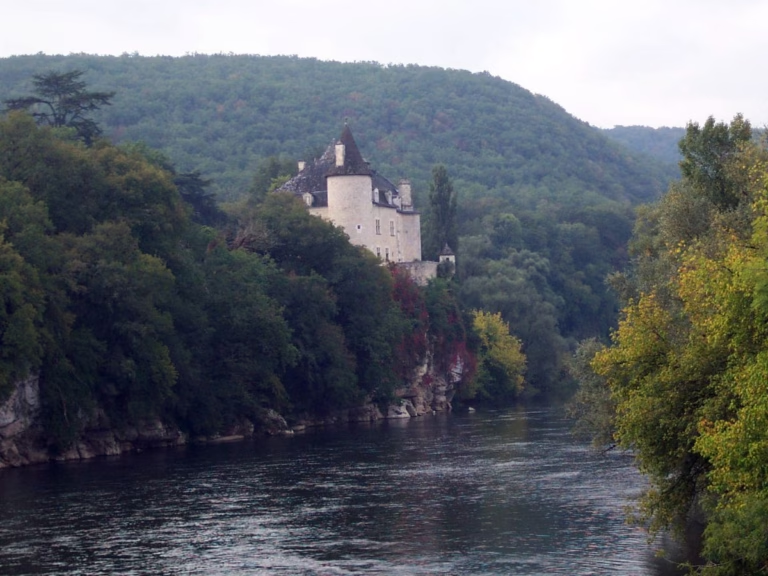
The next stage for 67 km is a UNESCO World Heritage Site, which is considered the most scenic by many people. Known as the Upper Middle Rhine Valley, along this section from Koblenz to Bingen, you can expect panoramic views with castles, historic towns, and vineyards. So when you overnight in these picturesque towns, be sure to enjoy a glass of wine.
Just past Bingen, I arrived at the city of Mainz with connections to Frankfurt Airport. Take time to visit the medieval market square and the old town with the half-timbered houses.
Heading along the banks of the river, you arrive in Mannheim, where a lot of additional water flows into the Rhine, and the Neckar Valley Cycling Route also connects. I did visit the Planken shopping street and Marktplatz Square, but the main attraction here is the Romanesque Water Tower surrounded by impressive gardens.
I continued to admire the beauty of the river landscape with France on my right and the Black Forest of Germany on the left until I reached Strasbourg.
Cycling in Strasbourg
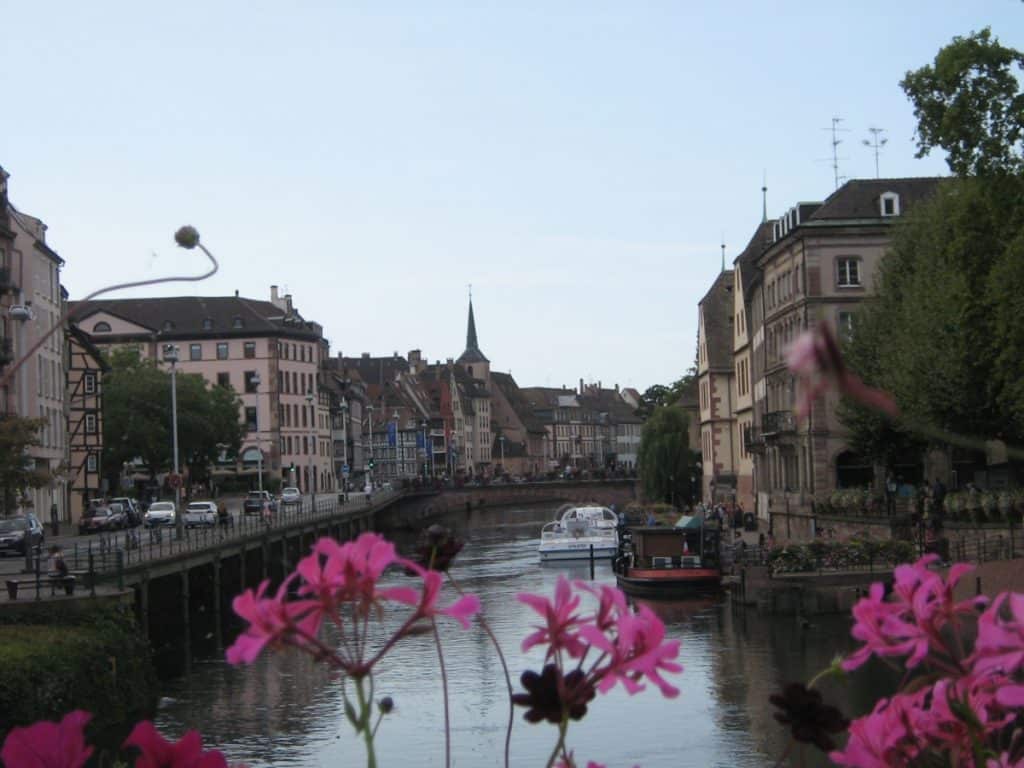
I spent an extra day in Strasbourg, having breakfast in the medieval heart of the town. From the city centre, I mounted my bicycle for a ride to look at the European Parliament surrounded by canals, which were easy to find following the numerous bike signs.
I returned riding along the canals of the quaint Petit France district. There were signed bicycle lanes everywhere, and it was easy to get about, which is why it is considered one of the most bike-friendly cities in the world.
If you want to take a break from cycling, there is a Strasbourg walking tour available. Even better, how about a Grande-Île & Neustadt Guided Sightseeing Cruise?
We stayed at Le Gillon Hotel, centrally located and bike-friendly.
Strasbourg to Breisgau on the Rhine Bike Route

I departed the next morning along the Canal Du Rhone-Au-Rhin in France, also signed as Eurovelo 15. The EuroVelo network is a series of bicycle routes crossing several European countries.
The paved bicycle path follows the canal for about 70 km, very straight and flat, flanked by majestic trees for much of the way. While the route continued on the French side of the river, we took a short section on the road to reach a bridge (with bike lanes) to Breisgau for another night along the Rhine River.
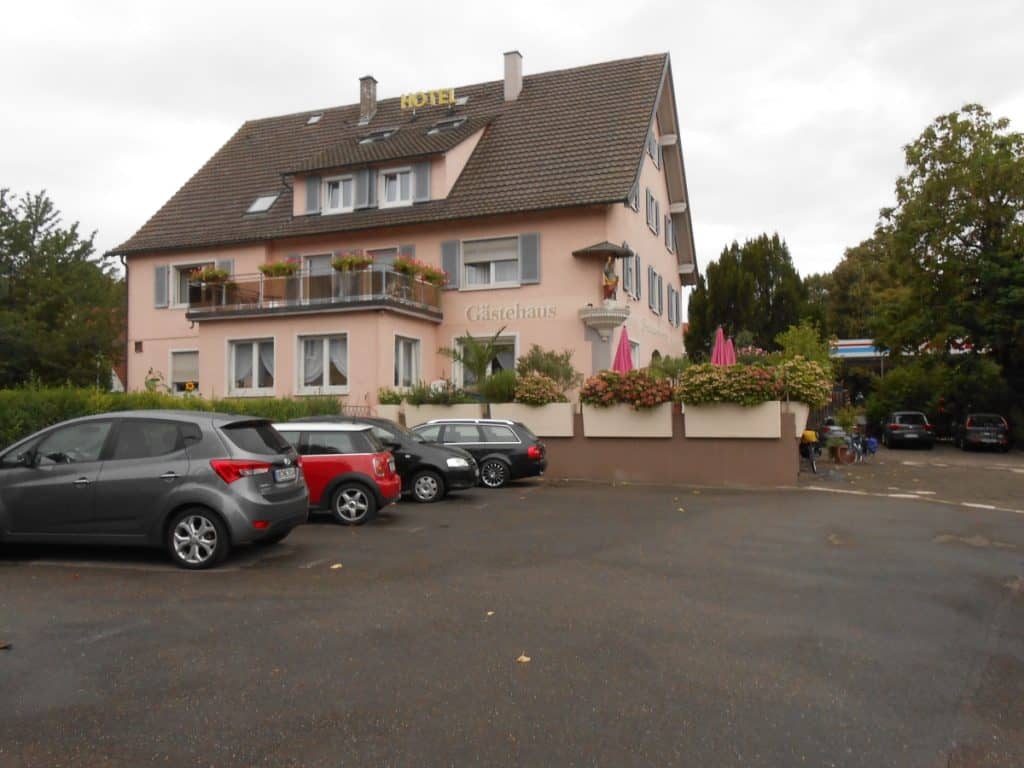
I had reserved the Hotel Breisacherhof in Breisgau using the German Cycling Club Bett + Bike section, which is also in English and suggests cycle-friendly accommodation. Indeed, although our hosts did not speak English, I was expected, and they provided a garage to store my bike overnight.
The nearby pedestrian-only street provided many restaurants and a nice spot for a drink and dinner. Then there was a short hilltop walk for excellent views of the countryside and cruise boats on the Rhine, plus a visit to the cathedral, which dominates the town.
Breisgau to Basel along EuroVelo 15

The German side of the Rhine River route to Basel is along the edge of the Black Forest with a combination of paved, hard-paved, gravel, and cobblestone surfaces, so this day of riding still took some getting used to with the loaded panniers. At times, the beautiful landscape revealed vineyards on the slopes.
I saw plenty of others bicycle touring and met cyclists from Norway, Australia, and elsewhere, mostly heading in the opposite direction. I was following the river, which is constantly on my right side, and riding mostly through flat forested terrain.
Visiting Basel

In Basel, I reached the Three Countries Bridge, which connects to the French side for riders who have followed the canal from Colmar (mostly hard-packed). I, however, stopped in Basel for 2 nights to explore the city, staying in a very bold-colored B&B near the waterfront. The main square featured an impressive city hall, a historic building.
I headed to the tourist board, which offers inexpensive guided walking tours in English and German of the central part of the city, and it is well worth the time. I was surprised at what an interesting city this turned out to be.
Insider tip: For the best free entertainment, go for a walk along the river in the evening, and everyone is there. I mean, it was crowded, and do take a picnic as many do while enjoying the view.
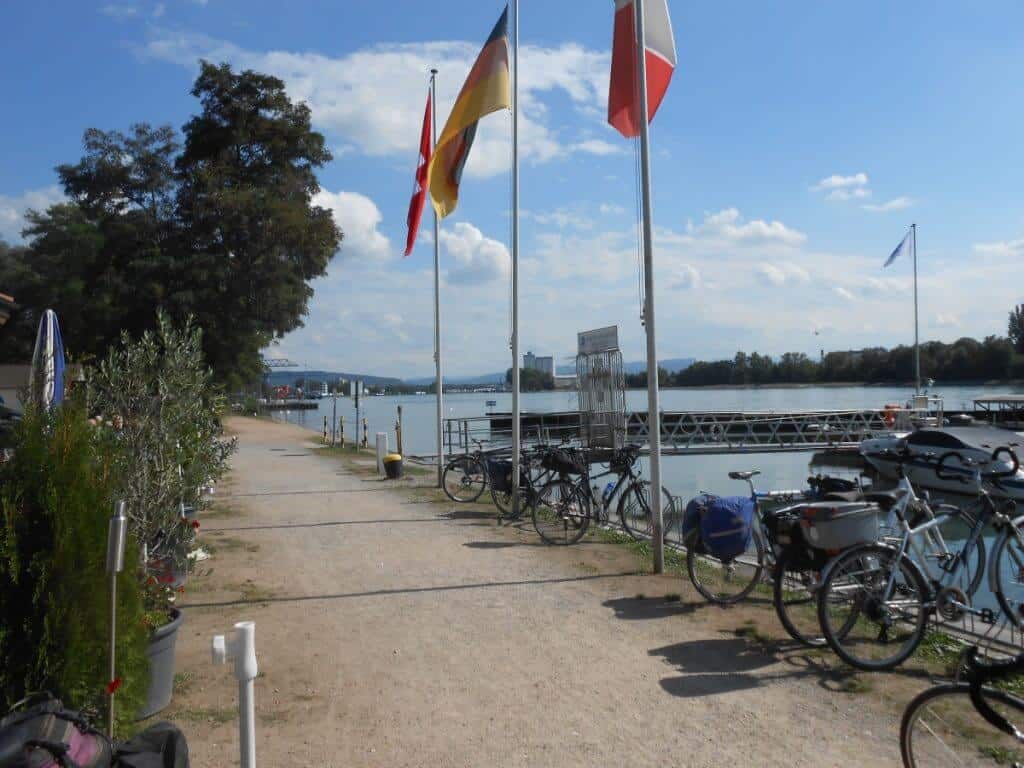
I left Basel on a bike trip on the north side of the river for 20 km to the village of Augst. Another option is to go to the south bank for ruins from Roman times at Augusta Raurica. It was the oldest known Roman colony on the Rhine.
Basel to Waldshut via the Rhine Cycling Route
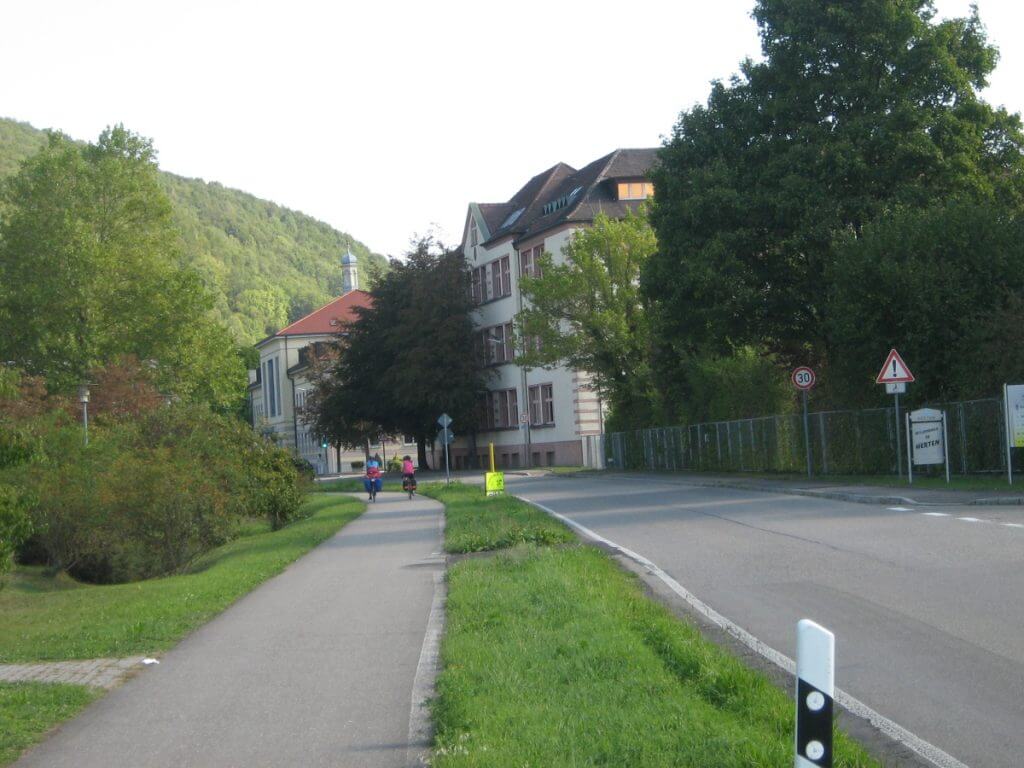
If departing Basel on the German side, it is signed as the Rhine Route/Eurovelo 15, while the route in Switzerland is signed as the Swiss National Route 2/Eurovelo 6. I chose the German side and headed along a combination of country roads, quiet residential streets, and bike lanes over gently rolling terrain.
I passed through quaint medieval-style towns, corn fields, and plenty of apple orchards. It wasn’t all paved as we encountered a few hard-packed trails, which didn’t slow me down on my road bike. More open, very different terrain than the canal and forested path of the previous days.
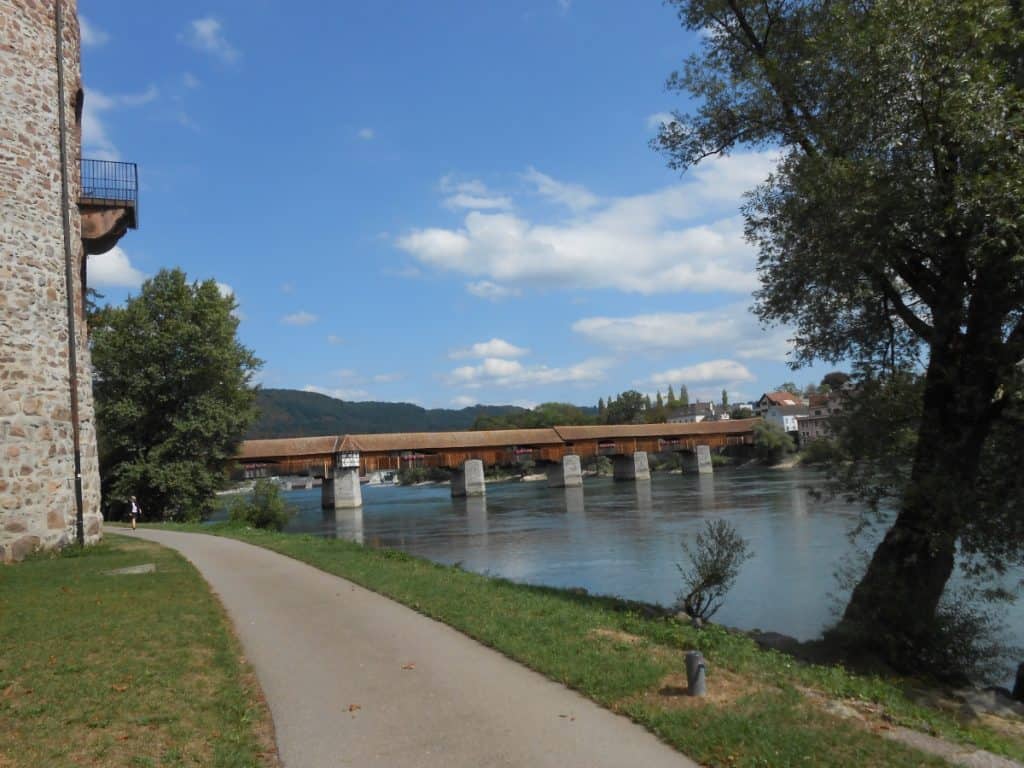
At Bad Sackingen, I stopped along the banks of the mighty Rhine to take pictures of the longest-covered wooden bridge in Europe. And further along at the historic old town of Laufenburg, the route had taken us up a small hill, so we had a spectacular view of the town on both the German and Swiss sides when descending.
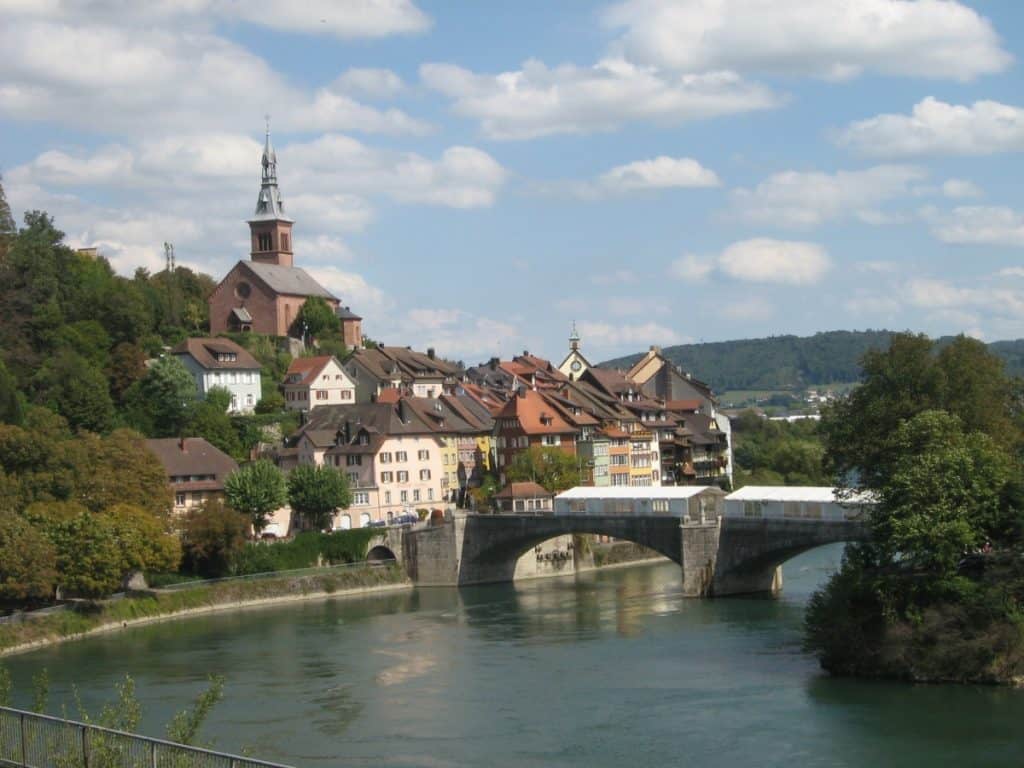
More photos here of a castle with the town tucked into a curve in the River Rhine. Then we continued through smaller towns to Waldshut and the hotel I had booked. In another Bike + Bett hotel, all the other guests were bicycle touring.
Cycling Waldshut to Schaffhausen
After Waldshut, the German side of the Rhine Cycle Path heads inland, passing through small villages and a few small hills to keep things interesting. There were many apple orchards on this section of the route.
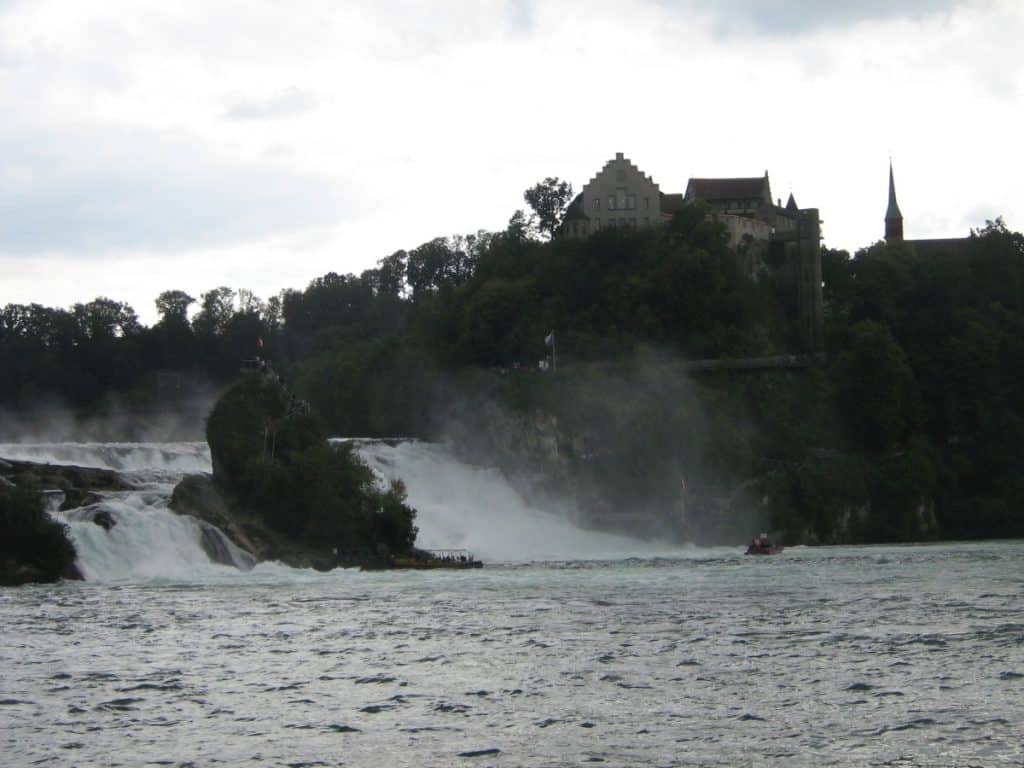
The Rhine River bike trail takes you right to the Rheinfall, a bit touristy but well worth a brief stop for pictures and lunch, as I had plenty of time. It was then up an extremely steep hill (okay, I walked my loaded bike) and over to nearby Schaffhausen, where I had accommodation booked.
The main street of the medieval town is pedestrian-only and fun to walk before tackling the stairs to take me to the Munot Fortress overlooking the town.
Schaffhausen to Konstanz

It was lightly raining as we left Schaffhausen the next morning, and I hated riding on the wet cobblestones until I reached the nearby Rhin Route, which was flat and easy.
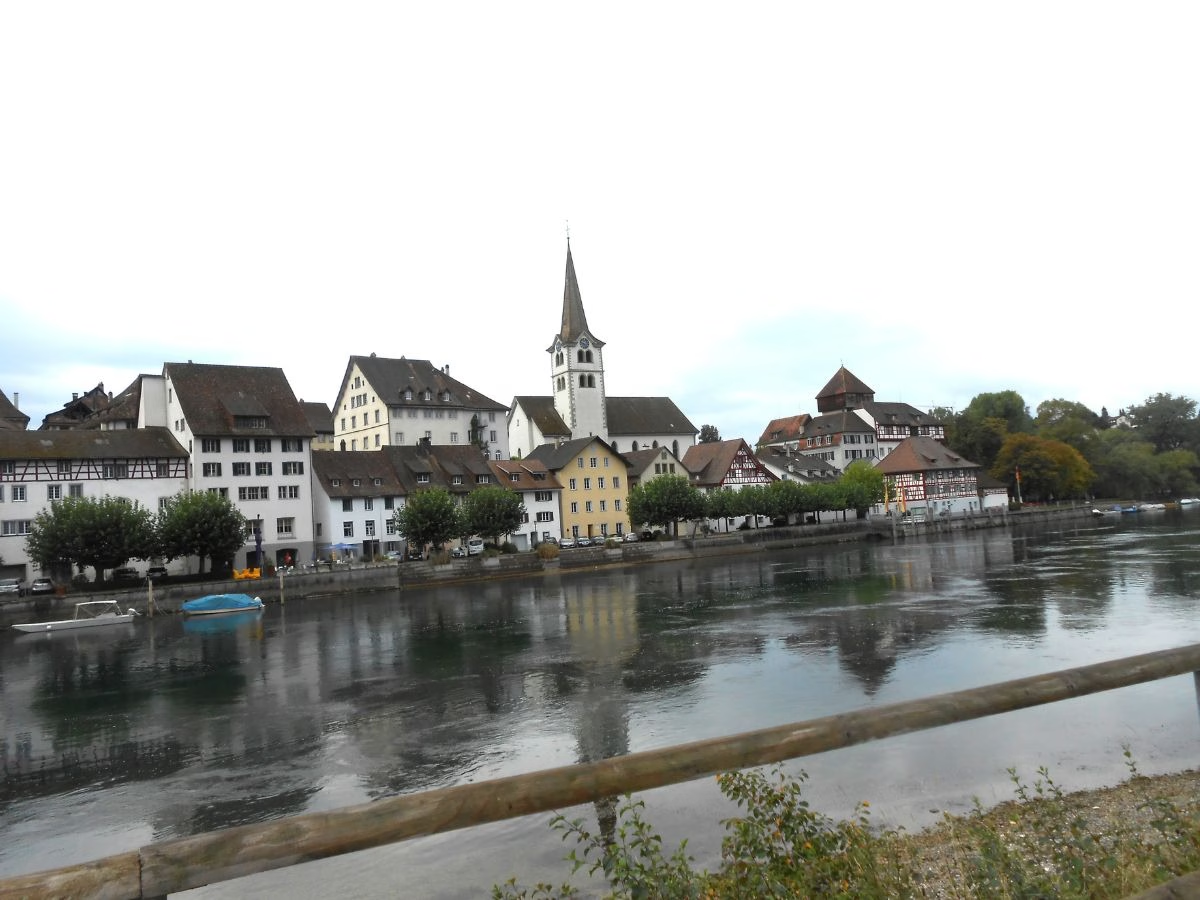
Then, through more apple orchards, a covered bridge, and a combination of a few easy hills along quiet roads or bike paths, the 25 km to Stein am Rhein, with what is considered one of the best preserved medieval centers in Germany. Still, with the heavy rain, I stopped for coffee and pastries in a cafe and was soon joined by a few other cyclists.
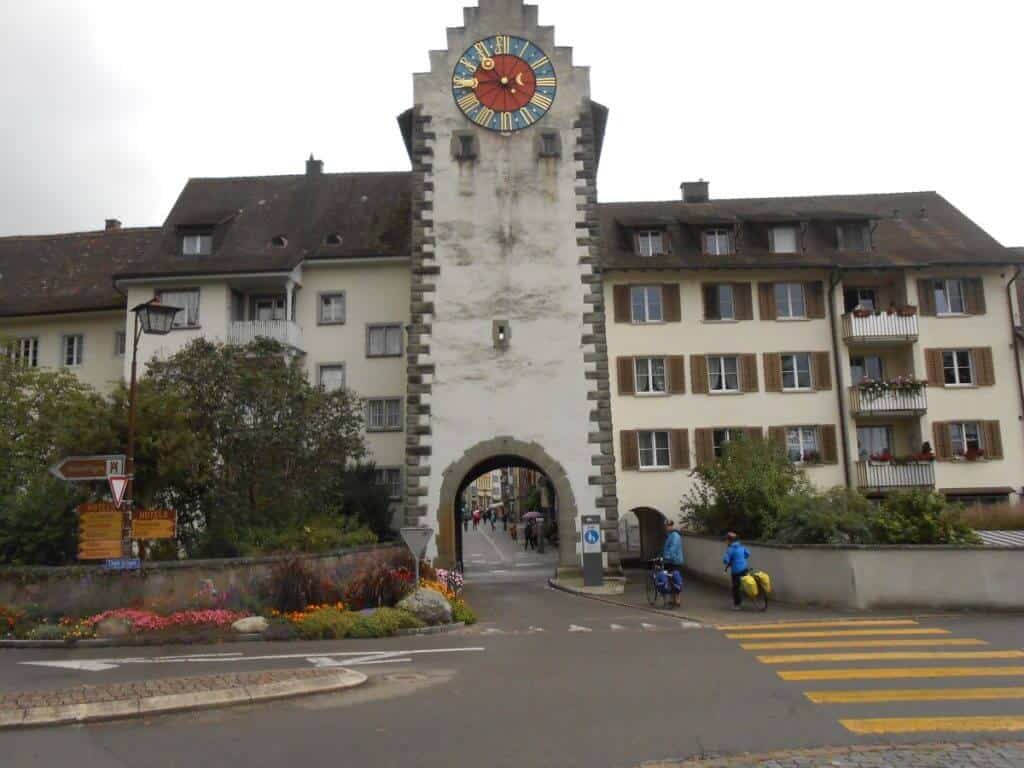
Leaving Stein am Rhein, I crossed over to the Swiss side of the river to continue my ride along the banks of the Rhine. From here to Konstanz, you are following the ever-widening river on a mostly paved section. The rain had lifted, so the views across the Rhine were awesome.
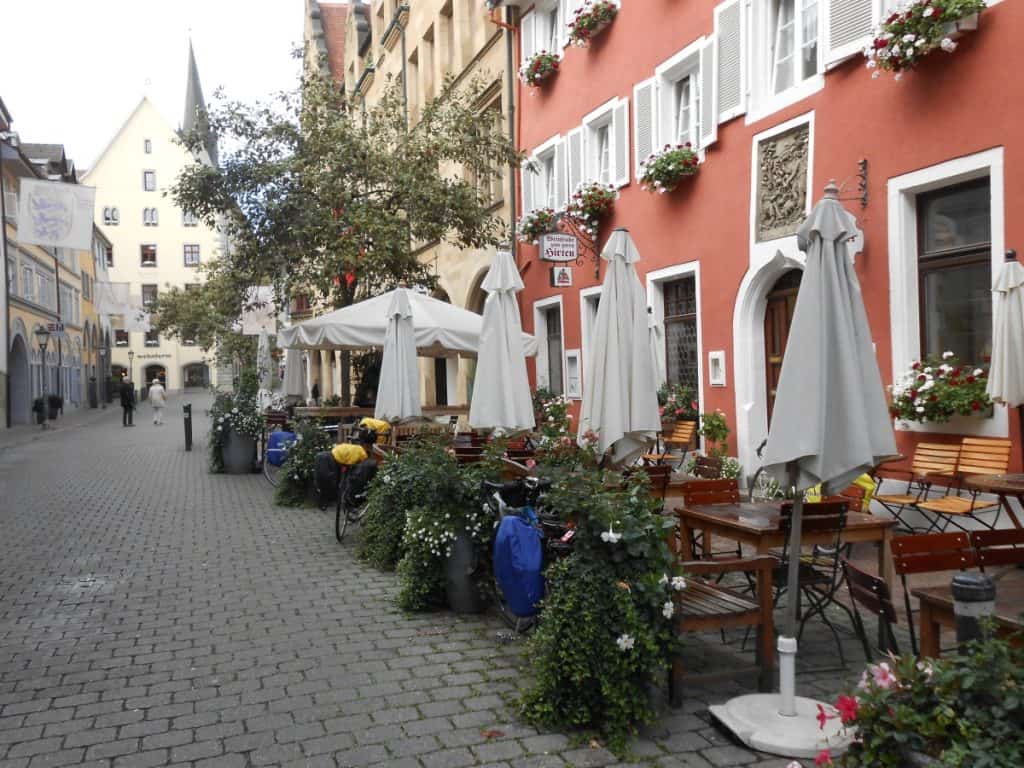
It was an easy 25 km ride into Konstanz, and our accommodation was in the center of town. I knew we picked the right hotel when I found the bike storage area already crowded. Take time to explore the busy harbor on the west end of Lake Constance, the cathedral, join a Konstanz guided tour, and of course, stop at a café for dinner.
We stayed at the Hotel Pension Gretel, well located with a bicycle storage room.
Konstanz to Meersburg Cycling
The Rhine Cycling route continues along either side of Lake Constance before heading south into Switzerland. However, I decided to cycle the entire 280 km around the lake.
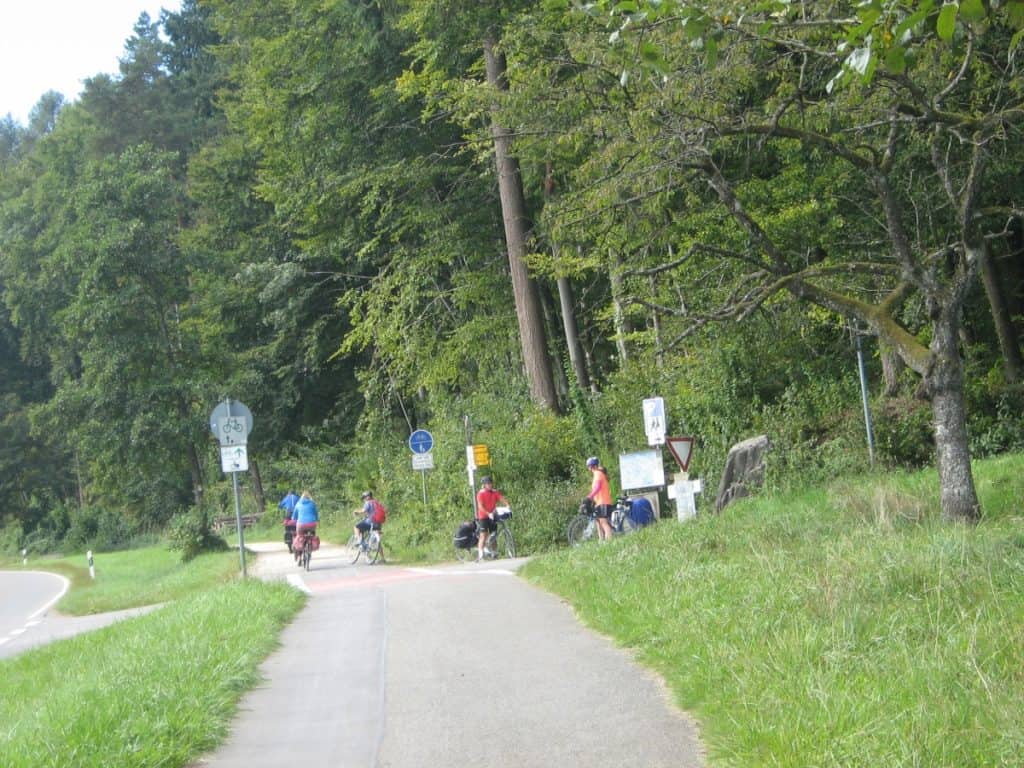
Departing Konstanz on the Bodensee Route (also signed as Eurovelo 15/Rhin Route). One big mistake I made was not stopping at Mainau Island. Cycling friends of mine did stop to see the gardens and residence, and after listening to their experience, I wish I had as well.
I headed inland and encountered my first real hill of the ride before descending to the shores of the lake again. The downhill was interesting as I was passed by about 30 school kids on bicycles and their teacher (yes, the kids were fast, but they were not on loaded bicycles).
The Lake Constance cycling route would allow us to visit 3 countries using a combination of dedicated bike paths and quiet roads close to or along the lake.
This section featured more vineyards, orchards with paved roads, or bike paths along Lake Constance, and a lot of other cyclists. It was a holiday, and this part of the route was packed with cyclists out for a day of riding. I did not have to read the bike signs; we just had to follow the other cyclists.
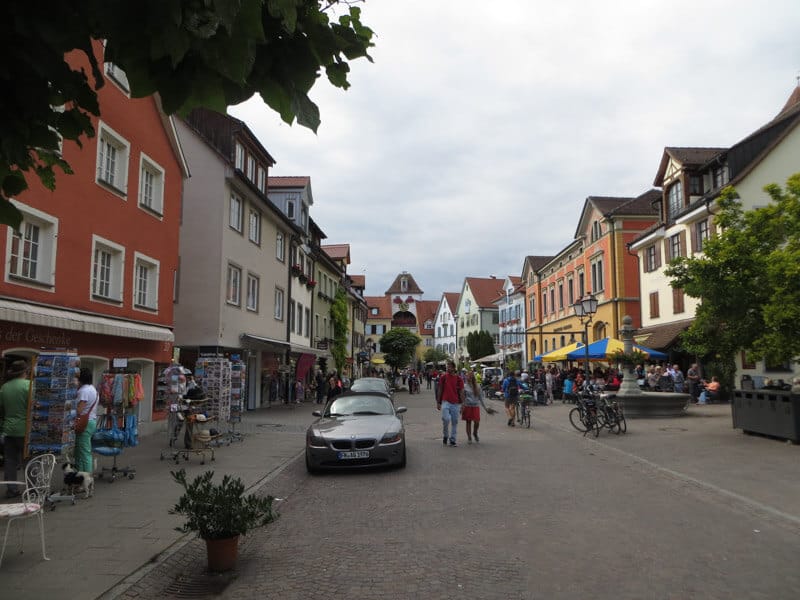
After about 70 km, we came to the walled town of Meersburg and our hotel, which we checked into before visiting the interesting hilltop castle. The castle is well worth a visit, has 33 rooms open to viewing, and we received an English-language brochure explaining the exhibits. What I like most about this castle is how close you get to the exhibits; it does not feel like a museum as some do.
We stayed at Augustin’s Hotel & Restaurant. The rooms are nice but basic with the bicycle parking down the street. The owner is more into the restaurant and the included buffet breakfast was one of the best I have ever had anywhere.
Meersburg to Bregenz Cycling
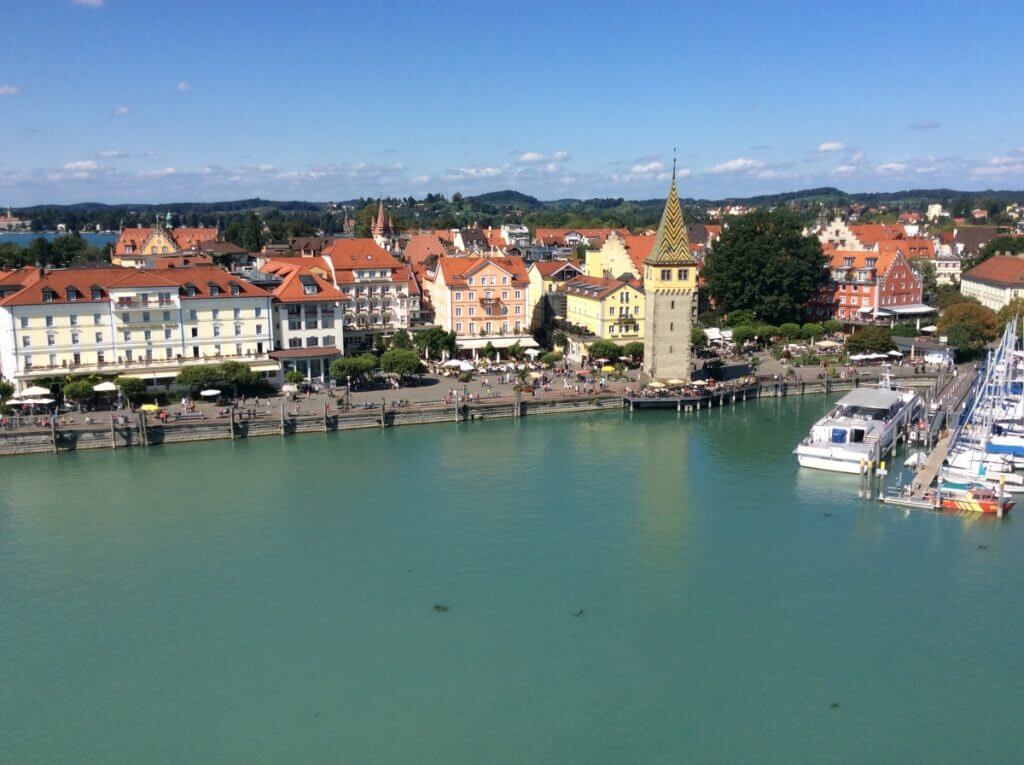
The next day, I continued riding along the flat shore of the lake again through Friedrichshafen, home of the Zeppelin Museum. This is my favorite section of the ride, with interesting buildings, parks, vineyards, and our first views of the Alps we were to see along the way.
My lunch stop was in Lindau, which is a slight side trip across the bridge to this island with a historic harbor. I consider this a must-stop, not just for the delicious ice cream but for the interesting architecture. In Lindau, there is a connection to the Bodensee to Königssee cycle route.
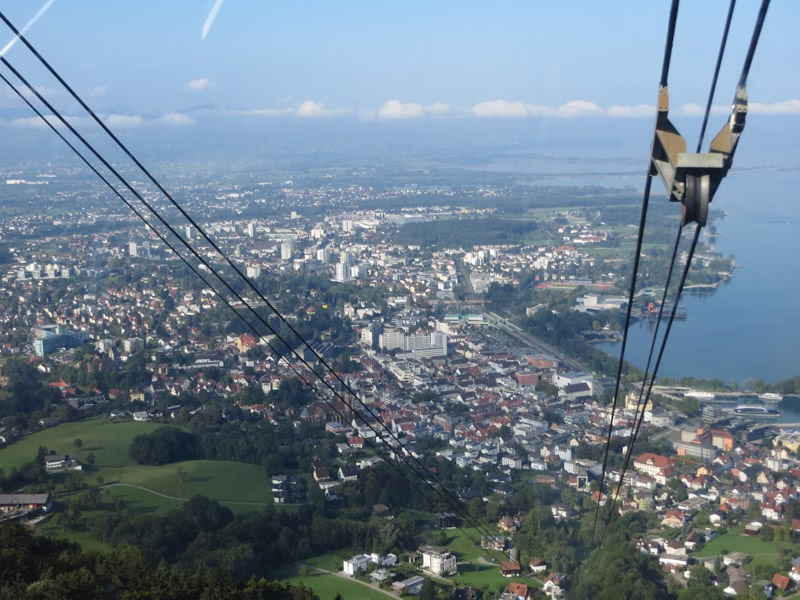
Continuing my ride, I soon came to the Austrian border and the resort town of Bregenz. If you have enough time, walk the pedestrian-only streets and take the cable car up the Alps for great views of Lake Constance.
The Pension Soone is located in the pedestrian street of Bregenz so you need to walk your bicycle to get there. No too far off the bicycle route.
Bregenz to Konstanz Cycling
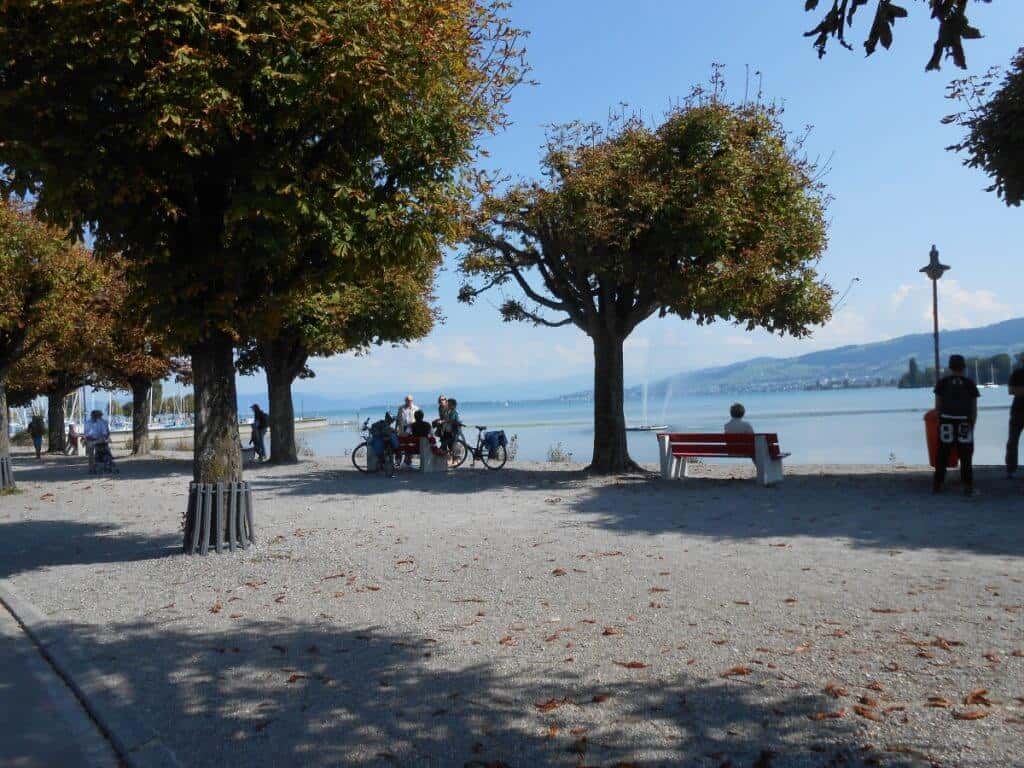
The next day, quickly riding over flat terrain brought me to where the Rhine River enters Lake Constance, and many cyclists continue along the route towards Liechtenstein and Andermatt.
However, I continued following the south shore signed as Swiss National Route 2/Eurovelo 6, passing through many resort towns, each with a harbor full of sailboats. Easy riding, although not as scenic as the north shore, until I reached Konstanz again.
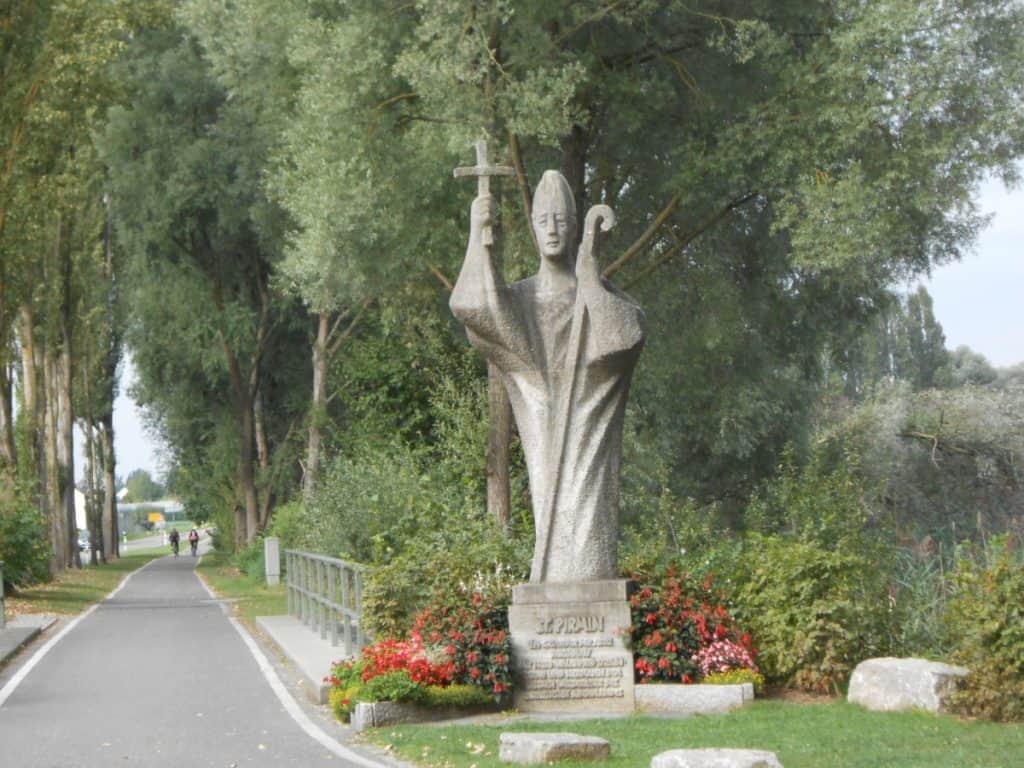
Insider Tip: An optional side trip on your bike tour is to take a short detour to Reichenau Island, a UNESCO heritage site that is reached by a causeway with a bike lane. Visit the various churches and stop for pastries at the cafe near the entrance to the island; it seemed everyone else did.
Cycling from Bregenz to Andermatt
Your bike ride continues to the final destination, the town of Andermatt, surrounded by the Swiss Alps. There is a train station if you are starting or ending your journey here. If you do want to see the source of the Rhine, that requires hiking for about two hours from the nearby Oberalp Pass.
We did not do this but continued riding around Lake Constance.
Accommodation along the Rhine
Booking.com – I use this accommodation platform due to its wide selection and support.
Expedia – lots of hotel options along the route.
VRBO – apartments and cottages in towns along the Rhine route.
HostelWorld – if you prefer hostel-style accommodation
Transportation Connections
Trip.com – I used European trains for connections from the cycle route to the airports.
Busbud – bus booking platform worldwide
FAQs: Rhine Bike Route
How long is the Rhine Cycle Route?
Over 766 miles (1,233 km) for the entire route.
Where does the Rhine Cycle Route start and end?
You can start in Andermatt, Switzerland, and follow the flow of the river as it heads west and then north, passing through Germany and France and ending in the Netherlands and the North Sea.
Can you cycle along the Rhine?
Yes, there is a 1,233 km cycle route known as the Rhine Cycle Route (or EuroVelo 15) starting in Switzerland and passing through Austria, Germany, France, and finally the Netherlands. This signed cycle path is suitable for most cyclists.
Where does EuroVelo 15 start?
EuroVelo 15, or the Rhine Cycle Route, starts in the village of Andermatt in Switzerland.
When is the best time to ride the Rhine Cycle Path?
The best time to cycle the Rhine is from May to early October; however, during the summer months of July and August, accommodation may be difficult to locate.
How much time to spend at the Rhine Falls?
Generally good for 1 to 2 hours while enjoying lunch and the Rhine Falls. If you decide to take one of the boat tours, then allow some additional time.
Looking for more information on cycling in Germany?
If you’re planning bicycle touring in Central Europe and looking for more information, consider reading some of my other posts:
- The Bodensee to Königssee cycle route connects with the Rhine Route at Lindau
- Also connecting with this route is the Neckar Valley Cycling Route near Heidelberg
- Part of the Rhine Route includes cycling around Lake Constance
- Running parallel to the Rhine Valley Route is the Romantic Road Cycling Route from Würzburg (just south of Frankfurt) to the Austrian border
- You may also enjoy some of these top European cycling routes
- Finding accommodation for cyclists will make this journey much more enjoyable
Wrap-up: Bicycle Touring the Rhine Cycle Route
Click on the links for more on the Rhine Cycle Route. I liked that on this route we visited 4 countries, each very different: France, Germany, Austria, and Switzerland.
I can now say I accomplished one of my bucket list items by riding along the Rhine Route. Many who are bicycle touring prefer to follow the entire route from south to north, following the flow of the river. Whichever section you ride, expect numerous castles, ancient cathedrals, and other historic buildings, covered bridges, vineyards, orchards, medieval towns, plenty of other cyclists, and enjoyable scenery the entire journey.