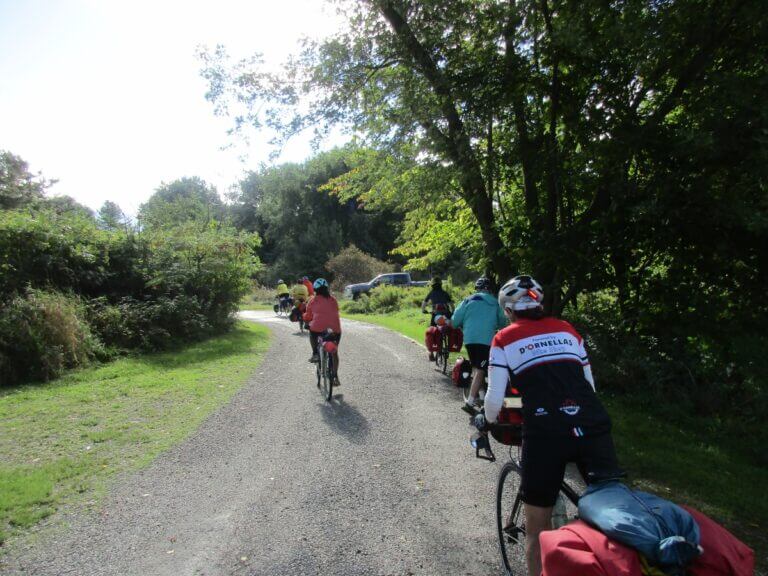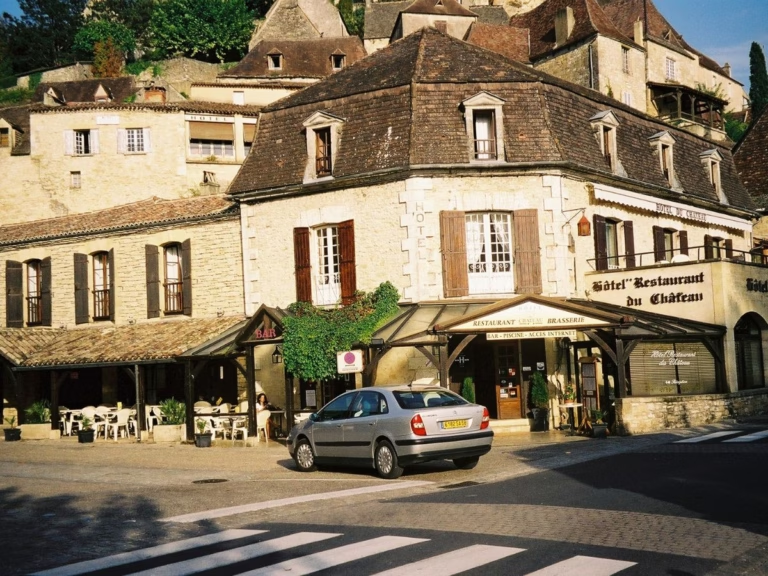
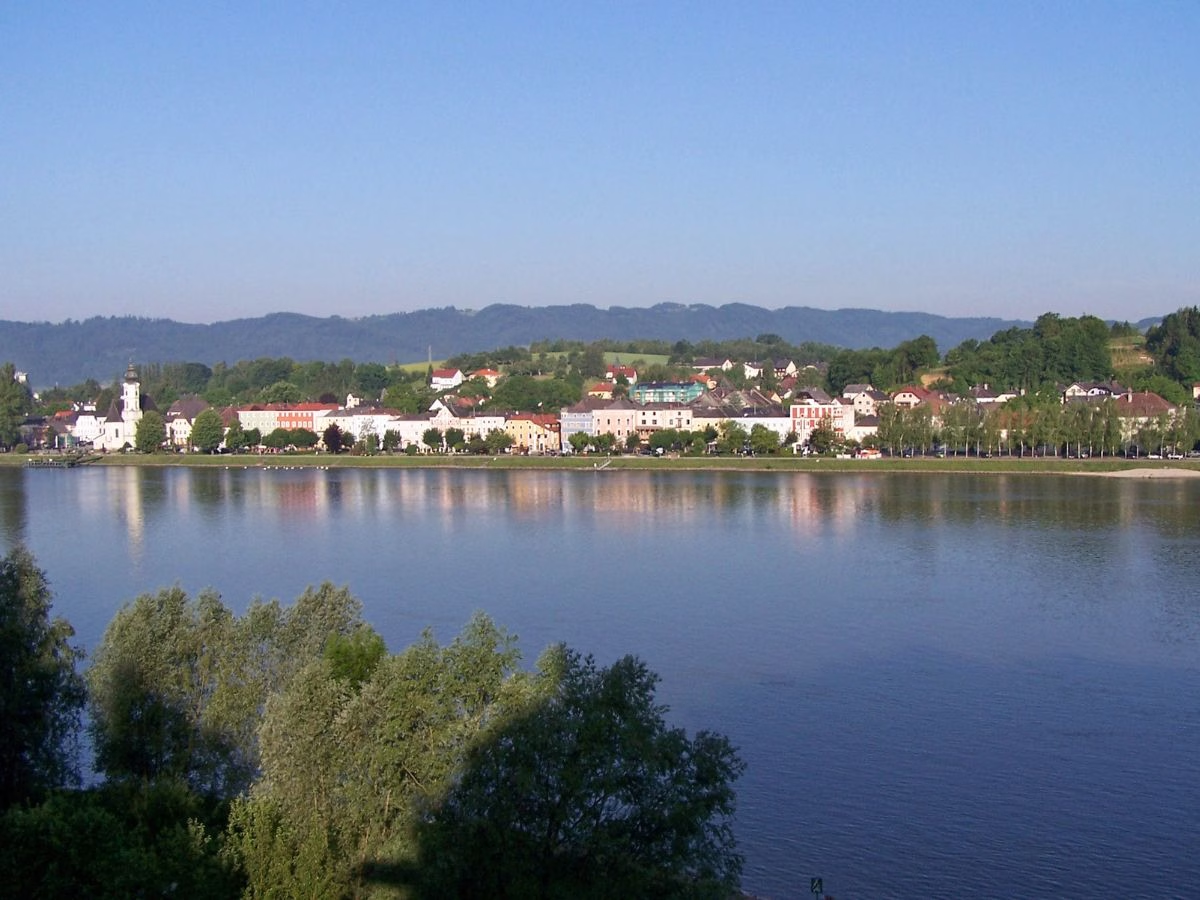

Looking for some easy Bicycle Touring Routes in Europe?
Having cycled in Europe for many years, you have come to the right place because I have ridden many of them.
So whether you purchase a guided tour or plan a self-guided tour, there are easy routes in many European countries.
Use my helpful guide to plan your own European cycle tour.
A cycling colleague recently asked me about these 13 Easy European Bicycle Touring Routes. You see, they had joined me on previous journeys in Europe, and those particular routes had been very hilly, so they thought it would be a good idea to mention the best ways to cycle on flatter routes.
Whether you are a beginner to cycle touring in Europe, a senior, or someone just wanting a more recreational level of riding, these choices should appeal to you. Some are signed, and others are regions popular with anyone on a cycling vacation. All offer guided and self-guided options from travel companies, or you can easily arrange it yourself.
1. Danube Bicycle Path
One of the most popular European Bicycle Routes

I started in Passau, which is a good starting point, and took the well-signed bike tour route to Vienna, Austria, which takes about one week. For a second week, I continued through Slovakia and Hungary to Budapest, but you will need a guidebook as the route is not signed. In Austria and Germany, hotels are used to bicycle touring and have facilities for bike lockups. You can also continue on the entire route to the Black Sea.
Anywhere along the Danube Bike Path, you will meet like-minded cyclists to will ask for directions or advice on restaurants. It is mainly a flat path, but there are a few small hills in Austria’s Wachau wine area and slightly higher hills departing from the resort town of Tata in Hungary for a few kilometers, but otherwise, it is not challenging.
Insider tip: if making your own arrangements, reserve accommodation on weekends in Austria, as it can be busy, and in Hungary, as there is limited hotel space.
This route takes you right through Central Europe and is one of the most popular EuroVelo Routes, and you do see a wide variety of scenery.
Expect to see a lot of other cyclists: cathedrals (Passau, Melk, Vienna, Esztergom); vineyards (Wachau, Hungary); bike ferries (Austria); castles; walled towns (Krem); funiculars (Budapest); horses (Babolna), and the river boats along the Danube River.
2. Bodensee (Lake Constance) Cycling Route
Cycling around the lake, visiting 3 countries with one hill
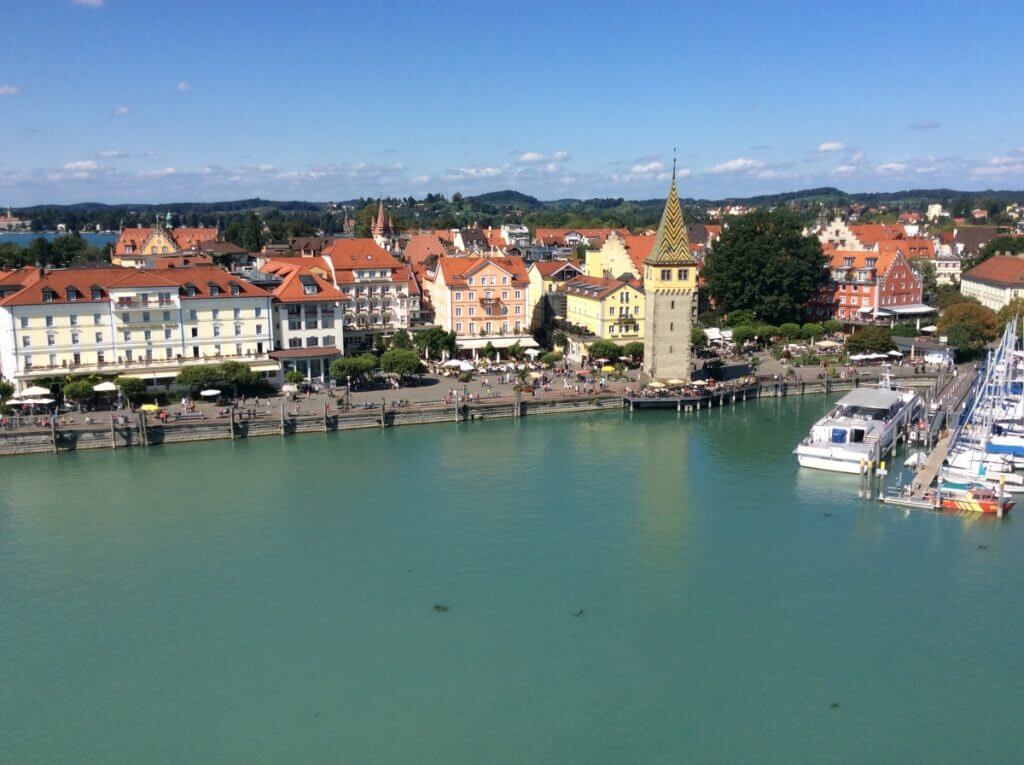
The Bodensee Cycle Route is a popular ride of 260 km (161 miles) with easy riding on signed cycle paths around this scenic lake bordered by Switzerland, Austria, and Germany, making for interesting sightseeing. It took me about 4 to 5 days for this cycle vacation, assuming you explore the various towns along the way.
I liked the variety, as you can expect to see castles, medieval towns, vineyards, boats on the lake, a cable car, and a backdrop of the Swiss Alps. It is part of the Rhine River Route.
I extended my cycling holiday for a longer distance by continuing to Zurich, across southern Bavaria as I did, but I expect to encounter some hilly terrain. A popular option is to head up the bike route along the Rhine River in France via Basel.
3. Swiss Rhone Bike Route
Most popular cycling route in Switzerland

You never expected I would include a route in Switzerland, did you? Well, the Rhone Cycle Route starts in Geneva and follows the shores of Lake Geneva, including Lausanne and Montreux, before continuing up the Rhone River Valley to Sion and Brig, with mountains bordering you on either side. It is considered one of the best cycling routes in Switzerland.
Although signed, the route jogs quite a bit, so you will require a map. There are only a few small hills in the Lausanne area, but otherwise, it is quite flat, following bicycle paths and minor roads. I stopped at the International Cycling Association World Headquarters for a coffee and to watch the riders in the velodrome. It is right on the bike path, so you can’t miss it.
You can expect to see a lot of vineyards around Sion and just past Lausanne; promenades with colorful flowers (Vevey, Montreux, Lausanne); castles (Chillon in Montreux, Sion); museums (Lausanne, Geneva); statues to Freddy Mercury (from the group Queen); International Cycling Association World HQ); great scenery along Lake Geneva and in the narrow Rhone Valley with the majestic Alps mountain backdrop.
You can make this a long-distance cycle by combining it with the Via Rhona route (EuroVelo 17) from Lake Geneva to the Mediterranean coast.
4. Dordogne Cycling Route
Cycle past castles, vineyards, and quaint villages in Southern France

France offers so many bicycle touring regions that it is hard to pick one. My favorite is this area of southern France along the Dordogne and Lot Rivers. In between, it can be quite hilly, so consider one or the other.
Sights along the Dordogne Cycle Route include prehistoric caves, castles from the 100 Years’ War, a town hanging from the side of a huge ravine, the prettiest town in France (or so they say), plus the compulsory excellent food and wine.
Lots of walnut plantations, small villages, little traffic, and a great bicycle museum, too. Along the Lot River, also expect villages with stone houses along the sides of the hills and beautiful scenery; it is a bit off the beaten path.
Bicycle Touring France, of course, includes the famous Tour de France routes, which change each year. The Country roads are usually closed for a few days before the event for local cyclists.
5. Loire Valley Cycling
Popular French region to visit elegant châteaux & vineyards
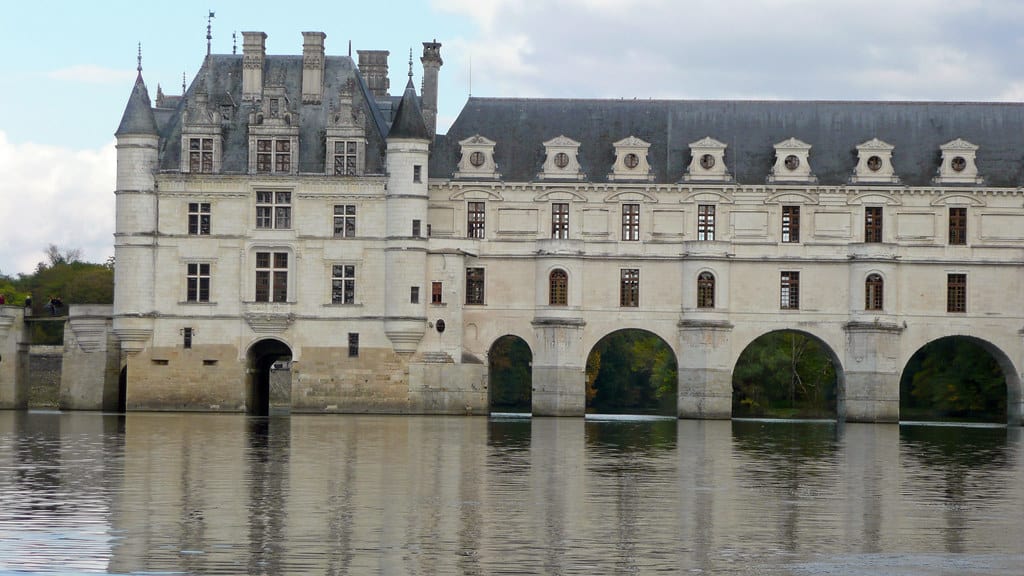
This region of France is the first introduction to European cycling for many. You can expect to be cycling short distances on quiet roads as you explore the vineyards and châteaux dotted along the route. Don’t expect any significant ascents or descents along the river; however, many cyclists do head into the surrounding hills, as there are many possible routes in the area.
Besides the châteaux, highlights are sure to include fine cuisine. If wanting to see the south of France, the Canal du Midi route from the Mediterranean Sea in Provence to Toulouse and continuing to the Atlantic is also an option.
6. Veneto Region of Italy
Lots of history on this route, which includes Venice
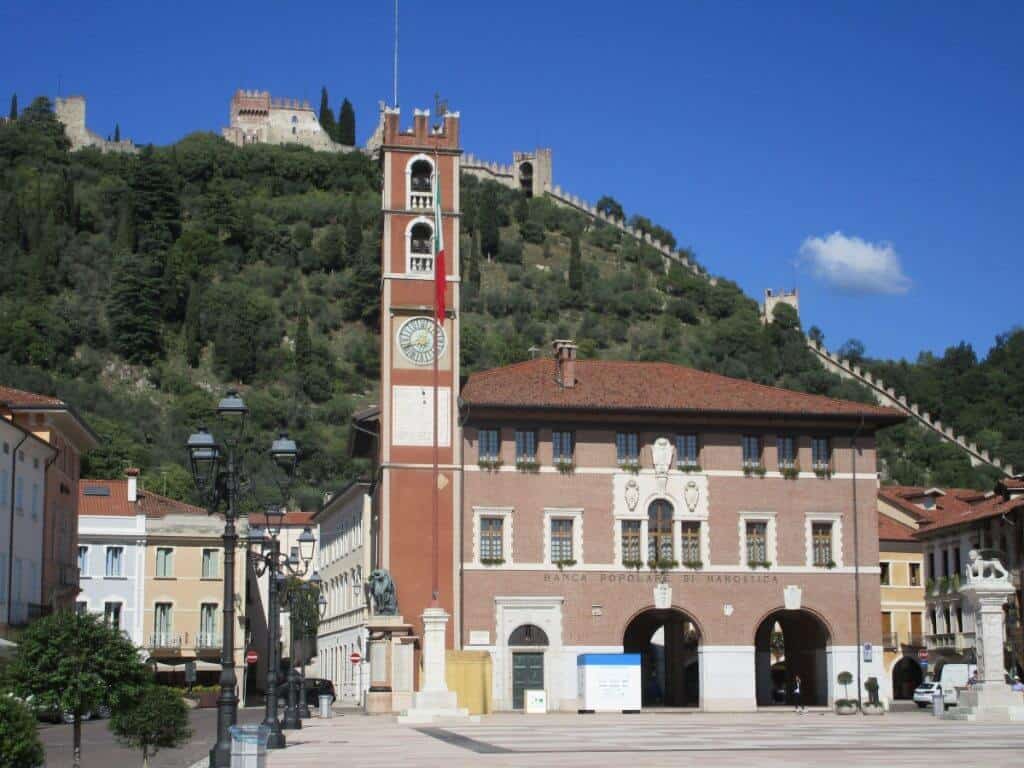
I started in Vicenza on a guided tour (a lot of self-guided tours of this route), which included Bassano del Grappa, well known for the liqueur Grappa, and with the Dolomites in the distance, before continuing to historic Padua and Venice.
We continued our Veneto Cycling Adventure along Laguna Venice before heading inland through the edge of a wine district. There was only one hill heading up to Asolo in the wine country, and it really wasn’t too bad. A lot of cyclists have taken the self-guided option, but you will need a map as the route is unsigned.
You can expect to see numerous museums in Padua and Venice; canals everywhere (not only in Venice); vineyards; historic bridges (Bassano), good food, small towns, and ancient cathedrals. We had a ferry pass to get us from Venice, allowing us to hop and cycle the various islands along the Adriatic Sea.
7. Netherlands
Numerous bicycle routes throughout the entire country

When I say I am going bike touring in Europe, everyone assumes it is to the Netherlands, as this is a region well known for the popularity of cycling and plenty of bicycle lanes both in the cities and the countryside. Although it is flat, as you ride along the tops of dikes, you can expect to face strong winds at times.
I took a guided 7-night Bike and Barge tour, plus spent extra nights in Amsterdam. The tour included Edam, the famous flower gardens, northern Holland, and more.
The Netherlands is well known as a bicycle touring haven with numerous paths. The town of Valkenburg is located near the German, Belgian, and French borders and is the center of cycling in this country, and a great place to base yourself. Bicycle touring in Holland will be along bike paths, but expect windy days. Can easily be combined with Belgium (make sure Bruges is on your itinerary.
One issue I found was that due to the large number of local cycling routes, you have to make sure you make the correct turns. Yes, there are flowers to see, cheese, of course, quaint villages, windmills, castles, museums, and perhaps Delft pottery, depending on your route.
8. Girona Cycling
Popular region in Spain for cycling
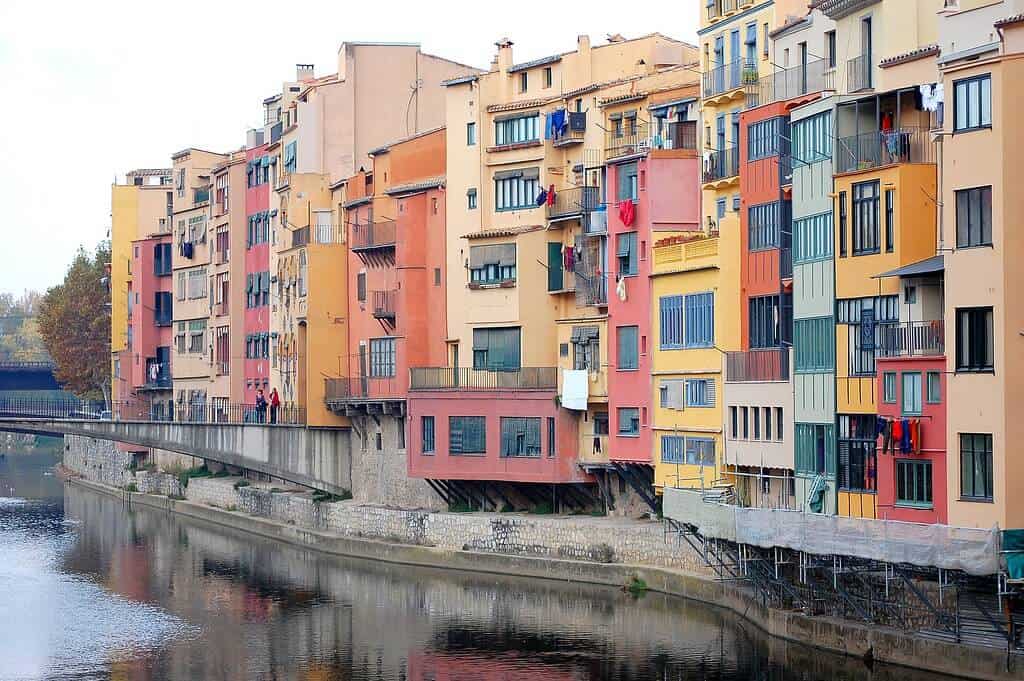
This Spanish town is located only 30 km (18 miles) from the Mediterranean and 90 km (56 miles) from Barcelona, and yet this town is where many of the professional cyclists train and live in the off-season. The area offers a great variety of daily bicycle touring options, from flat to hilly and coastal to mountain routes.
9. Adige Cycling Path
Flat Cycle path from Austria to Verona in Italy

This cycling tour actually starts in Austria but is a bit hilly, so I joined the Adige Cycling Path in Merano and took the dedicated cycle path along the valley route all the way to Verona. You can see the Dolomites in the distance. You can also take a side trip on another bike path to Lake Garda.
This is one of the best places to go bicycle touring in Italy, but it is not well known in North America, so expect your fellow cyclists to be European. When people ask me my favorite European route, it is the Adige Cycle Path.
What to expect: the German-speaking area of northern Italy, picturesque towns, beautiful scenery, numerous castles, vineyards, orchards, bicycle cafes, and lots of local riders on this paved route.
10. Neckar Valley Cycle Path
Through southern Germany to the Rhine, including Heidelberg
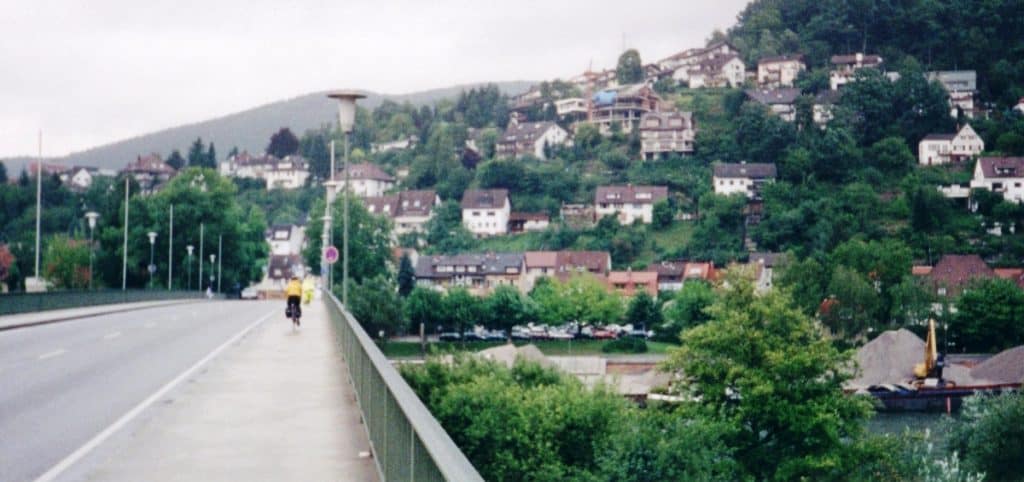
Starting in the southern part of Germany and passing Stuttgart and Heidelberg, the Neckar Valley Cycle Path follows the river of the same name for 375 km until it reaches the Rhine River. This is a dedicated paved bike path for most of the way and is very flat. It was not very busy during our ride.
What to expect: historic towns, half-timbered houses, lots of history, castles, vineyards, museums, wine festivals, and a very scenic river.
11. Rhine Cycle Path
Famous bicycle touring route through 5 countries
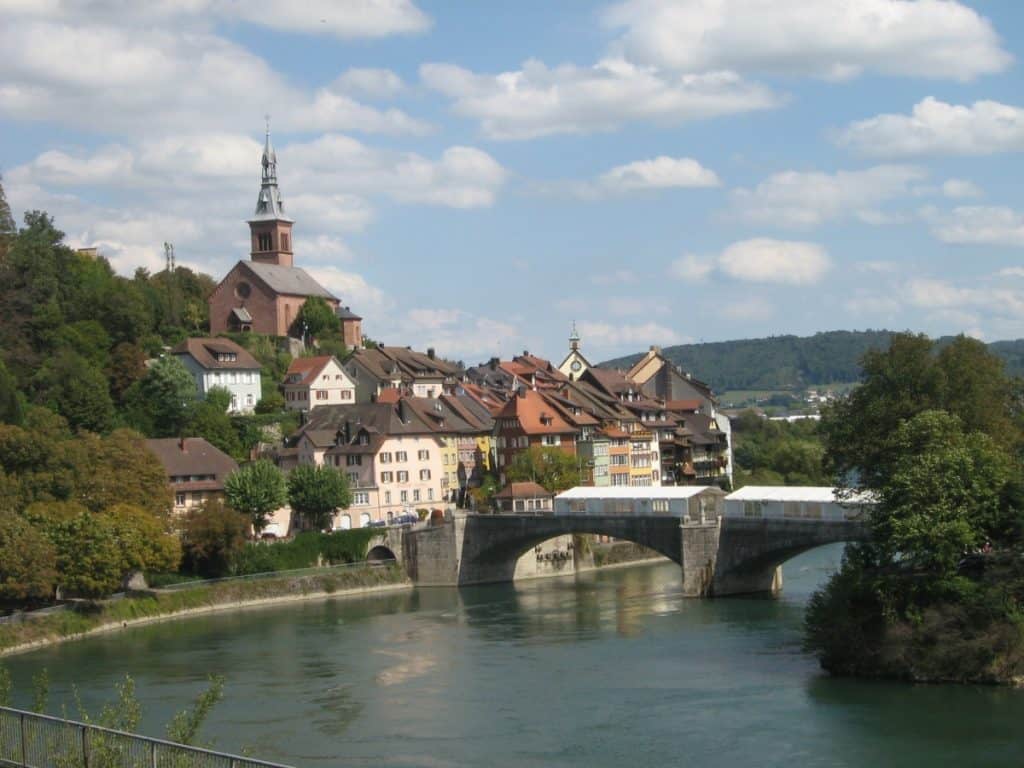
One of the best-known is the 1,233 km Rhine River Route along the river. Best to start by going around Lake Constance (Bodensee), although you can start further upstream. After leaving Konstanz, you follow the river to medieval Stein, and shortly after that, there are some small hills on the next stage, during which you pass the Rhine Falls and the longest covered bridge in Europe.
In Basel, the European Countries of Germany, Switzerland, and France meet, and you can go on either side of the river heading downstream to Strasbourg, a city of canals. Continue to the Netherlands, where the bike route ends at the North Sea. The surface is paved bicycle paths, some hard-packed sections, and quiet roads for the most part. Well signed and easy to follow.
What to expect: 4 countries (Austria, Germany, Switzerland, France, Netherlands) so a lot of variety, castles, the Rhine Falls, Lake Constance, medieval towns, vineyards, and more; it’s got it all.
12. Lake Garda Bike Path
Cycle Path around the lake with quaint towns and castles
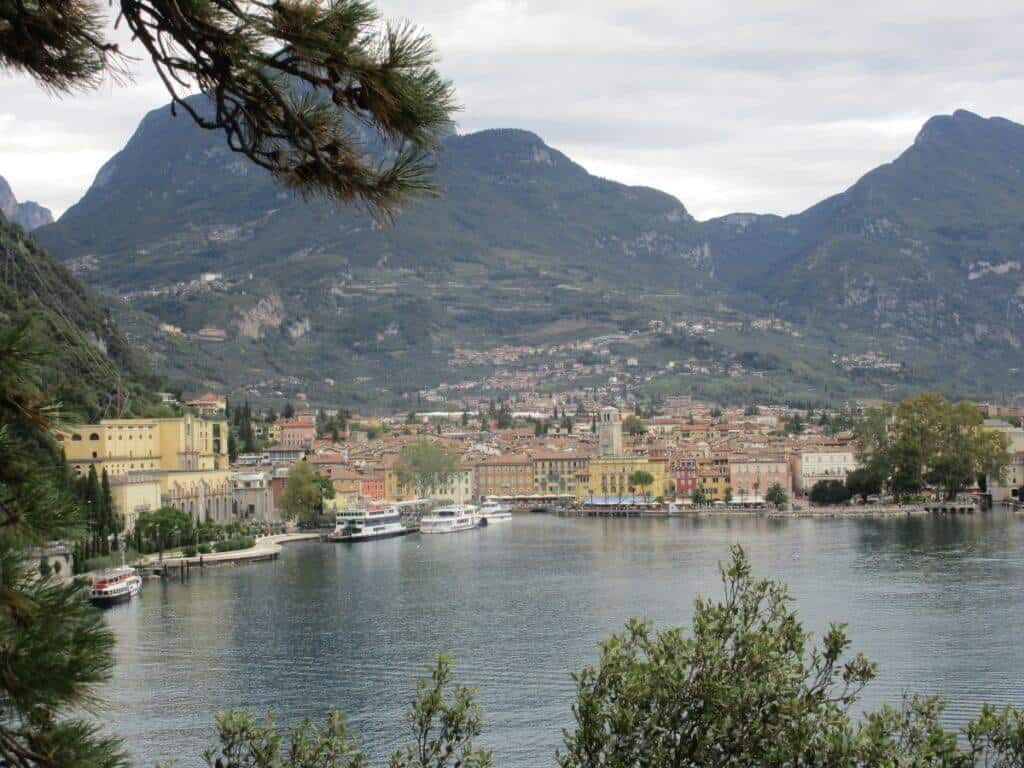
The Lake Garda Bike Path is scheduled to be a 140 km route around the entire lake. In 2026, the full hanging route is still not completed, so you can ride on the completed parts and otherwise ride on the local roads. The only difficulty is going through some of the tunnels. This is perhaps one of the most beautiful routes in the world. Connects with the local bike route to Verona.
What you can expect: at Riva del Garda, enjoy wine on the square, people watching, the incredible Old Ponale mountain biking/hiking trail, castles, interesting towns, and that scenery. A favourite area of mine in Italy.
13. National Cycle Route 4, UK
A bit of a rail trail and a canal towpath heading to London
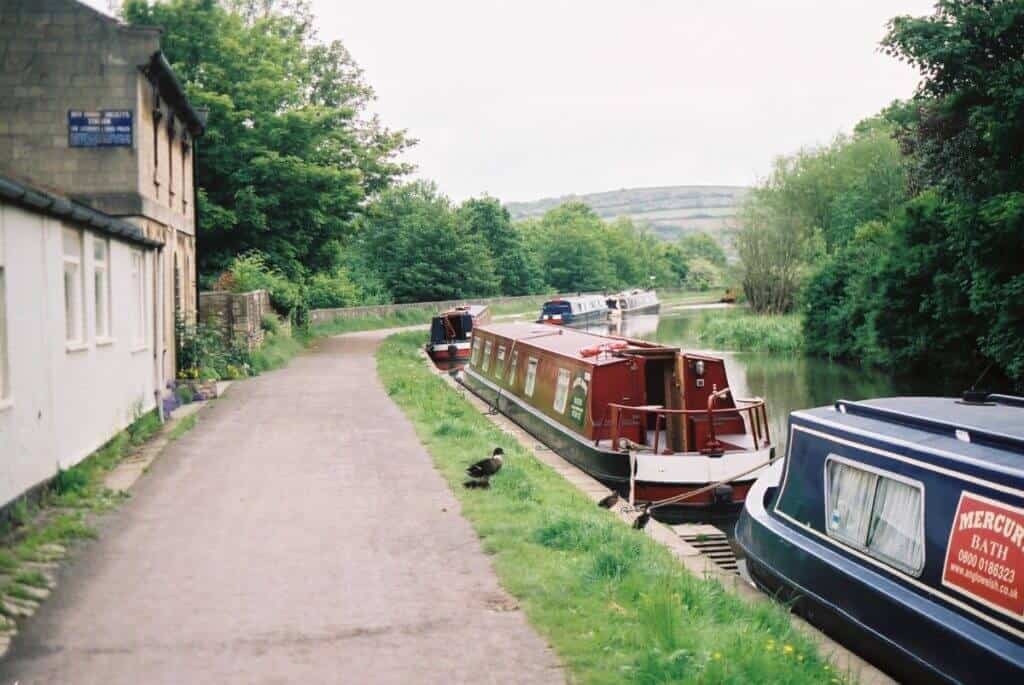
In the United Kingdom, consider the National Cycle Route 4 from Wales to London. I picked up the cycling route in Bristol, where it was a rail trail through green hills with a gradual climb and art at the former stations. The former stations remained along the scenic route to Bath, the perfect place to stop for a few days.
From Bath, the route follows the Kennet & Avon towpath, so you see the colorful boats and go through interesting villages along the way.
What you can expect: colorful barges on the canal, Roman baths, pubs, and beautiful scenery.
Additional Resources
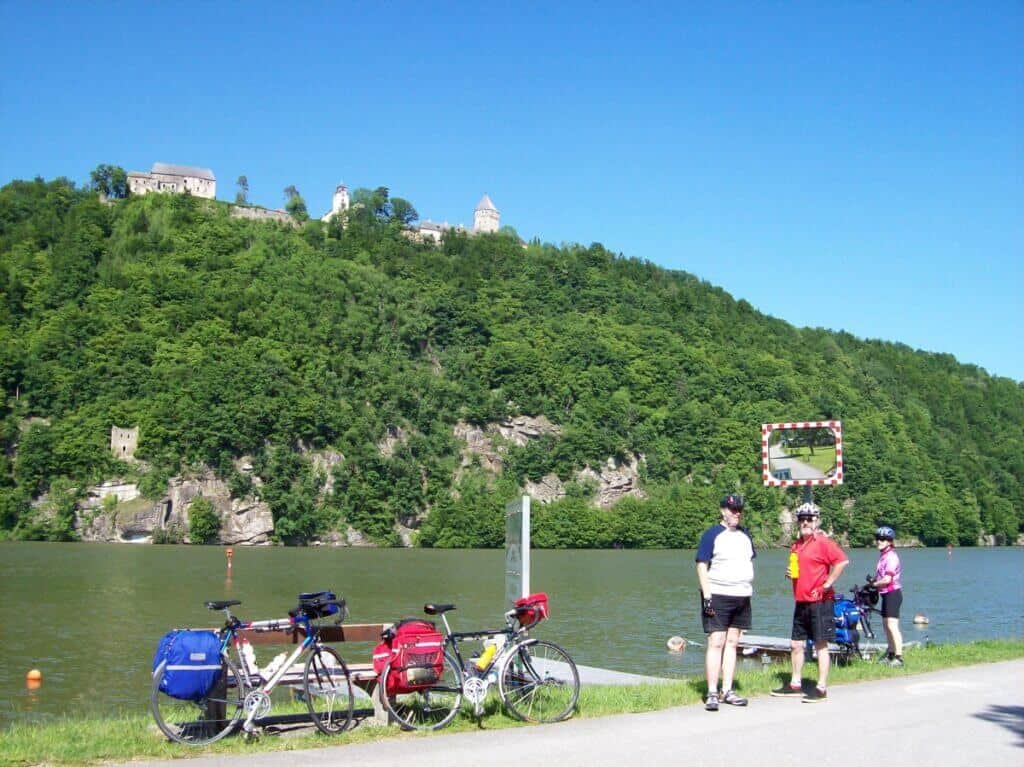
Cycling Along Europe’s Rivers – a guide with about 25 rides including accommodation, restaurants, and route tips.
BusBud – a worldwide platform for booking buses, including Europe
VRBO – apartments, homes, and other accommodation options
Expedia – for booking your flights and hotels in Europe
HostelWorld – for booking hostels in Europe
Travel Insurance – with Safety Wing Nomad Insurance
FAQs: Easy European Cycling Routes
When is the best time to cycle in Europe?
While it varies by region, it is generally late May, June, and the fall to late September. The summer months of July and August can make finding accommodation difficult. Also in Central Europe, Friday & Saturday evenings can be difficult to find hotels.
What is EuroVelo?
EuroVelo has 17 long-distance cycling routes, each a minimum of 1,000 km, connecting the countries on the continent.
What is the easiest EuroVelo route?
Some consider it to be the 1,233 km Rhine Cycle Route, which is generally flat, but there are some small hills between Basle and Konstanz. Also departing Konstanz, there is one steep climb on the north shore.
Other easy routes exist along the Moselle River (Germany/France) and in Denmark, but you will need to do the planning yourself, as there are no guided options. The book Cycling Along Europe’s Rivers can assist with planning some of these trips.
Wrap-up: 13 Easy European Bicycle Touring Routes
A cycling vacation in Europe can be interesting even if an easy bicycle touring route is chosen.
A cycling friend was seeking advice on these easy bicycling tour routes in Europe. There is a cycling culture in Europe that makes it easy to tour, with many hotels having lock-up rooms, many other cyclists on the routes, and long-distance bike touring routes.