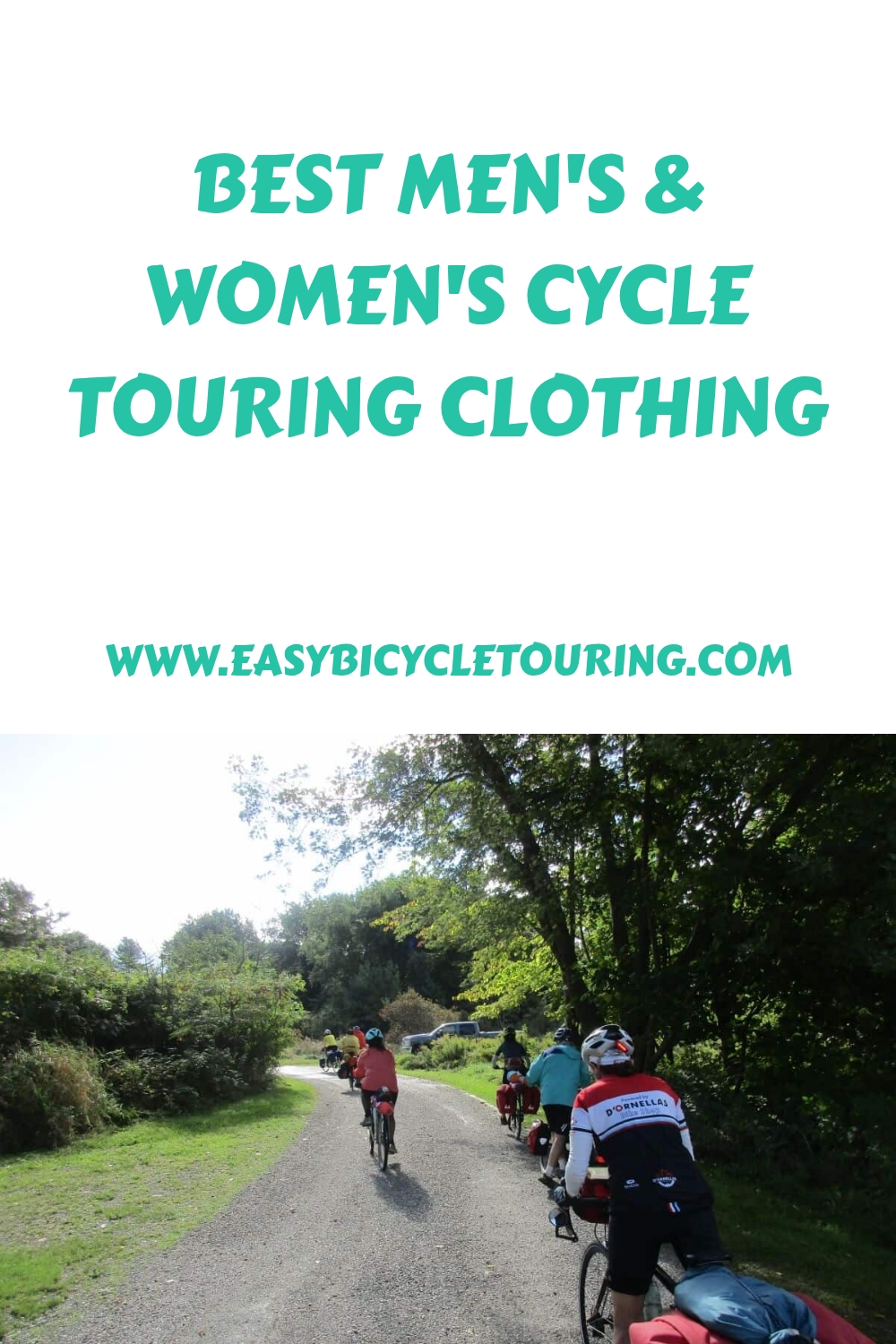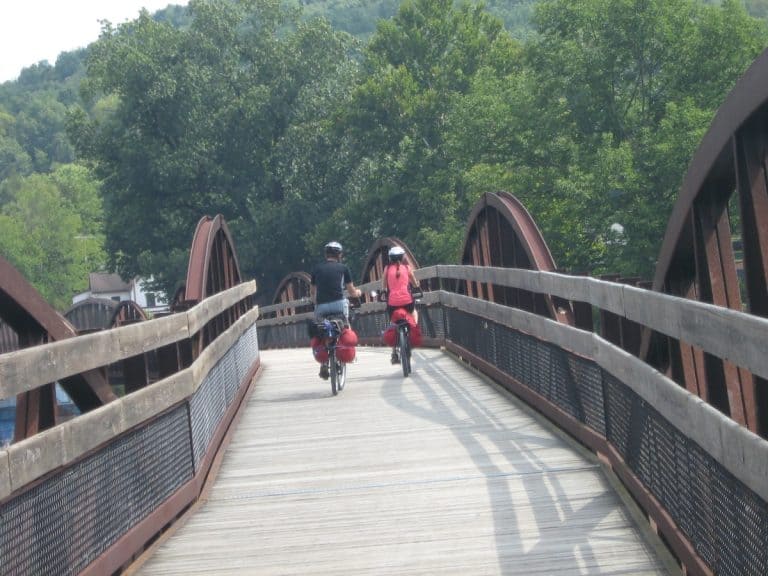


Looking for the best choices for Cycle Touring Clothing?
Like many cyclists, I started with a T-shirt and running shoes, but quickly upgraded my apparel. Over the years, I continued to go on bicycle tours in Europe, Canada, and the USA.
Your cycle touring clothing must be very limited as you need to carry it in your rear panniers and it must wear and wash quickly, yet still look good (at least for some of us).
One of the biggest issues I find regarding bicycle touring clothing with beginners is that they pack too much. On my first trip to Europe over ten years ago, I ended up throwing away items early in the trip. Friends of mine, a few days into our Danube Bike trip, packed a box with extra bicycle touring clothing and mailed it to our final hotel in Vienna rather than carrying it.
Use my helpful guide to get it right and have an enjoyable and comfortable ride!

What Bicycle Touring Clothing to Bring

This list will depend on whether cold weather is expected, but it contains what the average cyclist should consider wearing. You won’t have much space in your panniers, and the amount of gear quickly adds up, so depending on the type of ride, you need to review your options carefully.
Bicycle Helmet
Bicycle helmets are available in many models (some even stylish) and are important not only for safety, but are a legal requirement where I live and in many destinations.
Get a helmet that is comfortable, easy to fit and adjust, lightweight, has great ventilation, and is aerodynamic. To keep cool in summer, get one with a lot of vents. Other features may include an easy-adjust dial system, which provides a custom fit with a twist of the dial, and adjustable side straps that allow you to fine-tune fit and comfort.
Others like a detachable visor, which helps reduce glare, and I have friends who like attaching a rearview bicycle helmet mirror to better see the traffic behind. Many cyclists also protect themselves and use a head sweatband or helmet cover in the rain for additional protection
A good-fitting bike helmet should be snug but not too tight. It should sit level on your head (not tilted back) with the front edge one inch or less above your eyebrows. It should be replaced every few years as the sun weakens the shell.
Tip: One thing I sometimes do if a flight is involved is take my old helmet or cycling shoes, use them for the trip, and throw them out at the end to save carrying them back.
Sunglasses
Depending on the weather may be required to protect your eyes from the sun, dirt or mud, and bugs. They should be snug at the temples, but not pinching. Generally, you want the wrap-around variety to shield your eyes from the dust and dirt of the road or trail. Sunglasses with anti-fog help when you are sweating, and UV protection is a great benefit.
Base Layer
In colder temperatures, you may want a lightweight base layer that fits under your cycling jersey with a snug fit to wick moisture but not be so tight as to restrict your movement. A Merino T-shirt, some athletic shirts, or shirts (and pants) designed as a base layer garment will do the job. For women, a sports bra may be necessary.
Cycling Jerseys
I normally take two short-sleeved bike jerseys on a cycle tour and do laundry frequently. You should consider whether you require a cycling shirt with long sleeves or short, thermal or not. Other things to think about are the wicking ability that removes sweat and moisture from your body, the number of pockets, UPF, and a full zip in front.
Some cyclists use wool cycling jerseys, which are odorless and require less washing. The wool fabric regulates your body temperature, keeping you cool in the hot weather of summer and warm in the colder seasons with great wicking ability.
While many are solid colors, you want one with a stylish or crazy design if you really want to stand out or make a statement.
Cycling Jacket
You will require an outer layer. I take a lightweight Gore-Tex waterproof jacket, which I have found to be really good in heavy rain and wind, along with a vest that is easy to remove. Dressing in layers is always a good idea.
I prefer a yellow color so motorists can see me, but there are many varied opinions in the cycling community about this. I have been riding in heavy rain where I could barely see the cyclist in front of me and felt safer with the yellow models.
Cycling jackets are generally made with a breathable fabric that will not restrict your movement. There will be an extended rear panel to cover your rear. Check out my post on Women’s cycling jackets.
In warmer weather, I frequently use a lightweight vest instead of a jacket, combined with arm warmers. In cold weather, I will combine a cycling jacket with a vest and/or base layer.
Rain Jacket
On any long tour, you will encounter wet weather, so in addition to a cycling jacket, you may want to carry a rain jacket and rain pants, but I take a yellow rain poncho. Rain gear is important because nothing is worse than riding and getting cold and wet.
Cycling Arm and Leg Warmers
For those crisp mornings before you warm up, I find arm warmers handy. They permit you to start your day with lighter summer cycling clothes and can be taken off as things warm up. The lightweight ones are easy to store and can be a nice alternative to a jacket or tights. They are my constant companion when I go cycling.
Others use leg warmers for the cold temperatures, although I don’t. They are also available in merino wool, which keeps them warm even when wet.
Cycling Gloves
These padded gloves protect your hands while riding from the bumps along the way by absorbing vibration when riding on a rough road or even cobblestones in Europe. They are also great for reducing fatigue, providing a bit of grip, and keeping your hands and/or fingers warm. Make sure the gloves are snug but not tight.
There are waterproof cycling gloves, full and half-fingered styles, also available in wool styles if desired.
Cycling Tights or Shorts
Bike shorts come with padded chamois to help resist friction with the bike saddle. I prefer a removable inner padded liner, which makes washing and drying easier when bicycle touring.
Consider a pair that is lightweight, breathable, and has a stretchy fabric. If on a recreational ride or race, you may not want pockets, but for anyone doing bicycle touring or mountain biking, you will appreciate pockets
Don’t forget to put some good quality chamois cream, available at your local bike shop, in your handlebar bag.
On any long-distance tour, consider your available choices from a pair of shorts, long pants (tights), knickers (3/4 length), Capri, and bib shorts. Fabrics vary, with some available in wool.
Cycling Socks
As cycling is a no-impact sport, the socks have a little padding, although thermal models are available. This is another item that comes in crazy colors and designs.
You can get bike socks made with wool, which is odorless and wicks the moisture away to help prevent blisters.
Cycling Shoes
With your cycling shoes, make sure your toes have room to expand (they will).
Decide whether you need cleats or not. For bicycle touring, I find it preferable not to have cleats but big pedals instead, as you are frequently getting off your bicycle to explore. However, for recreational riding, they are preferred by many as your feet are less likely to slip off as you pedal being clipped into your pedals, you can apply more pressure for more efficient riding.
Tip: I use sandals instead of cycling shoes in the summer, which works well on recreational rides or on longer cycling tours.
Some like booties (overshoes), which are available to fit over your bike shoes when it rains. Mountain bike shoes have a lugged outsole and recessed cleats for ease of walking and are often used by those who are bicycle touring as well.
Wool Cycling Clothing, The Natural Choice

Wool cycling clothing is a natural choice. A common problem shared by all cyclists regards their choice of clothes while on their bikes. You want comfort, style, and the ability to cycle in varied weather conditions while not being left with stinky clothes when you finish your ride. Whether you mountain bike, road bike, commute, or go bicycle touring, there is a solution: wool cycling clothing.
Five Clothing Issues Faced by All Cyclists
Regulating temperatures
By dressing in layers, you can add or remove clothing depending on the weather conditions. Also, consider wool cycling jerseys, which do an excellent job of wicking moisture away.
Wool stays warm in summer and cool in winter, so you can wear it year-round. In summer, the wool fibers pull excess heat and moisture away from your body. In winter, its natural insulating qualities trap dry air and warmth to keep you dry and warm as wool wicks away moisture from the skin.
Stylish, comfortable, and non-itchy, you can find wool cycling jerseys, shorts (tights and knickers too), Socks, gloves, caps, jackets, and leg and arm warmers are some of the wool cycling clothing available.
Water Repellent
Comes naturally and easily to wool due to the makeup of its fibers, which overlap each other.
Wrinkle-Resistant
This very resilient fiber can even be stretched and bounced back, important when you are out cycling.
Durable
Wool cycling clothing is easy to wash; in fact, it is said you can wash a wool garment up to 20,000 times without the fibers breaking, so they have a long life. Just machine wash them and hand them out to dry.
Handling Laundry while Bicycle Touring
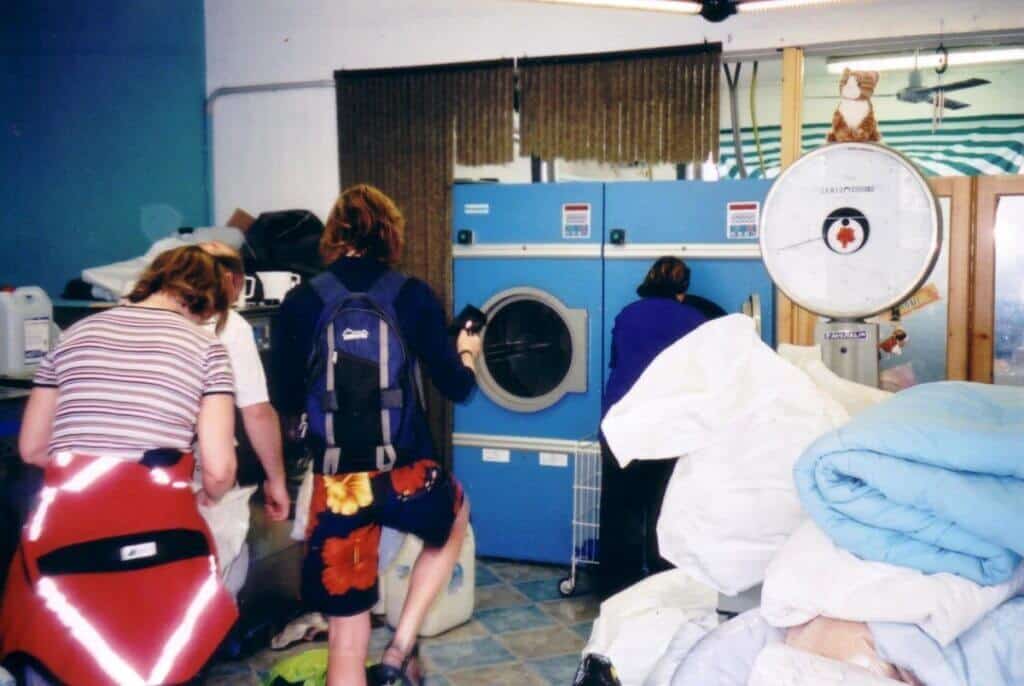
Regarding laundry, I carry liquid soap (others take laundry detergents) and hand-wash my bicycle touring clothing in the sink. I know of others who wear their bicycle clothing in the shower (yes, really) and others who use the Laundromat.
I use the Laundromat if staying or camping in one location for a while and taking daily cycling rides. While staying in a Greve in Tuscany for one week, I took my laundry into town where they did the wash, and we had to return to pick it up. Meanwhile, in Verona, I just had to figure out which coins to put into the machine.

FAQs: Cycle Touring Clothing
What do you wear on a cycling tour?
You want lightweight cycling clothing that wicks moisture and is fast-drying. Dress in layers that can be removed as the day warms up. You will require a bike helmet, cycling jersey, and maybe a jacket, shorts or pants, cycling gloves, socks, and cycling shoes. And carry rainwear in your pannier.
What not to wear when cycling?
You always want to wear comfortable clothes that do not restrict your movement. You should wear cycling shorts and not regular shorts to prevent chafing (saddle sores).
How can I wear good, stylish clothing when cycling?
Get an aerodynamic bike helmet with good colors or designs to start. Again, cycling shirts and jackets are available in many colors and designs, so make sure everything is coordinated. Socks are important as well and available in white, black, and with fun designs. Again, it is about the overall look.
How do cyclists prevent saddle sores?
Always carry and apply chamois cream prior to your ride, as it will reduce friction by hydrating your skin. Also, wear clean shorts (or a removable liner) and wash them often.
What should a beginner wear while cycling?
Start with a cycling helmet (required by law in some regions), an activewear shirt that wicks moisture (a cycling jersey is best), padded shorts, sunglasses (wrap-around is best, cycling gloves, and athletic shoes (again, cycling shoes are best). You may require a jacket and rainwear depending on the weather.
Do you need cycling shoes for touring?
No, athletic shoes will work, but for bicycle touring, the right shoes will provide more comfort, support, and help with riding efficiency. You may also consider cycling sandals in warm weather.
.
Do you need clipless pedals for touring?
It is recommended not to use clipless pedals when bicycle touring. While clipless pedals can deliver more speed and power, that is generally not a priority. When cycle touring, you will be getting off your bike to explore frequently, and shoes designed for clipless riding are difficult for walking. Consider a large pedal for extra power.
What material is best for cycling clothing?
Cycling clothing made with merino wool is odorless (is not stinky), wicks moisture, and regulates temperature. Also, polyester fabrics provide some of these features but are not as effective.
Wrap-up: Cycle Touring Clothing
Be sure to check out our article, ” Lightweight bicycle touring packing list which can also assist with your planning. For long trips, pack the above in plastic bags or a dry bag or place them in your Ortlieb Ultimate or similar back panniers.
While you do not need all this bike clothing to start cycling, it does add to your performance and comfort. Your choice of clothing makes a huge difference to your enjoyment, and with all of its benefits, wool cycling clothing is the sensible choice.